How old media killed Rangers FC….and how new media danced on its grave.

PART 1 – How old media killed Rangers FC

by Mr Custard – a Hitthebyline contributor

A grand title with lofty claims. How can this debutant guest writer live up to such outlandish claims and roll with it? No bother at all. The truth is out there. The internet bampots have had their whiff of power and they like it. The new media do it for the love, do it because it feels right, do it for the banter and incessantly because they want to. The old, tired media have been caught with their pants down. They have had their day in the sun. Technology has caught up. Move over Grandaddy. The people are the new media; more power to them.

David Murray in his pomp had the Scottish media in his back pocket, and in many respects this was to be expected. A brief rattle through the history of time here:

The Murray/Souness era began in 1986, and after 9 barren years, they won the Scottish title at first ask. This was helped in no small part to the free spending of Murray, backed by the riches of his then thriving steel empire and the accidental advantage of being able to offer top English internationalists European football during the post Heysel English ban. It was a mighty roll call and it brought in the honours and fans, leaving in the dust the like of Celtic, Aberdeen and Dundee united who had dominated the last decade of the Scottish game with the latter two successful in Europe also: Butcher, Woods, Steven, Stevens, Francis, Wilkins, Roberts……they crushed everything before them. All bow to David Murray, the chequebook ruled supreme, he had invigorated the Scottish game? Hail to him! Without going over old ground, we have heard all the quotes ad nauseam lately… “deep pockets”, “succulent lamb”, “for every fiver…..”, “there is a massive moonbeam of success waiting for us” etc etc. Rangers and Murray could do no wrong as a sycophantic and compliant media knelt on their very knees to grace the new messiah.

On the other side of the city an old, tired, going nowhere family dynasty was being ousted by fan power, who were sick of being second best to their loud next door neighbours and demanded change. Rallies and organised boycotts appeared within a siege mentality to counter the newspapers who week after week, season after season, put the boot in, mocking the hoops, their biscuit tin mentality, “celts in crisis” endlessly bannering each sports page, staging a hearse photoshoot outside Celtic Park. There was an uprising, people putting their money where their mouths were to force change. With the club finally on the up, Wim Jansen’s Celtic stopped 10 in a row. A sleeping giant had finally woken up, and now had a shiny new stadium boasting the highest capacity football ground in the land.

The height of Rangers big spending was during the Dick Advocaat ‘Oranje boom’. With a bruised ego due to failure to reach ten in a row Murray dealt with the defeat in the only way he knew – by spend, spend, spending. Circa £60m in funding obtained from ENIC and Joe Lewis helped this. 5 out of 6 domestic trophies were won in Dick’s first two seasons and still the big signings kept coming. Nothing could go wrong, or could it?

Image
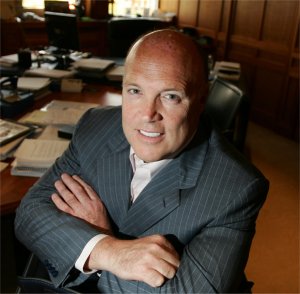
Murray the ‘money man’ enjoys a good laugh – and with good reason.

Indeed, what could go wrong? Just sit back and watch the carnage unfold. After the hit and miss of Jo Venglos’s tenure and the flop of the Dalglish/Barnes partnership Celtic finally struck gold with Martin O’Neill winning the treble in his first season and overturning the points deficit in his first season by 35 points. O’Neill’s first signing was Chris Sutton, a snip at £6m from Chelsea. The team was further galvanised by the signings of Valgaeren, Thompson, Agathe, Douglas and teacher’s pet, Lennon, who joined the existing players of calibre of Lambert, Boyd, Petta, Moravcik, Petrov and Larrson. The first derby meet in August ended 6-2 to the new pretenders with Chris Sutton scoring in almost the first minute. So how did David Murray react to this? True to his word he literally spent a tenner for Celtic’s fiver. He outdid Celtic doubly by paying Chelsea £12m for Tore Andre Flo. A symbol of a last throw of the dice gamble to try and stop the switch of power across the city. An epic fail. In total Advocaat spent over £80m on transfers, meaning an unsustainable £50m net spend. Ouch. And also a debt of £50m too.

So what happened next? With Celtic in rude health and able to meet and exceed Rangers spending power something had to be done. Over the next few seasons Rangers began to try and gain back their spending advantage by playing fast and loose with an EBT scheme, the brainchild of flamboyant pornographer Paul Baxendale-Walker to bypass the traditional PAYE and NI route that football clubs traditionally took, necessitating the use of dual contracts that weren’t lodged with the SFA. So that was a saving made. What about a share issue? Well that didn’t work. How about selling the jerseys and closing the Rangers shops and doing a deal with JJB to gain £18m short term? Who cares about the long term? Murray being such a good salesman would have offloaded the club by then wouldn’t have he? How about selling Barry Ferguson and Jean Alain Boumsong for a tidy total of £15.5m to Blackburn and Newcastle United? Who just happened to be managed by Graeme Souness who for some reason was himself a beneficiary of the EBT scheme a decade after he left the club. Things that make you go hmmm indeed!

And so it carried on, still no alarm bells ringing anywhere. No press questions, even in 2007 when there were simultaneous City of London police dawn raids at Portsmouth, Newcastle United and Rangers FC no press questions were asked. It seems the Boumsong transfer the catalyst for the HMRC investigations. The normal check and tests were not conducted. The media stood idly by. No wait, they did more than that. The media were rampant cheerleaders. Year after year after year of published yearly losses did not result in any probing questions. Hugh Adam’s prophetic words were put down to being the mad ramblings of a disgruntled ex-employee. David Murray had the cheers ringing in his ears and in this vacuum, with no-one there to reign in these stupendous shows of grandeur more liberties were taken and like the boozed up betting addict in the bookies chasing his Friday pay poke doon the swannee the further into trouble he fell, the more dangerous and desperate he got. Criminal are we about to find out?

In 2008 amidst all this debt the redtops circulated stories of £700m super stadiums with floating pitches and Chelsea like villages and super-casinos. Sheer unadulterated propaganda. Anyone with common sense knew this to be a nonsense. People were now awakening to the internet and were reading the source stories on Newsnow and fans forums a full day before the mainstream media put their spin on it. People were now making their own mind up.

So there we are, the “for sale” sign outside Ibrox for year follow year. When the “big tax case” story broke in 2010 we were told there was nothing to worry about. It was being appealed so wasn’t a real bill, and anyway even if it was a bill it would be picked up by MIH. Simples! Murray insisted he would only sell to those who would have the money to progress Rangers forward and along comes Craigy Boy Whyte. The press told us he was a success story, a” billionaire” no less…no scrap that…”off the radar wealth”. So Rangers FC were bought for the princely price of £1 with her Majesty’s head on the back of it. Given that David Murray had priced Rangers FC at anywhere between £150-£200m to the normal guy in the street this seemed a bit strange and still the old media asked no questions. In any vacuum of space something usually comes along to fill this. Rangers Tax Case appeared in this vacuum number 2. Someone had taken to t’internet to raise his concerns on these seeming irregularities. Very quickly there was a groundswell of research and digging which found out by fans of all clubs in Scottish football who knew something was a amiss. With just a few google searches it was quickly apparent that the bold Craigy boy was indeed a shyster. Far from being a success story the t’internet bampots could ascertain he had fled the country leaving a trail of destruction behind of failed companies involving cleaning companies run from portacabins in Bellshill and was heavily involved in Tinkerbell baby clothing shop in Motherwell. Still the media sat on their hands, denied any knowledge of the information now shared in the public domain. They instead printed bogus stories about warchests and the like. The Rangers fans were being openly deceived by the media, if the truth had come out there might be a Rangers still here today, there is not. Rangers FC as we know it were liquidated. A company called Sevco have bought the assets which may yet be reversed by the liquidators and still haven’t secured a place in Scotland’s fourth tier.

The printed lies are being bought less and less, the comedy phone-ins are dropping like flies too. The old media killed Rangers. Goodbye Rangers, goodbye old media. Dressed to kill, and guess who’s dying?

This was the story of how old media killed rangers. Keep your eyes on Hitthebyline.com this week for part two: “How the New Media danced on Rangers’ grave”.

Why not subscribe via email on the homepage, or follow @hitthebyline to ensure you don’t miss out?

Heroes and Villains: Why our beloved game’s media men should be next under the microscope

By TuttiFruttiBusDriver

The decision to offer Dundee FC a place in the SPL appears to offer a welcome release from the maelstrom of committees, board meetings and legal chicanery that has consumed the thoughts of many during this dreich Scottish Summer of sport. It offers an opportunity for fans of all teams to focus on summer transfer windows, pre-season friendlies, and, perhaps, foster a wee bit of cautious optimism about what the season ahead may bring. Maybe the dust will settle a little and we can concentrate on the football.

However, while it is undoubtedly healthier to look forward with positivity to the new season, it is necessary to get several things in order if this is not to become yet another missed opportunity to address the parlous state of the game. There are many issues that need looked at from a change point of view, none more so than the role of BBC Scotland’s sport department going forward.

The now notorious inability of a vast rump of the Scottish football media to ask questions of David Murray for fear of being banished from the vineyards, private jets and oak-paneled offices is an embarrassment that will haunt many hacks for as long as they continue to eke out an existence in the media. Many key players at the BBC were not immune from this. Similarly when Craig Whyte emerged from the shadows (with a questionable CV to boot) the prevailing practice of parceling up PR-swill while avoiding asking difficult questions continued. On the evidence so far, and with a few notable exceptions as detailed below, Charles Green hasn’t exactly getting the roughest ride either.

Image
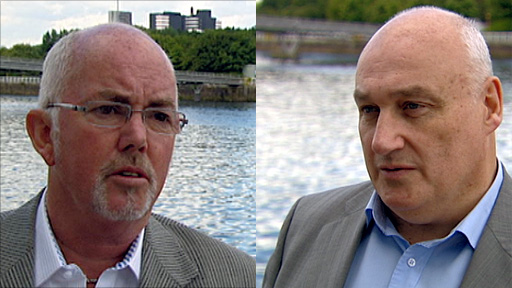
Chick Young and Jim Traynor – Purveyors of questionable coverage?

It is arguable that the senior management at BBC Scotland’s Sportsound conducts a fundamental and radical review of the makeup of their broadcasting team for the forthcoming season. While some have enhanced their reputations with an honest and even-handed approach to the protracted saga (Jim Spence and Richard Gordon spring to mind) others, such as the laughably lightweight Chick Young and the deliberate mendacious Jim Traynor are surely redundant. Young’s grasp of the story is weak and ineffectual. Traynor, meanwhile, has brought nothing to BBC Scotland’s sports output bar a hectoring, bullying, sneering, doom-mongering style that has many listeners reaching for the off-switch.

Traynor can write what he likes in his newspaper (which given the latest circulation figures appears to be living on borrowed time ) but I am sure many license-fee payers resent his views being rammed down their throats in the sake of ‘parity’ or ‘balance’. A slavish desire to see the status quo remain purely out of self-interest has been has main contribution to the debate. Surely this propagandist has no place in a key forum for debate on the issues going forward?

Jim Spence and Richard Gordon, conversely, are notable for the way that they have made room for nuanced arguments. They have focused on complex issues, have tried to make sense of wildly conflicting information and synthesize it into something meaningful for the listening audience. They’ve asked the difficult questions, engaged widely with fans on social media and largely understood that fans are now better informed, more connected, and, with worthwhile opinions (compare that to the loathing of ‘internet bampots’ that you get from Traynor).

It is vital that all those with an interest in the future of Scottish football ensure that the mainstream media charged with holding authorities to account ask the questions that we want asked and provide informed analysis/opinions. Where the pundits are not fulfilling that role then others must be offered the opportunity. Punditry should not be a job for life, it should be determined by an ability to ask the right questions, no matter how uncomfortable those may be, and, a demonstration of sound interpretation of events. The days of the two-dimensional Traynor autocrat or the sycophancy of Young are gone. While social media has radically altered the media landscape by increasing connections, relationships, and, the democratisation of information, it is important that those in charge of the BBC Scotland Sports department fulfill their commitment to serve in the public interest. Weak scrutiny has failed us in the past; it should not be allowed to happen again.

We are all Neil Lennon?! We most certainly are not…

Hitthebyline reviews the spontaneous combustion of Neil Lennon

Image
Pushing the self-destruct button – Lennon at the centre of controversy

Congratulations to Neil Lennon for guiding his young Celtic side to the SPL title. What a fantastic achievement, and on the face of it, everything is rosy at Celtic. An average squad age of just 23, operating in a financially prudent manner, and looking forward to launching an attack on the Champions League next season. However, the headlines this season (aside from the financial crisis at Rangers) have been dominated by Lennon’s ill-tempered approaches to officials, when they could so easily have been about the positive aspects of the Glasgow club’s season.

This petulant and puzzling behaviour again reared it’s ugly head when Celtic suffered a 2-1 defeat to Hearts in the Scottish Cup Final. Of course Celtic and Lennon have the right to feel aggrieved at that penalty decision that was at best, ill-judged and at worst, downright ludicrous, but what the Hoops boss did next was quite unprecedented. In a national semi-final, with 50,000 eyes on him in the stadium, and several million more watching at home, Lennon took it upon himself to dash on to the pitch and confront the referee in an aggressive manner.

Treating this case in isolation, perhaps you could almost put it down to a freak loss of temper, but this is now the third incident in a matter of weeks, and it’s getting to the stage now where the Celtic support are having to watch the name of their great club being besmirched by the manager’s thuggish actions.

18th March, Celtic are denied a debatable penalty in the League Cup final. Lennon doesn’t like it. Lennon criticises the referee’s decision. Lennon is warned about his conduct. Celtic lose the match (and the Cup).

25th March, Celtic suffer two red cards in an Old Firm match. Lennon doesn’t like it. Lennon foolishly approaches the referee at half-time. Lennon is reprimanded. Celtic lose the match.

15th April, Celtic concede a dubious penalty in the Scottish Cup semi-final. Lennon doesn’t like it. Lennon gives the ref a mouthful. Lennon will be punished. Celtic lose the match.

See a pattern forming here?

Let’s say for the sake of argument that Celtic have fallen victim to poor officiating in the above matches. Let’s also again take each game on it’s own merit.

First up, the League Cup final. If Celtic require an injury time penalty at Hampden to draw level with a distinctly average Kilmanock side, then the manager has failed to motivate and organise his team to do a job.

Next up, two red cards in an Old Firm match. Lennon decides to drop Kelvin Wilson for this match after a poor performance in the cup final, only to bring in one of the biggest bombscares I’ve ever known in Cha Du Ri. Cha’s sending off was by far the more suspect looking of the two but you’ve got to ask yourself some key questions. Why would this below-par player even be on the field? And why did he allow himself to be caught so far up the park, when Celtic had fielded a 5-man midfield? As much as the decision was a joke, I’m firmly of the opinion that Cha shouldn’t have been anywhere near the team, and even if he was, then he should have the savvy as a professional football player to be able to conservatively hold the right-back position as part of the 4-5-1 tactic deployed. Wanyama’s red card is unquestionably deserved. Two-footed tackle off the ground is a straight red any day of the week. Yet still, Lennon makes a fool of himself by challenging the referee in the tunnel at half-time (something we all know isn’t allowed).

Finally, and most recently, another Hampden park non-event for Celtic. It took Lennon’s Celtic over 35 minutes to register a single shot on target, despite admittedly dominating the game. The longer the match went on, and with Ki hitting the post from close range twice, the match was always going to swing in the Gorgie club’s favour. As previously discussed, perhaps Celtic shouldn’t have had a penalty given against, then, but the fact is that Celtic should have done more to win the match. Many of Celtic’s top players didn’t turn up. Of course Ian Black should have been sent off for that horror tackle on Joe Ledley, and the officiating standard was poor, but at which point was Lennon going to mention the fact that Hooper’s equaliser could have been given as offside?

As if the aggressive confrontation to the officials wasn’t embarrassing enough, the Celtic manager then took to Twitter. Why Celtic’s manager engages actively in social media at all is beyond me. I’ve long cringed at his interaction with what are clearly adolescent teens and ill-informed, angst ridden punters who’re partial to making a call to football phone-ins. His comments via this medium have often been knee-jerk, but Sunday night’s tirade of nonsense was a new low.

For those of you who may have missed it, the Celtic boss indicated that he felt his side had received a disproportionate number of ‘dodgy’ decisions in big games, and these latest ones were “personal”. What a myopic and ill-thought out reaction. There are so many statistics and incidents to counter his argument that I don’t know where to start, but a good place could possibly be the last time Lennon’s men met their Scottish Cup opponents at Tynecastle earlier in the season. Hearts, as we all remember, were denied a clear goal against Celtic early in the match on this occasion, before Celtic went on to score at the other end, and ultimately hammer the Jam Tarts 4-0. Was this officiating blunder “personal” too?

To avoid the inevitable accusations that I’ll be faced with for being selective in my use of facts, let’s look at the penalty awards in the SPL, for this season and last.

2010/2011 season – Which team do you think were awarded the most penalty kicks? Yes, you’ve guessed it. Celtic, with 13 penalties. That same season, Celtic also conceded the fewest penalty kicks. This season, although obviously not finished yet, the Bhoys have again conceded the fewest penalty kicks.

So where’s the conspiracy? Where’s the clandestine collusion? Or is it all just hokum from a paranoid manager with a persecution complex?

Lennon has faced things off the park that no professional, and no human should have to endure. For this reason I retain a modicum of respect for Lennon, solely because he stood up to the bigots and didn’t allow his dreams to be taken from him, but his increasingly bizarre behaviour indicates to me that this job in the goldfish bowl that is Scottish football is an unsuitable one for a clearly unstable individual.

Always a fiery individual during his playing days, but I’m struggling to see why he can’t recapture the discipline that saw him play at the highest level. Lennon’s actions have repercussions not only for himself, but for the club’s reputation, and the next generation of Celtic fans. It seems like a lifetime ago when Lennon was an integral part of the team that made it all the way to Seville, playing “the Celtic way” and winning thousands of plaudits from all over Europe. Celtic were the likeable sleeping giant of European football, with a fanbase that were clean-cut and fun-loving, so much so that they received the FIFA Fair Play award that year. What must those one-time appreciators from all over the continent thing when they see the manager of the famous Glasgow Celtic behaving like a common thug? The fan-base too are in danger of being reeled in by this persecution complex. The “them and us” tribal mentality from bygone years looks as though it could be returning in the minds of many of the more impressionable Celtic fans.

I’d sincerely hope that this doesn’t continue to creep into the Celtic support. Sunday also showed that poor officiating isn’t just a Scottish problem. South of the border a match was decided by a horrendous mistake from the guys calling the shots. Spurs could potentially have lost out on silverware too as a result of Juan Mata’s goal that never was for Chelsea. After the match, did ‘Arry Redknapp (not that he’s fit enough to) dash across the park in pursuit of the referee to vent his anger? No. He also didn’t bring the game into disrepute by insinuating that a conspiracy was behind his side’s failure to capture points from the match. Instead he spoke calmly to the media, and backed the inevitable introduction of goal-line technology. Altogether, a more classy approach to an officiating failure where more was at stake for his men.

There’s so much going for Celtic at the moment, so why do the support and the likes of Lawell tolerate idiotic behaviour from the manager. The fans wouldn’t tolerate this nonsense from Martin O’Neill, Wim Jansen, Gordon Strachan, or anyone for that matter, so why does Lennon get away with it.

It’s time for Neil to hold his hands up when he loses in big matches. It takes a big man to say, “I got it wrong on the day” or “the best team won.” Lennon needs to focus on being the manager of Celtic football club, before his actions make his position at the club untenable. Time to shape up or ship out.

The Only Way is Ayrshire

By Hitthebyline’s Rangers Opinion Columnist, Ewan McQueen

Seeing is believing - Killie overcame the odds

Scottish football fans have long endured Glasgow and Edinburgh as the purveyors of footballing product for many years, but this season, perhaps another region in our ‘wee nation’ merits a note.

Despite my love for Rangers, I can’t help but feel a little proud this season to hail from Ayrshire.

Ayrshire’s two ‘big clubs’, Kilmarnock and 1st division outfit Ayr United have had seasons that I’d describe as nothing short of remarkable. Despite their bitter rivalry, it’s fair comment to praise the progress that both clubs have made this season.

The pair of course met in the Scottish League Cup semi-finals this season. Kilmarnock may have went on to win the game 1-0 to reach the final (more on that later), but for both teams to get this far was a magnificent achievement in itself. Kenny Shiels’ Kilmarnock hadn’t reached this stage since they made the 2007 final, while Brian Reid’s Ayr United hadn’t reached the last four since they made it through to the final in 2002.

Ayr fans may have been gutted coming back down the road to Ayrshire, but the game showed off the passion amongst Ayrshire football supporters. 25,000 of them made the trip to Hampden and the atmosphere was electric throughout with both sets of supporters getting right behind their teams.

In the build-up to the game, my Facebook ‘newsfeed’ was filled for weeks with comments about the match, which showed how great the rivalry and indeed the spectacle was.

I’m not suggesting that the rivalry is up there with the derby matches in Glasgow and Edinburgh, but there can be no doubting friendships go out the window on a day of a Kilmarnock V Ayr game.

Kilmarnock did have a fairly comfortable route through to facing Ayr, beating lower league teams Queen of the South and East Fife. But you can only beat what is put in front of you and Kenny Shiels made sure that his team didn’t suffer any shocks.

However, that paled in comparison with Ayr’s run in order to face their Ayrshire rivals. Brian Reid’s men are a part-time side but completed three superb victories over top division sides Inverness, Hearts and St Mirren.

Their football may have not been the prettiest, but it was certainly effective. And although they were criticised by Shiels for their performance in the semi-final, it almost worked a treat. To hold an SPL team with far greater resources for 109 minutes of a Hampden semi-final was something to admire.

And something else to admire was Kilmarnock reaching the final. It was the first time they had done it in five years and only the fourth time they had reached a domestic cup final in the last 15 years.

Not many football fans including, let alone Kilmarnock fans, gave Killie much hope of winning the League Cup Final against Celtic. Neil Lennon’s men had been on a great run of form domestically having not lost since 2nd October.

Kilmarnock on the other hand had been inconsistent all season and sat in the bottom half of the SPL before the game. They were also without their inspirational captain Manuel Pascali who had broken his leg, days after the victory over Ayr.

But less than two weeks ago, Kilmarnock won the League Cup for the first time in their history, thanks to a solitary goal by Belgian striker Dieter Van Tornhout. Goalkeeper Cammy Bell also produced a world-class performance to deny Celtic on many occasions.

The aftermath was tinged with sadness following the death of Kilmarnock midfielder Liam Kelly’s father but the town still came out to celebrate the glorious achievement afterwards. It was Kilmarnock’s first trophy in 15 years and their brand of passing football had been richly rewarded.

Their brand of passing football has also seen them achieve many memorable SPL results this season, most notably two victories over Rangers. Back in November they became the first SPL team to beat Ally McCoist’s men thanks to a late goal from Manuel Pascali and then in February they stunned the sell-out Ibrox crowd by beating them by the same scoreline again.

Kilmarnock may currently be 7th in the table with only a remote chance of reaching the top 6, but that does deserve to be praised. Many pundits tipped them to go down at the start of the season but there has never been any danger of that. Players such as Dean Shiels, Cammy Bell and Pascali have been very consistent all season. Kenny Shiels hasn’t spent long in the Scottish game, but this hasn’t stopped him winning many plaudits, and standing an outside chance of winning manager of the year.

Ayr United have toiled as the season has gone on, despite their bravery, willingness to attack, great record against SPL clubs, and overall lack of resource. They currently sit 8th in the table, and look likely to hold on to 1st division status this year. Remaining financially prudent generally, despite being a part-time club is a formidable feat.

Killie, with Shiels at the helm have been galvanised and continue to punch above their weight, proving to be a tough customer for the very top clubs in Scotland. If Ayr are to fulfil the potential they’ve shown, they must continue to take a leaf out of the book of their rivals. They are capable, and there’s no doubting that the SPL has been a stronger and more attractive league with Kilmarnock playing the way they are.

As a local, I always like to see both Ayrshire teams do well. It is good for the local economy, the people of the towns, and has created a buzz for football again in this area. It just goes to show that Scottish football doesn’t need a complicated masterplan to get back to it’s best, just the right people in the right places, some attacking football, and a bit of belief.

Let’s hope they finish the season in style and give some of the nation’s other struggling football areas some food for thought next season.

EXCLUSIVE : Scottish multimillionaire mulling over Rangers takeover

On a day that will go down as one of the darkest in Rangers’ history to date, Hitthebyline can reveal what could prove to be a shining light at the end of a tunnel of turmoil for the club.

A Hitthebyline insider has had advanced discussions with Jim McColl OBE, who has expressed a desire to end the disastrous reign of Craig Whyte.

Jim McColl - Scottish Multimillionaire
Jim McColl - The saviour of Rangers?

Last month, McColl was mentioned by former Rangers director Paul Murray as being a key figure in a potential consortium to mount a takeover bid. However, it would seem since then that McColl has had a change of heart, and would now like to champion the takeover on his own, (as our insider learned at the weekend while speaking to him at a local golf outing).

McColl is understood to be watching intently and mulling over his options as he looks to become the successor to Craig Whyte, and ultimately end the suffering of the Ibrox faithful.

The Carmunnock born businessman has a reported fortune of over £800m, with a far more transparent and upstanding reputation than the clandestine Mr Whyte. The Daily Record reported in November of 2008 that McColl had overtaken Tom Hunter as Scotland’s richest man, and with recognition in the Queen’s Birthday Honors list of 2001, Rangers would be inclined to put to put their faith in the seemingly upstanding businessman, should any takeover bid emerge.

As a lifelong Rangers fan, McColl has long been rumoured to enter into financial involvement with his boyhood heroes. In 2010, the Sunday Herald also reported that he was to be the bankroller of a Rangers Supporters Trust takeover bid, which was to make the club wholly owned by the supporters (in a similar setup to how Barcelona currently operate). This has since proved to be not entirely true, but the multimillionaire conceded to the fact he was providing financial advice to the supporters trust.

In this age of uncertainty for the Glasgow giants, it remains to be seen whether the successful entrepreneur will firm up his interest in the club. With his interest in the club now declared, all eyes will now be on him to see when and if he takes the next step.

Kenny Shiels: A shot in the arm for the SPL

By Ewan McQueen

Hitthebyline’s Ewan McQueen reveals why he thinks Kilmarnock boss Kenny Shiels has impacted positively in more ways than one on the Scottish game.

Image

The man in question – Killie boss, Kenny Shiels

Since filling the void left by the inimitable Mixu Paatelainen at Killie, an unlikely cult hero in Kenny Shiels has emerged, and has scarcely been away from the headlines.

Things didn’t look good at the start for Shiels, as the Northern Irishman failed to win any of his 8 games as caretaker manager of the Ayrshire club. Many doubted whether he even had it in him to carry on the Finn’s good work.

However, this season he has dragged his team by the scruff of the neck up to 6th position in the table, and has made many shrewd signings including his own son Dean, whilst at the same time retaining the easy-on-the-eye style of play introduced by his predecessor.

To put the icing on the cake for the Rugby Park faithful, he has also led Kilmarnock to their first cup final in five years, as his men now prepare to lock horns with the might of Neil Lennon’s Celtic on March 18th.

But there’s much more to Shiels than just his success on the pitch. As a wavering SPL continues to face the ever-present danger of becoming stagnant, Shiels has introduced a colourful personality to the league at just the right time, and his comments that have landed him in hot water are undoubtedly a breath of fresh air, regardless of whether you agree with him or not. I feel the strong criticism he’s had is completely wrong. Infact, his honesty is a quality that should be admired.

Until recently the Northern Irishman hadn’t really got involved in any spats with fellow managers.

Instead, he went about re-building the Kilmarnock team who had lost some real quality in terms of Conor Sammon, Craig Bryson and Alexi Eremenko in the previous two transfer windows.

But in the past few weeks Shiels has been involved in many disagreements that have threatened to overshadow the football on the pitch. The first of these came to light in the aftermath of Kilmarnock’s 1-0 win over their rivals Ayr United in the League Cup Semi Final.

Despite requiring extra-time to beat the first division side, Shiels’s side were utterly dominate throughout, having an incredible 31 shots on goal and also enjoying 69% of the possession.

Afterwards, many criticised the Kilmarnock manager for showing a lack of disrespect towards Brian Reid’s men by saying only one side had tried to win the game and said it would have been a travesty if his side hadn’t won the game.

But in my eyes, Shiels was well within his rights to say what he liked about the Ayr side. Despite being a part-time club, Ayr had already beaten Inverness, Hearts and St Mirren on their way to Hampden.

This was a game in which Ayr played for penalties, which when it was a derby game and a chance to return to Hampden was nothing short of disgraceful in my eyes.

All Shiels did was being honest about the standard of his opponents in the game. More managers should be like this rather than trying to be nice to all.

Shiels had just seen his side rack up 31 shots and enjoy 69% of the possession. In my eyes, Shiels was entirely justified to say only one side tried to win the game.

The following week Shiels and Kilmarnock found themselves on the wrong end of a 1-0 Scottish Cup defeat to Hibs. Afterwards, Shiels had a pop at Hibs goalkeeper Graham Stack who he said had held onto the ball for long periods of the game.

Some said he was having a moan for the sake of having a moan. But he had every right to be aggrieved. Stack had clearly timewasted during the game, and this is something that should be clamped down on by referees.

Instead of being lambasted, Shiels should have been praised for his honesty.

And now on to his biggest spat (so far). His argument with Hearts boss Paulo Sergio last week threatened to spill over into something akin to World War 3. And it certainly seems it won’t be ending anytime soon.

Once again, I really enjoyed Shiels’s honesty. He merely put himself in Sergio’s shoes and said he would stand up to Hearts owner Vladimir Romanov over his handling of the team.

For Sergio to label the Northern Irishman a “clown” was absolutely laughable.

The Portuguese man was the manager who was the clown when he refused to shake Shiels’s hand not once but twice when they played at Rugby Park last weekend. And then Sergio had an altercation with Dean Shiels at the final whistle, which again showed his immaturity.

So let’s hear it for Kenny Shiels; a man whose positivity and honesty has been a breath of fresh air for Scottish football.

Let’s hope it continues for a long time yet.

A World Without Rangers?

Hitthebyline proudly presents our latest contributor, Edward Champagne. In “A World Without Rangers?”, Edward explores the potential pro’s and con’s of Rangers’ hypothetical expulsion from the SPL, given the problems that could ensue as the HMRC tax case draws to a conclusion.

By Edward Champagne

Image

As Rangers continue to wallow in the perpetual mire thrust upon them by the HMRC tax case and financial misery, one could be excused for beginning to ponder exactly how Scottish Football would be affected by the loss of one of its most successful and well supported teams.

In recent times Scottish football has been dominated by both Celtic and Rangers, with every SPL title since the league’s inception in 1998 having been won by one of the two Glasgow giants. This, however, hasn’t always been the case. In the 80’s both Sir Alex Ferguson’s Aberdeen and Jim McLean’s Dundee United won the league title. Who could also forget the memorable 1985 season? – When Alex McDonald’s Hearts side were pipped to the post by Davie Hay’s Celtic
Alex McDonald’s Hearts came so close in 1985 only to be pipped on the line by Davie Hay’s Celtic with the assistance of Dundee’s Albert Kidd.

The question on many fans’ lips in recent weeks is how would Scottish football fair if a Rangers “phoenix” club were not allowed to pick up the SPL licence from the club in administration and to continue to play in the Scottish top flight. Many argue that the loss of TV revenue provided by the Sky TV contract, and the reduced gate receipts would force SPL chairman to accept the new phoenix club back into the SPL, with at worst, a points deduction as punishment.

So for that reason it’s worth looking at the revenue available to SPL clubs. All revenues generated by the SPL in respect of TV, Radio and sponsorship are effectively put into one big pot. A support payment to the SFL and parachute payments to assist relegated clubs are then deducted from that pot.

The money left in the pot is then split to provide each club with 4% of the total revenue based on league participation and with the rest subsequently awarded to the club depending on their league position. The bonus system is heavily weighted towards the teams finishing as SPL winners and the team in the runners up position, with 32% of the overall budget going to these clubs.. Only once in the SPL existence have these slots failed to be filled by Celtic and Rangers when Hearts managed to knock Rangers into third position in season 2005/2006.  In season 2007/2008 which was ironically the last season were a SPL member club in Gretna went out of business, the SPL had £18m to distribute amongst its member clubs. It was split in the following manner:

Club SPL Revenue
Celtic £3.06m
Rangers £2.70m
Motherwell £1.71m
Aberdeen £1.53m
Dundee Utd £1.44m
Hibs £1.35m
Falkirk £1.26m
Hearts £1.17m
Inverness £1.08m
St Mirren £0.99m
Kilmarnock £0.90m
Gretna £0.81m

The table shows that although Celtic and Rangers shared 32% of the budget, the SPL commercial revenue split doesn’t explain the financial gulf between the big two and the rest of Scottish football.  This is more explained by the average attendances and commercial power that the Glasgow clubs have over their rivals and the fact that they are the only ones to ever receive the UEFA Champions League bounty. In season 2010/11 both Celtic and Rangers had 3 times more paying fans on average than nearest rivals Hearts.

Club

Average Attendance in 2010/11

Celtic

48968

Rangers

45305

Hearts

14185

Hibernian

11756

Aberdeen

9129

Dundee Utd

7389

Kilmarnock

6427

Motherwell

5255

Inverness CT

4526

St Mirren

4450

St Johnstone

3841

Hamilton

2898

The SPL board made up of Ralph Topping (SPL Chairman), Neil Doncaster (SPL Chief Executive), Eric Riley (Celtic FC), Stephen Thompson (Dundee United FC), Derek Weir (Motherwell FC) and Steven Brown (St Johnstone FC) have to decide what punishment the Rangers phoenix club should endure although the first penalty would be taken out of their hands by parent association UEFA.

UEFA rules do not allow a club who has faced financial administration to participate in any of their European competitions for a period of 3 years. This UEFA financial Fair Play ruling was the reason that Harry Rednapp’s Portsmouth were not allowed to participate as an English representative in the UEFA Cup following their FA Cup win in 2008. This would mean that an extra SPL club would have the chance to gain a European place and the associated revenue which they maybe would have seen as beyond their reach

So the SPL Board have to decide if they want to punish Rangers with or without  a points deduction and grant the transfer of the league licence to play in the SPL or make the phoenix club start again at the bottom of SFL Division 3.

In the scenario that Rangers are demoted to Division 3, it would seem given Celtic’s financial advantage and recent points finishes in comparison to other SPL clubs I think it’s fair to say that they would start as overwhelming favourites to win the SPL but how could other clubs try to bridge the gap whilst Rangers worked their way back up the leagues? Increased attendances? Higher league finishing positions bonus?

When you take into account the limited SPL commercial revenues listed above it would seem that they couldn’t be used to bridge the massive revenue gap especially with a reduced TV contract caused by the lack of the 4 Old Firm TV games so attendances would need to drive the revenue increase.  A look at recent attendances in the SPL show little fluctuation amongst top six clubs e.g. Hearts figures show that regardless of league position they finish somewhere between 14 to 16 thousand and its unlikely they would increase beyond 20 thousand even with the potential of 2nd place.

If we look back to when the Old Firm didn’t dominate Scottish football in season 1983/84, the crowds were not dissimilar to the ones that some clubs are achieving now. This was despite the fact the Aberdeen were holders of the European Cup Winners Cup and their fans had recently seen them defeat the European giants of Real Madrid and Bayern Munich.  Scottish football fans of a certain vintage will also remember the excellent Dundee Utd team of the time who were the league champions and had exciting times in Europe beating Barcelona in the Nou Camp and reaching the Uefa Cup final against Gothenburg.

It would seem that for the other teams in Scottish football success would bring increased supporters no doubt but their average attendance would always have a ceiling due to their demographic. When you take into consideration the difference in football now and the absence of live TV the average attendances at the time are quite surprising

Average attendances 1983/84:

Rangers – 21,996
Celtic – 18,390
Aberdeen – 17,138
Hearts – 11,914
Dundee Utd – 10,894
Hibernian – 8,334
Dundee – 7,442
Motherwell – 5,566
St. Mirren – 4,900
St. Johnstone – 4,859

I think everyone in Scottish football would love to see the return of a competitive SPL and have teams from all parts of the country challenging for honours but this looks, given the evidence, to be wishful thinking. Football has changed dramatically since Aberdeen, Dundee United and Hearts were able to challenge the Old Firm and the financial gap is surely too large to bridge given the SPL winner each year would only move further away with the potential of Champions League money.

In summary, a large proportion of SPL fans will agree with the feelings of many Celtic fans that during the well documented period of Rangers’ financial mismanagement, the Ibrox club had an unfair spending advantage, and as such should be punished by the football authorities. The question is however, would that punishment be best served by demoting Rangers into Division 3?

There is no doubt that the dominance of the Old Firm in Scottish Football has caused the competition to become stale and I for one think the other teams would quite enjoy a shot at 2nd or 3rd place if only for 3 seasons. The new Rangers 2012 club clear of debt and with the sizeable support would inevitably return up to the SPL and return it back to a sense of normality in three seasons. One negative facing the SPL chairman would be the loss of 2 potential visits by Rangers to their ground for 3 seasons. However, this would only effect top six finishing clubs and in recent years only Hearts have enjoyed anything close to a full house with a game against Rangers so there is the potential to plug this gap with increased crowds due to their own team performance

The punishment to place Rangers in Division 3 will not change Scottish football dramatically and return it to past glories but it will give the other clubs a chance to compete for the reward of top places finishes, the chance to compete in Europe , give Scottish football a time to cool down with the absence of 4 Old Firm games a season and most importantly maintain sporting integrity

Celtic….. A club for all?

Given the high profile incidents in football regarding censorship of songs and banners, Celtic supporters club, ‘The Celtic Trust’ have responded with their opinion on how things stand at Celtic, why there’s no need for draconian law enforcement, and why Celtic always has, and always will be a club that opens it’s doors to all.


The Celtic Support
Let the people sing?

Before every home game at Celtic Park the Stadium announcer reminds us that “Celtic was founded in 1888 as a club for all”, and invites us to remember and celebrate that heritage. I imagine that all Celtic supporters are happy to do just that, but recent events have shown that there is sometimes a wide gulf between aspiration and realisation. The main problem with being a member of such a ‘broad church’ is that the legitimate opinions and views of each member have to be respected and accepted even by those who might hold contrary views and opinions. That does pose problems for some supporters and indeed for the Club officials, the very people who presumably sanction the match day announcement. It is no easy matter to embrace Voltaire’s maxim “I disapprove of what you say but I will defend to the death your right to say it”. It is challenging, and for some, a bridge too far.

Differing opinions are part of the very fabric of football. Put a dozen football supporters in a room and they will come up with a dozen different opinions. Growing up in a Celtic supporting family and living close to Celtic Park, I have abiding memories of uncles and other male relatives congregating in our house around tea-time on home match days (before the days when women at football was as widespread).  Discussion mainly centred around that afternoon’s match and  regularly one of those  present  would demand of another with whom he had walked to and from the ground and stood beside on the terracing “Wur you even at the gemme?” Ah yes, reasoned debate was alive and well!

Add to these historic tendencies the implications of the recently passed draconian “Offensive Behaviour at Football/Threatening Communications” legislation and we entering into uncharted waters.  The trouble with concepts like “offensive behaviour” is that like individual viewpoints it is very subjective and open to many interpretations.  For example UEFA, admittedly aided and abetted by one of Strathclyde’s finest (and perhaps a certain Chief Exec.) deemed as ‘illicit’, one phrase in a nonsense song, while the serried ranks of the Strathclyde force failed to find anything offensive or illicit, in 120 minutes of sustained sectarian/racist chanting and indeed had their Assistant Chief Constable and a government minister laud the wonderful atmosphere created. I don’t know why but the words “double standards” spring to mind!

Now something I personally  find offensive is the current assault on the English language and in particular the use and abuse of a word which was originally a verb but is now used as a noun, an adjective and indeed any other part of speech you care to name. You know the one I mean…starts with an ‘f’ ends with a ‘k’, has four letters..aye that one.  It is heard on every street, every bus, in shops, during most conversations, and even, I suspect within Lennoxtown and the hallowed corridors of Celtic Park. Yet when that word appeared on a banner in an Italian football stadium it unleashed a great wave of shock and hysteria.  Now I happen to think that the aforementioned banner was at best ill advised, and at worst, like the word itself, crass and inappropriate, but it did not merit the hysterical, hypocritical, and completely disproportionate reaction and from the same folk who seemed happy to accept, without challenge or sanction, unfounded accusations against their own fans made by our national broadcaster.

And of course the banner was blamed on the much maligned section of the Celtic support, The Green Brigade. I do not know to what extent this group were responsible, if at all. However one thing I am sure of is, that without the Green Brigade, the match day experience at Celtic Park would be much poorer, dire even. They bring colour and noise and support the team no matter what kind of football is being served up on the pitch. If the thunder has returned to Celtic Park it is largely due to them. And it is great to hear songs about individual players re-emerging, something which has been sadly missing since the days of the King of Kings and Big Bad John.  Oh there was the one about the Holy Goalie, I suppose, but didn’t it contain that dreaded word as well?

Much has been made of other songs sung by the Green Brigade and this has has given rise to debate on what songs may or may not be appropriate in a football setting.  My view is that we are often told that we are all members of the ‘Celtic Family’, and in my experience the best families sort out any problem and reach a consensus within the family. We do not want or need those from outside who have no concept of, nor any empathy with, our origins and heritage to impose their views on us. Nor do we need that imposition to come from Club officials who seem to think that by dancing to the tune of these outsiders they will gain their acceptance and favour. Poor deluded souls that they are! Don’t they know that sufferance is the best they can hope for and even that will be grudged?

I suggest that it is now time for all who love Celtic and have the well being of the Club at heart to engage in this debate. To ensure that this is successful we must respect and tolerate all shades of opinion and it may be that each of us will have to give a little to gain a lot.

Celtic was formed out of an impoverished marginalised community but those people had the vision and the humanity to include everyone. Surely we, inheritors of that vision have the capacity to find a consensus which recognises our origins and history while at the same time excludes no one from ‘Glasgow’s green and white’?

SPL journeymen will see Dons crack the top 6

Long suffering Aberdeen fans could have been forgiven for releasing a sigh of release when Craig Brown took over from the disastrous tenure of Mark McGhee.

Under McGhee, the Dons found themselves as prime candidates for relegation from the SPL, after winning just 3 games from the opening 15 of the season. This horrendous run reached its’ destructive epicentre in a 9-0 drubbing at Celtic Park. Aberdeen’s biggest problem has been a lack of cohesion in the squad, and a failure to competently handle simple set piece situations like corners and free-kicks. Despite Brown’s vast experience, and fantastic time of it at Motherwell, it looked at one point as though he’d never get it right at Pittodrie.

Although Brown’s arrival failed to reverse the club’s fortune’s initially, it now appears, after just over a year in the job, he’s finally starting to get it right. The Dons are currently sitting 6th in the table, and have lost 10 of the 25 matches they’ve contested in the league this season. However, of those 10 losses, just two of them have been more than a single goal (3-0 loss to Hearts and 2-0 loss to Kilmarnock earlier in the season)

Given the high number of narrow losses, Brown’s men were again faced with the very real threat of relegation. Losing three matches in a row at the start of the season, and a run of no wins in 4 matches in October left the Dons rooted to the bottom of the SPL. Despite the short term nature of their time at the bottom of the league, it looks as though alarm bells began to ring, and an inspirational, but simple transfer policy was to ensue for the approaching window.

Far from the notion of the ‘marquee signing’, Brown entrusted his transfer budget and the hopes of the Aberdeen to a quartet of journeymen, a quartet that I believe will cement the club’s position in the top 6 of the SPL.  In came ex-Motherwell starlet, Mark Reynolds, former Aberdeen hero Russell Anderson, the once forgotten man of Rangers, Gavin Rae, and another ex-Ger, Stephen Hughes.

Mark Reynolds has been loaned back to rejoin the man who brought him through at Motherwell. Reynolds, despite still being a young at 24 years old, played 166 times for Motherwell, was on the verge of a Scotland call up, and attracted serious attention from both halves of the Old Firm and a couple of Premiership clubs. Somehow the move to Sheffield Wednesday didn’t quite work out for the player, but under Brown, only a fool would bet against him recapturing the form that led to the player being proclaimed by many as one of Scottish football’s hottest prospects.

A somewhat surprising homecoming for Russell Anderson was also arranged by Aberdeen’s wily manager. Anderson is no spring chicken, but the likelihood is that his vast experience will shore up the defence and help eradicate the aforementioned defensive frailties that have been synonymous with the Dons in recent years. 33-year old Anderson returns to the north of Scotland, where he played 280 times before. He has experience at the top level, playing for Sunderland in the Premiership, as well as Plymouth, Burnley and Derby down south too. Deservedly, he’s picked up 11 caps for the Scottish national side, a figure that many believe should be considerably more given the player’s formidable record.

Brown made another unexpected swoop for Dundee’s Gavin Rae. After a failed spell at Rangers and a productive time at Cardiff, many expected Rae to see out the remainder of his career, quietly playing in the Scottish First Division. However, anyone who’d took the time to watch Gavin Rae in recent times will have observed his resolute positional sense and shrewd passing ability. Rae, at 34, has perhaps lost a yard of pace, but again his experience and ability to retain possession against the very best opponents that the Scottish league has to offer will surely make him a hit at Pittodrie.

Last but not least, industrious midfielder Stephen Hughes. Still under 30, Hughes burst on to the scene at Rangers, and was a surprise departure for many of the Ibrox faithful as he went to ply his trade at Leicester City. Hughes also spent time working under Brown at Motherwell, in arguably his most successful spell of his career. More experience in England came for the player at Norwich for two years, and a short spell at MK Dons brought the player’s time down south to a halt. Hughes failed to make an impact under Stuart McCall in a second spell at Motherwell, before Craig Brown made a move to bring the player to Pittodrie. Hughes will no doubt slot nicely into the Dons’ midfield, as Brown again opts for something of a safe, ‘tried and tested’ player to plug the gaps in a once leaky and inefficient midfield.

These four experienced signings will make up a significant portion of the collective group that’ll galvanise Brown’s Aberdeen side; the remaining key factor in my opinion is the goalscoring prowess of Scott Vernon. It seems to be overlooked by many that Vernon has made the net bulge on 10 occasions this season, a figure that’s no mean feat for a side who’ve been languishing in the bottom half of the table for much of the season. Vernon will no doubt see his spirits lifted by the arrival of the three journeymen, and things are indeed looking up for Aberdeen, as the club remain unbeaten in the month of January.

A further cushion this season for the Dons will be the continuing shambles that is the league form of Hibs and Dunfermline. They’ll be the two clubs who’re fighting it out for the drop this year, not Aberdeen. Brown’s transfer strategy will tide them over this season, and perhaps another, but if Aberdeen are to become the club they have the potential to be, their strategy of player development and transfers will need to change again. The Dons will weather this storm and in my opinion, hang on to the top six place that has eluded them in recent years, but Brown’s biggest challenge will be to propel this sleeping giant of Scottish football back to its’ rightful place, up knocking on the door of the Old Firm for honours.

Aluko’s the man to keep Gers in the Hunt

Rangers fan Ewan McQueen explains why Sone Aluko could be an unlikely hero for Ally McCoist’s men

In the beginning...

It’s fair to say that since his arrival at Rangers in November, Sone Aluko has rarely been far from the headlines in the world of Scottish football. Even before his arrival, Aluko was surrounded by controversy as rumours flew around the Scottish media world that the former Aberdeen star had paid for his move to Rangers out of his own back pocket. Whilst there was conflicting reports over that, most Rangers fans including myself were pleasantly surprised to see Aluko at the club. Yes, it was a gamble that was being taken by manager Ally McCoist, but on a personal level, I always rated Aluko at Aberdeen. His trickery and eye for goal was impressive; but others did label him as lazy and inconsistent. Having lost Steven Naismith to injury a few weeks earlier, in a match against Aluko’s former club Aberdeen, McCoist recognised he needed someone to give his team the energy and drive that Naismith had provided in the first few months of the season.

Whilst Aluko was and never is going to be a like-for like replacement for the Scotland star, everyone associated with Rangers could clearly see that since Naismith’s injury, the Ibrox side had been extremely sluggish and devoid of ideas. Three days after signing, Aluko was thrown in from the start against Kilmarnock, where he showed in glimpses what he could bring to the team. During the first half in particular, he attacked the Kilmarnock defence and just before half-time was arguably denied what looked to be a stonewall penalty. However, he was to play a significant role in handing Kilmarnock a 1-0 victory and condemning his new side to their first SPL defeat of the season. As Kilmarnock put the ball back into the box, Manuel Pascali headed home from what looked an offside position, but infact Aluko had failed to rush out the box along with his teammates, therefore the goal stood.

This spoiled what was otherwise a very good debut by Aluko. The following week against Dunfermline, the Englishman was yet again at the centre of the action. He showed in patches what he could bring to the Rangers team over the course of the season. This was shown when he attacked the Dunfermline defence and won a penalty which was duly converted by Nikica Jelavic. However, after the match Aluko was found guilty of diving to win that aforementioned penalty and was banned for Rangers next two games.

Despite Rangers winning their next two games, Aluko’s absence was keenly felt. Against Hibs and Inverness respectively, Rangers were once again devoid of ideas and energy just as they had been before Aluko’s arrival at the club. The match against Terry Butcher’s men was torturous viewing and Rangers really got out of jail with a winner from Kyle Lafferty in the 83rd minute. Already Rangers fans could see that Aluko was a big player for them in an attacking sense. I don’t wish to gloss over the Christmas period defeats to St Mirren and Celtic that Rangers suffered, but in these games avoidable red cards and errors in defence were the reasons for Rangers surrendering their lead at the top of the table.

Once again though, Aluko showed that he was just about the only player in the Rangers team with perhaps the exception of youngster Gregg Wylde that was willing to run at opposition full-backs. Indeed, his cross in the Glasgow derby game that picked out Lee Wallace almost gave Rangers an early lead. But it has been in the first three games of 2012, where Aluko has taken his game to a new level and really stamped his influence on the Rangers team.

In the first match of the year against Motherwell, Aluko scored his first goal for the club and produced an all-round display that regularly got fans out of their seats in admiration and he was a constant menace for the Motherwell defence. Next up was a tie against Arbroath. Perhaps routine on paper, but Rangers were yet to win a cup game under McCoist and needed to avoid a further embarrassment. Aluko was key to doing this and his shining moment was when he showed great skill to set up Jelavic for a killer third goal.

And last weekend against St Johnstone, he was once again the key man for Rangers. He set up Jelavic for both his goals; one a bursting run into the box and the other a superb free-kick delivery. And once again he tormented the Saints fullbacks with his level of skill, pace and trickery and this made sure Rangers saw out a vital 2-1 victory in Perth. Despite a lacklustre draw most recently against Aluko’s former club, again the Nigerian looked lively and was a shining light in an otherwise dark and dank Rangers line-up.

Some would argue that keeping Nikica Jelavic at the club (however unlikely that may seem), as well as Allan McGregor and Steven Davis will determine whether or not Rangers are to secure a fourth SPL title on the spin, but perhaps it’s not as clean cut as that.

It’s no mean feat to endear yourself to the Ibrox faithful, yet Aluko has managed this in no time at all. He’s had little or no time to settle, and I for one believe, particularly at such a young age, that Aluko’s form could be the paramount factor in Rangers’ title hopes this season, and for seasons to come.

Agree with Ewan? Got a point to make about this piece? Leave a comment below.

Got a point you’d like to make on Hitthebyline.com? – Email hitthebyline@yahoo.co.uk with your idea