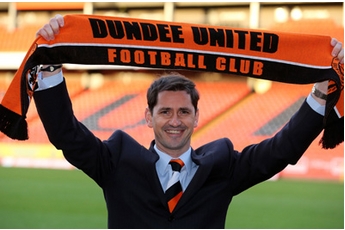
Trading Up – McNamara jumps ship and heads for Tannadice
Just as the ever-echoing knell of Scottish Football’s funeral bell seemed to be resonating louder than ever, up pops Stephen Thomson with a timely shot in the arm that could, and indeed should, transform the fortunes of one of the country’s biggest clubs this season.
It’s been a funny old season so far in Scotland’s top flight for several reasons, most apparently the absence of one half of the Old Firm. When the news first broke that there’d be no Rangers in the SPL this season, one of the first questions that football fans began to ponder was ‘who’ll challenge Celtic for the title?’ You’d be forgiven for expecting Dundee United to be in with as good a shout as any, (at the start of the season of course).
Their dogged style, recent history of moderate success, and formidable squad (on paper at least) led many to believe that they were contenders. Without going into too much detail, it didn’t come to fruition, much to the frustration of the Arabs.
With Peter Houston at the helm this season, the club embarked upon a whole host of baffling signings, and an abominable run of form at Tannadice. Radoslaw Cierzniak apart, the signings were poor, and the Tayside club have recorded just two wins at home in the league. But with players like Johnny Russell, Gary Mackay-Steven and Jon Daly to call upon going forward, there’s no way the club should be languishing behind ‘smaller’ clubs like St Johnstone, Motherwell and Inverness Caley Thistle (as impressive as they’ve been this year).
When the friction between Houston and the board became too much and it became clear he’d be leaving, I did worry that we’d see some haggard or soulless Scottish Football journeyman being rolled out to act as a safe bet. Sometimes change is needed, and Stephen Thomson saw this.
The slow death Scottish Football is enduring is as a direct result in part to some of the unadventurous and fundamentally dull managers like Jim Jeffries, Bobby Williamson and Gus McPherson (to name but a few).
It would have been easy for Thomson to go down this route, but he’s taken a gamble on a young, passionate manager with a penchant for attacking football. I for one believe this gamble will pay off. Jackie McNamara ticks all the boxes.
He’ll command the respect of the players given the illustrious career he carved out despite not necessarily being the most talented player out there. McNamara, with a spot of good fortune and the right attitude on and off the park, won titles, played for his country, and played against some of the best players in Europe.
I’m confident McNamara will instil this idea of knuckling-down to reap rewards and punch above your weight in his new Dundee United squad. Are any of the less well-rounded, young players at United any worse than McNamara was at Dunfermline as a player? I think not. If Jackie can get across to his players that attitude outshines ability any day of the week, then there’s no limits to what his squad can achieve.
Plaudits rained in from all over the media for the success McNamara brought to his Patrick Thistle squad, and rightly so. His Partick side has lost just once at home this season, and can go top of the First Division if they win their two games in hand over Greenock Morton. This, combined with steering his team to the final of the Ramsdens Cup, drew in big crowds, sometimes upwards of 5,000.
Football fans vote with their feet. If the product on the pitch is good enough, the club won’t have to worry about empty seats. This was the case at Partick Thistle under McNamara, and Stephen Thomson will be hoping that his new manager’s passion attract fans back to Tannadice to cheer on the Terrors.
No manager’s appointment guarantees success, and everyone at Dundee United will know that there’s a lot of hard work to be done over the next few months. That said, given the options available, there was no better choice than McNamara. For the good of the game in this country, I hope the new Dundee United manager transfers and enhances the same excitement he generated at Firhill, to his new employers 80 miles up the road.
Hats off to Stephen Thomson for being bold enough to try something bold, and good luck to the SPL’s newest manager, Jackie McNamara.
Where was I? Oh that’s right, Old Media killed Rangers…
I was brought up with a newspaper coming through the letterbox every day in our house. We had a big family and it got passed about. We knew it was biased in places but we were intelligent enough to read between the lines and find the truth. I was a paper delivery boy for years too, I did the same round Joe Jordan did. I remember getting a bollocking for delivering the Evening Times Saturday night copy late because I had been at Pittodrie that day. When the internet came along it opened people’s eyes. It became quite clear the newspapers were feeding us lie after lie. Unsurprisingly, circulation numbers began to dwindle. Now I don’t miss them. On my commute to work I can pick up fresh news, with interactive moments from various sources. Right now I would never dream of picking up a ‘red top’. Why would I pay to read the jaundiced words of Traynor, Keevins and Hateley? Before this era they were the only show in town, empowered by their own ego and their words were given credence. Now? In this internet age (which they seemingly can’t understand) they have been shown up as dinosaurs, and their meal ticket has run oot.
Not only did the Old Media kill Rangers; they killed themselves.
Take the floor shiny New Media. New Media is people led, fan led. It sets the agenda and it runs with it. In this current ‘internet age’ someone can have a good idea and it can gather pace and spread like wildfire. If it strikes the right chord, it’ll run and run instantly. The best example of this is the well known Twitter account, “Rangers Tax Case”. It came into being due to Old Media not only ignoring the biggest sporting swindle to ever hit these islands, it denied, obfuscated, and deflected too. Ordinary people had concerns, a blog aired these concerns and very quickly, a light was sparked and everyone did some digging, shared information and made informed decisions.
For months and months the mainstream media ignored these new findings. Things that had been dug up about Craig Whyte not having ten bob and a packet of fags, the Ticketus scam, the crumbling steel empire of Murray, the proof of dual contracts. The mainstream media denied it all, paving the way for the illuminating light of New Media. This name in itself is misleading in the context of the old. New media is everyone connecting, sharing views and opinions and quickly realising that contributors were far more resourceful and intelligent than their antiquated predecessors. Obviously Celtic fans had the most reason to investigate but they were joined by fans of other teams and fans of fairness and justice who were similarly fed up by the open corruption and bored with the SPL cabal that hadn’t seen the league trophy leave Glasgow in over a quarter of a century.
Instead of buying a newspaper that was already redundant by the time it hit the newsstands, purveyors of New Media could read these articles immediately online, and within minutes form and dissipate this opinion to others, often hilariously. By use of Twitter articles can be easily aired, derided and parodied by fans of all teams. Rangers Tax Case led to Celtic tax case, Aberdeen tax case and St Mirren tax case… all with their own humorous contributions.
After year upon year of comedy reporting that had now been shown up for the joke that it was, the New Media fearlessly put the boot in, and what a wealth of material to choose from. Craig Whyte was openly lampooned which was like shooting fish in a barrel. The ‘Mr Custard’ debacle where Rangers Fighting Fund proceeds were transferred via Paypal to a clown was like something off Chucklevision. I’m purposely not naming names as would lead to cracking contributors being left out but in the midst of Old Media being dire, Joe Public was left to fill the void…and some humorous, well informed minds carried out this task. Each mention of “warchests” was derided. The comedy administrators Duff & Duffer equally got it for their shambolic dealings, as well had their long time conflicted interest in the case. Some clever peeps with too much time and too much Photoshop knowledge were given instant audience and infamy. Comedy “in denial” utterances from the “flat earth society” were also instantly shared with great glee. But amidst all the fun and joviality there was a serious and important message being shared.
From the old MSM claims of “nothing to see here” about the tax case (which bizarrely enough are now officially named as “the big tax case” and “the wee tax case” by all after being christened so on rangers tax case.) to “Craig Whyte is minted”…..we had Rangers in administration on Valentine’s Day, lying talk about being back out of admin for euro qualification, we had lying talk in the press about a CVA being do-able it quickly became clear that the only way to get near to the truth was New Media blogs, and twitter feeds from the footballing family.
Even now we are still being fed lies. Apparently Rangers didn’t get liquidated and are still in existence? Apparently the whole of Scottish football is going to hell in a handcart because “the peepul” aren’t there to scrape their knuckles across the landscape. So all SPL teams aren’t reporting record season ticket sales due to this cancer being cut out of the game?
I genuinely think this is a watershed moment for Scottish football. The schoolyard bully has been given a severe doing, the prefects who looked on have been similarly given a bloody nose. Scottish football has been given a shot in the arm due to new enthusiasm, lower league teams will see their exposure and coffers swell, SPL teams will have a better chance of silverware and there also seems to be a new found sense of “chumminess” between clubs over denying the passengers who wanted to keep the status quo and who served notice on their clubs guardians.
So here we are, Armageddon didn’t happen. Sky is still paying as it was, ticket sales are up and we’re all friends…the future’s so bright, I gotta wear shades!
The decision to offer Dundee FC a place in the SPL appears to offer a welcome release from the maelstrom of committees, board meetings and legal chicanery that has consumed the thoughts of many during this dreich Scottish Summer of sport. It offers an opportunity for fans of all teams to focus on summer transfer windows, pre-season friendlies, and, perhaps, foster a wee bit of cautious optimism about what the season ahead may bring. Maybe the dust will settle a little and we can concentrate on the football.
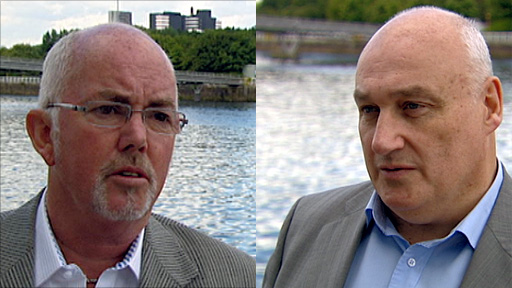
However, while it is undoubtedly healthier to look forward with positivity to the new season, it is necessary to get several things in order if this is not to become yet another missed opportunity to address the parlous state of the game. There are many issues that need looked at from a change point of view, none more so than the role of BBC Scotland’s sport department going forward.
The now notorious inability of a vast rump of the Scottish football media to ask questions of David Murray for fear of being banished from the vineyards, private jets and oak-paneled offices is an embarrassment that will haunt many hacks for as long as they continue to eke out an existence in the media. Many key players at the BBC were not immune from this. Similarly when Craig Whyte emerged from the shadows (with a questionable CV to boot) the prevailing practice of parceling up PR-swill while avoiding asking difficult questions continued. On the evidence so far, and with a few notable exceptions as detailed below, Charles Green hasn’t exactly getting the roughest ride either.
Chick Young and Jim Traynor – Purveyors of questionable coverage?
It is arguable that the senior management at BBC Scotland’s Sportsound conducts a fundamental and radical review of the makeup of their broadcasting team for the forthcoming season. While some have enhanced their reputations with an honest and even-handed approach to the protracted saga (Jim Spence and Richard Gordon spring to mind) others, such as the laughably lightweight Chick Young and the deliberate mendacious Jim Traynor are surely redundant. Young’s grasp of the story is weak and ineffectual. Traynor, meanwhile, has brought nothing to BBC Scotland’s sports output bar a hectoring, bullying, sneering, doom-mongering style that has many listeners reaching for the off-switch.
Traynor can write what he likes in his newspaper (which given the latest circulation figures appears to be living on borrowed time ) but I am sure many license-fee payers resent his views being rammed down their throats in the sake of ‘parity’ or ‘balance’. A slavish desire to see the status quo remain purely out of self-interest has been has main contribution to the debate. Surely this propagandist has no place in a key forum for debate on the issues going forward?
Jim Spence and Richard Gordon, conversely, are notable for the way that they have made room for nuanced arguments. They have focused on complex issues, have tried to make sense of wildly conflicting information and synthesize it into something meaningful for the listening audience. They’ve asked the difficult questions, engaged widely with fans on social media and largely understood that fans are now better informed, more connected, and, with worthwhile opinions (compare that to the loathing of ‘internet bampots’ that you get from Traynor).
It is vital that all those with an interest in the future of Scottish football ensure that the mainstream media charged with holding authorities to account ask the questions that we want asked and provide informed analysis/opinions. Where the pundits are not fulfilling that role then others must be offered the opportunity. Punditry should not be a job for life, it should be determined by an ability to ask the right questions, no matter how uncomfortable those may be, and, a demonstration of sound interpretation of events. The days of the two-dimensional Traynor autocrat or the sycophancy of Young are gone. While social media has radically altered the media landscape by increasing connections, relationships, and, the democratisation of information, it is important that those in charge of the BBC Scotland Sports department fulfill their commitment to serve in the public interest. Weak scrutiny has failed us in the past; it should not be allowed to happen again.
Given the high profile incidents in football regarding censorship of songs and banners, Celtic supporters club, ‘The Celtic Trust’ have responded with their opinion on how things stand at Celtic, why there’s no need for draconian law enforcement, and why Celtic always has, and always will be a club that opens it’s doors to all.
Let the people sing?
Before every home game at Celtic Park the Stadium announcer reminds us that “Celtic was foundedin 1888 as a club for all”, and invites us to remember and celebrate that heritage. I imagine that all Celtic supporters are happy to do just that, but recent events have shown that there is sometimes a wide gulf between aspiration and realisation. The main problem with being a member of such a ‘broad church’ is that the legitimate opinions and views of each member have to be respected and accepted even by those who might hold contrary views and opinions. That does pose problems for some supporters and indeed for the Club officials, the very people who presumably sanction the match day announcement. It is no easy matter to embrace Voltaire’s maxim “I disapprove of what you say but I will defend to the death your right to say it”. It is challenging, and for some, a bridge too far.
Differing opinions are part of the very fabric of football. Put a dozen football supporters in a room and they will come up with a dozen different opinions. Growing up in a Celtic supporting family and living close to Celtic Park, I have abiding memories of uncles and other male relatives congregating in our house around tea-time on home match days (before the days when women at football was as widespread). Discussion mainly centred around that afternoon’s match and regularly one of those present would demand of another with whom he had walked to and from the ground and stood beside on the terracing “Wur you even at the gemme?” Ah yes, reasoned debate was alive and well!
Add to these historic tendencies the implications of the recently passed draconian “Offensive Behaviour at Football/Threatening Communications” legislation and we entering into uncharted waters. The trouble with concepts like “offensive behaviour” is that like individual viewpoints it is very subjective and open to many interpretations. For example UEFA, admittedly aided and abetted by one of Strathclyde’s finest (and perhaps a certain Chief Exec.) deemed as ‘illicit’, one phrase in a nonsense song, while the serried ranks of the Strathclyde force failed to find anything offensive or illicit, in 120 minutes of sustained sectarian/racist chanting and indeed had their Assistant Chief Constable and a government minister laud the wonderful atmosphere created. I don’t know why but the words “double standards” spring to mind!
Now something I personally find offensive is the current assault on the English language and in particular the use and abuse of a word which was originally a verb but is now used as a noun, an adjective and indeed any other part of speech you care to name. You know the one I mean…starts with an ‘f’ ends with a ‘k’, has four letters..aye that one. It is heard on every street, every bus, in shops, during most conversations, and even, I suspect within Lennoxtown and the hallowed corridors of Celtic Park. Yet when that word appeared on a banner in an Italian football stadium it unleashed a great wave of shock and hysteria. Now I happen to think that the aforementioned banner was at best ill advised, and at worst, like the word itself, crass and inappropriate, but it did not merit the hysterical, hypocritical, and completely disproportionate reaction and from the same folk who seemed happy to accept, without challenge or sanction, unfounded accusations against their own fans made by our national broadcaster.
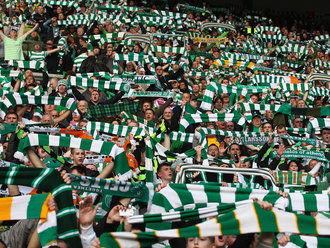
And of course the banner was blamed on the much maligned section of the Celtic support, The Green Brigade. I do not know to what extent this group were responsible, if at all. However one thing I am sure of is, that without the Green Brigade, the match day experience at Celtic Park would be much poorer, dire even. They bring colour and noise and support the team no matter what kind of football is being served up on the pitch. If the thunder has returned to Celtic Park it is largely due to them. And it is great to hear songs about individual players re-emerging, something which has been sadly missing since the days of the King of Kings and Big Bad John. Oh there was the one about the Holy Goalie, I suppose, but didn’t it contain that dreaded word as well?
Much has been made of other songs sung by the Green Brigade and this has has given rise to debate on what songs may or may not be appropriate in a football setting. My view is that we are often told that we are all members of the ‘Celtic Family’, and in my experience the best families sort out any problem and reach a consensus within the family. We do not want or need those from outside who have no concept of, nor any empathy with, our origins and heritage to impose their views on us. Nor do we need that imposition to come from Club officials who seem to think that by dancing to the tune of these outsiders they will gain their acceptance and favour. Poor deluded souls that they are! Don’t they know that sufferance is the best they can hope for and even that will be grudged?
I suggest that it is now time for all who love Celtic and have the well being of the Club at heart to engage in this debate. To ensure that this is successful we must respect and tolerate all shades of opinion and it may be that each of us will have to give a little to gain a lot.
Celtic was formed out of an impoverished marginalised community but those people had the vision and the humanity to include everyone. Surely we, inheritors of that vision have the capacity to find a consensus which recognises our origins and history while at the same time excludes no one from ‘Glasgow’s green and white’?
Long suffering Aberdeen fans could have been forgiven for releasing a sigh of release when Craig Brown took over from the disastrous tenure of Mark McGhee.
Under McGhee, the Dons found themselves as prime candidates for relegation from the SPL, after winning just 3 games from the opening 15 of the season. This horrendous run reached its’ destructive epicentre in a 9-0 drubbing at Celtic Park. Aberdeen’s biggest problem has been a lack of cohesion in the squad, and a failure to competently handle simple set piece situations like corners and free-kicks. Despite Brown’s vast experience, and fantastic time of it at Motherwell, it looked at one point as though he’d never get it right at Pittodrie.
Although Brown’s arrival failed to reverse the club’s fortune’s initially, it now appears, after just over a year in the job, he’s finally starting to get it right. The Dons are currently sitting 6th in the table, and have lost 10 of the 25 matches they’ve contested in the league this season. However, of those 10 losses, just two of them have been more than a single goal (3-0 loss to Hearts and 2-0 loss to Kilmarnock earlier in the season)
Given the high number of narrow losses, Brown’s men were again faced with the very real threat of relegation. Losing three matches in a row at the start of the season, and a run of no wins in 4 matches in October left the Dons rooted to the bottom of the SPL. Despite the short term nature of their time at the bottom of the league, it looks as though alarm bells began to ring, and an inspirational, but simple transfer policy was to ensue for the approaching window.
Far from the notion of the ‘marquee signing’, Brown entrusted his transfer budget and the hopes of the Aberdeen to a quartet of journeymen, a quartet that I believe will cement the club’s position in the top 6 of the SPL. In came ex-Motherwell starlet, Mark Reynolds, former Aberdeen hero Russell Anderson, the once forgotten man of Rangers, Gavin Rae, and another ex-Ger, Stephen Hughes.
Mark Reynolds has been loaned back to rejoin the man who brought him through at Motherwell. Reynolds, despite still being a young at 24 years old, played 166 times for Motherwell, was on the verge of a Scotland call up, and attracted serious attention from both halves of the Old Firm and a couple of Premiership clubs. Somehow the move to Sheffield Wednesday didn’t quite work out for the player, but under Brown, only a fool would bet against him recapturing the form that led to the player being proclaimed by many as one of Scottish football’s hottest prospects.
A somewhat surprising homecoming for Russell Anderson was also arranged by Aberdeen’s wily manager. Anderson is no spring chicken, but the likelihood is that his vast experience will shore up the defence and help eradicate the aforementioned defensive frailties that have been synonymous with the Dons in recent years. 33-year old Anderson returns to the north of Scotland, where he played 280 times before. He has experience at the top level, playing for Sunderland in the Premiership, as well as Plymouth, Burnley and Derby down south too. Deservedly, he’s picked up 11 caps for the Scottish national side, a figure that many believe should be considerably more given the player’s formidable record.
Brown made another unexpected swoop for Dundee’s Gavin Rae. After a failed spell at Rangers and a productive time at Cardiff, many expected Rae to see out the remainder of his career, quietly playing in the Scottish First Division. However, anyone who’d took the time to watch Gavin Rae in recent times will have observed his resolute positional sense and shrewd passing ability. Rae, at 34, has perhaps lost a yard of pace, but again his experience and ability to retain possession against the very best opponents that the Scottish league has to offer will surely make him a hit at Pittodrie.
Last but not least, industrious midfielder Stephen Hughes. Still under 30, Hughes burst on to the scene at Rangers, and was a surprise departure for many of the Ibrox faithful as he went to ply his trade at Leicester City. Hughes also spent time working under Brown at Motherwell, in arguably his most successful spell of his career. More experience in England came for the player at Norwich for two years, and a short spell at MK Dons brought the player’s time down south to a halt. Hughes failed to make an impact under Stuart McCall in a second spell at Motherwell, before Craig Brown made a move to bring the player to Pittodrie. Hughes will no doubt slot nicely into the Dons’ midfield, as Brown again opts for something of a safe, ‘tried and tested’ player to plug the gaps in a once leaky and inefficient midfield.
These four experienced signings will make up a significant portion of the collective group that’ll galvanise Brown’s Aberdeen side; the remaining key factor in my opinion is the goalscoring prowess of Scott Vernon. It seems to be overlooked by many that Vernon has made the net bulge on 10 occasions this season, a figure that’s no mean feat for a side who’ve been languishing in the bottom half of the table for much of the season. Vernon will no doubt see his spirits lifted by the arrival of the three journeymen, and things are indeed looking up for Aberdeen, as the club remain unbeaten in the month of January.
A further cushion this season for the Dons will be the continuing shambles that is the league form of Hibs and Dunfermline. They’ll be the two clubs who’re fighting it out for the drop this year, not Aberdeen. Brown’s transfer strategy will tide them over this season, and perhaps another, but if Aberdeen are to become the club they have the potential to be, their strategy of player development and transfers will need to change again. The Dons will weather this storm and in my opinion, hang on to the top six place that has eluded them in recent years, but Brown’s biggest challenge will be to propel this sleeping giant of Scottish football back to its’ rightful place, up knocking on the door of the Old Firm for honours.
Introducing the newest opinion columnist here on Hit The Byline: Ewan McQueen. Have a read below at Ewan’s first piece, as he asks if St Mirren could be a leading light for the SPL.
It cannot be denied that Scottish football is facing a crisis and has been for some time. Fans are drifting away, the quality of players on show and the standard of play in general has considerably decreased in the last few years. Needless to say, once again our national team won’t be at a major finals this summer either.
However, amidst the darkness shines one beaming light. St Mirren football club.
No, you’re not dreaming, you have just read that. This season for me, the usually unfashionable Paisley side have led the way in trying to kick and drag Scottish football into a new way of playing and thinking.
Despite sitting 8th in the Scottish Premier League, I have been thoroughly impressed with how Danny Lennon’s side have gone about their business this season. Come May, I wouldn’t be surprised to see the Saints sitting in the top six of the SPL.
And how will they achieve this? Simple, by sticking to the easy on the eye football that’s been a joy to watch for football fans across the board. The attacking style has clearly found favour with the St Mirren faithful, but has also won plaudits from fans from all corners of Scottish football.
When Danny Lennon was appointed St Mirren manager before the start of last season, many eyebrows were raised as he had only ever managed Cowdenbeath in the lower leagues and many questioned whether he could make the step up to Scotland’s elite division.
That said, he had led the Blue Brazil to successive promotions, and with St Mirren having stagnated somewhat under Gus Macpherson, some saw it as a fresh and bold appointment.
But in his first season (2010/11), Lennon struggled and just as under Macpherson, the Saints once again found themselves in the relegation mire, with only Hamilton saving them from a return to the First Division.
Last season, Lennon won just 8 games. This season in only 22 he has already won 6 and that number is unlucky not to be significantly higher. So what has changed?
To put it simply, last season Lennon didn’t have the quality of players to allow him to play slick, attractive football. Now, having made some shrewd summer signings, Lennon’s original vision of where he wanted to take the Paisley club is starting to become a reality.
Although there have been inevitable disappointments along the way, Lennon has started to dramatically reform St Mirren during 2011/12, and all of Scottish football could learn something from his team.
In every game this season, no matter who they have played or what the conditions have been, thanks to their manager, St Mirren have attempted to play a passing game. Of course, there have been some high-profile errors by doing this. (Such as Craig Samson, the goalkeeper, even trying to play football and letting Hibs striker Leigh Griffiths nick in for a goal)
However, it is has been very pleasing to watch. Along with Kilmarnock and to a certain extent Motherwell, it’s good that teams in Scottish football’s top league attempt to play ‘The Beautiful Game’ the way it was intended to be played.
But for me there are other aspects of St Mirren that make them the so-called leaders of this small ‘revolution’. As I pointed out before, in the summer Lennon made some excellent signings that took me and many other Scottish football observers by surprise.
Lennon blended the mix of youth and experience perfectly. He signed experienced former Scottish internationalists Steven Thompson and Gary Teale, whilst picking up promising youngsters Paul McGowan and Nigel Hasselbaink in other pieces of good business.
What Lennon also did, was get rid of players that clearly weren’t going to fit into his new vision for the club such as club captain John Potter and strikers Craig Dargo and Michael Higdon. Ruthless and brave, yes, but he has been proved right in doing so.
As well as this, Lennon brought through one of the hottest young talents in Scottish football, Kenny McLean. Along with Paul McGowan, McLean has terrorised defences with marvelous trickery and creativity. Both are now said to be on Craig Levein’s Scotland shortlist and in my mind that is well deserved.
Let’s not forget that McLean and McGowan are what you term in Scotland “wee men”. They could be seen as the Xavi and Iniesta of the Buddies, by some at least.
Now before you say the men in white coats should be coming for me, I’m not saying they are as good as the Spanish duo; merely more managers should be giving young players with the ability to out-fox defences rather than just lumping it to a 6ft 4 targetman all the time. Only then in my view, can Scotland start to have a bright future.
Let’s not forget Danny Lennon is a young manager, at the age of just 41. Experience can be so vital in the game, I won’t deny that (Lennon himself made a very good move by appointing 61 year old Tommy Craig as his number 2). But the SPL was beginning to stagnate under the constant revolving door of management opportunities for outdated and exhausted managers like Gus McPherson, Craig Brown and Jim Jefferies to name but a few.
That raw energy of young managers can also help players who take that out onto the pitch. That has happened this season with Lennon, who always promotes a positive message and through the aforementioned McGowan and McLean plus other such as Aaron Mooy and Jim Goodwin (also both his signings), St Mirren are a real threat to any defence in the SPL, as the current Scottish champions have found out the hard way.
It would be criminal not to mention the Saints superb team goal at Ibrox, where despite being 1-0 behind in the last minute, they stuck to their passing principles right from the goalkeeper Samson to the striker Thompson – where the rewards were justly reaped.
Samson started the move and after a couple more passes it was moved out to David Van Zanten on the right wing who crossed for Steven Thompson who swept home against his former club. It’s well worth a watch if you haven’t done so already.
So I say, let’s hear it for St Mirren and their new found philosophy. Long may it continue and I hope it spreads throughout Scotland. In a time of constant re-invention of the Scottish game, the teams in the top flight could do a lot worse than take a leaf out of the Buddies’ book.
Got an opinion on the article above? Let us know by leaving a comment below.
You’d think that there’d be no better judge of striking ability for Celtic to call upon than the Swedish sensation, Henrik Larsson. Larsson’s name will forever echo throughout European football as a great of the game, but did Celtic’s ‘magnificent’ no.7 get it wrong when it comes to the signing of Mohammed Bangura?
On the 30th of August last year, Neil Lennon’s side splashed the cash to the value of £2.2million on AIK’s highly regarded Sierra Leone international, Mohammed Bangura. The Parkhead faithful salivated at the thought of another forward with the guile of Larsson, but 4 months in Bangura has yet to find the back of the net.
Ironically, at the time of his signing, AIK also had another ‘Bangura’ on their books. Teteh Bangura (no relation) plays the same position, is the same age, and the same nationality as Mohammed. However, the similarities end when it comes to on the field matters.
Both Banguras played together at Kallon, and remarkably, Mo was the more prolific of the two, netting a remarkable 39 times in 58 appearances. Mo, after a semi-successful spell at AIK, made the move to Celtic, while Teteh proved to be the Bangura who was ‘banging’ in the goals.
Teteh scored a superb 15 goals in 17 appearances for AIK this season, before making the switch to Turkish top-flight club Bursaspor. Since his switch to the Super Lig, Teteh has managed 3 goals in 9 appearances. This clearly is a dip in conversion, but given that Bursaspor are fighting against relegation, his haul for the season still remains decent.
Mohammed however, looks as though he’s finding it a little tougher to find his form. He’s turned out on 12 fruitless occasions for Celtic (granted that only 1 of these has been a start). Altogether, he’s played 5.5 hours of football for the Glasgow giants, and it would seem as though he’ll not have long left to convince Neil Lennon or the Celtic fans that he’s the man for the job.
Match
Time on the field
Date
Details
1
23 mins
10/9/11
4-0 win over Motherwell
2
9 mins
18/9/11
4-2 loss against Rangers
3
14 mins
21/9/11
2-0 win over Ross County
4
39 mins
24/9/11
2-0 win over ICT
5
90 mins
29/9/11
1-1 draw against Udinese
6
59 mins
2/10/11
2-0 loss against Hearts
7
45 mins
15/10/11
3-3 draw against Killie
8
3 mins
20/10/11
1-1 draw against Rennes
9
27 mins
26/11/11
5-0 win against St Mirren
10
1 minute
10/12/11
1-0 win over Hearts
11
9 mins
15/12/11
1-1 draw against Udinese
12
11 mins
18/12/11
2-0 win over St Johnstone
Total : 330 minutes (5.5 hours)
Points can be made for and against Mo Bangura’s performances. He’s young, and has a history of goalscoring. Perhaps Celtic’s style of play isn’t utilising his ability in the best way? Take the recent form of Giorgios Samaras for example. Six months ago, the Celtic support were almost unanimous in the opinion that the player wasn’t a valuable asset to the club. Now, after a stint as more of a floating left-sided forward, he’s scoring goals and causing problems to top clubs in the Europa League. I also seem to remember John Hartson taking around 8 or so appearances before he got that Parkhead goalscoring monkey off his back.
On the negative side, even the most run of the mill Celtic strikers throughout the ages have managed a decent goal scoring record. Andy Paton, Darren Jackson, Tony Cascarino, Marc-Antoine Fortune, and even the much ridiculed Harald Brattbakk notched up a decent tally – so why is this £2.2million acquisition seemingly incapable of doing the same?
The clock is ticking for Bangura. As a Celtic striker, the pressure is on, by hook or by crook to score goals. Not all strikers get to make a dream start, in such a way that the likes of Jorge Cadete did in his debut against Aberdeen. The approval of such a legend as Henrik Larsson doesn’t come lightly, but with the SPL title looking to go down to the wire, and with Lennon in the market for another striker, Bangura’s time to find his form is of the essence.
As the ever controversial Vladimir Romanov era erupts again with stories of unpaid wages and players going on strike, the Jambos fans could be forgiven for reminiscing over happier times. The club’s last major coo was securing the 2006 Scottish Cup. Hitthebyline takes a look back at that successful Hearts team, and reveals where they are now.
Goalkeeper – Craig Gordon
The biggest success in this Hearts team; and the most expensive Jambo in history, Craig Gordon’s career continued to flourish after the success of 2006.Gordon played 139 times for Hearts, and is the youngest player ever to be named in the club’s Hall of Fame (aged just 24 at the time). The year after the Scottish Cup triumph, Sunderland broke the UK transfer record for a goalkeeper by signing Gordon for £9million. He’s been capped for Scotland 40 times, and played 87 times for Sunderland, despite falling out of favor on occasion. Serious injuries have hampered his career progress (in particular an 8-month layoff as a result of knee surgery) and the player has found himself surplus to requirements with the Black Cats. The arrival of Martin O’Neill at the club may positively impact his fortunes, but as it stands, the player’s contract is due to expire in the summer. Celtic and Arsenal are known to be interested in the player, and at just 28-years of age, Gordon’s best years are clearly still in front of him.
Defender – Robbie Neilson
After 13 years and 200 appearances for the Gorgie club, Neilson set off in search of a new challenge in 2009, ending up at Championship club Leicester City. Neilson was at the mainstay of Sven Goran Eriksson’s promotion challenging side in his first year at the club, making 19 starts that season. However, things too turned sour for Neilson as his first team opportunities were restricted to just a handful in the coming years.In February of this year, he was loaned out to League One club Brentford, where he made 15 appearances, the highlight of which was the Football League Trophy final (where the London club narrowly lost to Carlisle). Neilson was released by Leicester in May, and trained briefly with Falkirk and Burton Albion before making a welcome return to the SPL, joining Peter Houston’s Dundee United. The experienced defender has failed to capture the form at Hearts that endeared him to the fans and saw him capped for Scotland, but at 31-years old the player does have a few years left in him at the top level. Away from the field, Neilson has recently been banned from driving after being clocked at 106mph.
Defender – Steven Pressley (c)
The Scottish Cup victory proved to be the swan song of Pressley, as the infamous spat with Vladimir Romanov came to a head in the months that followed the final.After a phenomenal 271 appearances for Hearts, Pressley made the surprise switch to Celtic, having rejected offers from Championship sides Derby County and Charlton.Pressley was a formidable presence in the Celtic back-four, and went on to captain the side on several occasions.The highlight of his time in Glasgow’s East End was a Scottish Cup win in 2008. This etched Pressley into the history books as the first player to win the Scottish Cup with three different clubs. When his contract expired at Celtic, Pressley trained with several clubs to keep up his level of fitness, before signing a short-term deal with Falkirk. Upon his retirement as a player, he was handed the assistant manager’s job at Brockville, and eventually became the manager. ‘Elvis’ has had his ups and downs as a manager, but now seems to have turned the corner. In his first season he saw Falkirk relegated to the Scottish First Division, but he now has assembled a young team playing attractive football and challenging for promotion. Pressley is now regarded as one of the up and coming Scottish management talents, with many a close eye watching his progress.
Defender – Ibrahim Tall
This big Senegalese defender’s move to Tynecastle was fraught with controversy, as then manager George Burley had the player added to his squad against his wishes by owner Vladimir Romanov. Despite earning a huge £8,000 per week at the time, Tall spent much of his time on the bench or in the stand, appearing just 35 times in 3 years. In the 2005-2006 season he formed a strong central defensive partnership with Steven Pressley. Despite the relative success, the player was released in 2008 and signed for newly promoted Ligue 1 side FC Nantes. Tall was a regular in this side before making the move to Greece in 2010 to play for Larissa (not long after another SPL export, Maciej Zurawski, had parted ways with the Greek outfit.) Tall remains with Larissa to this day and is a regular starter under manager Chris Coleman .
Defender – Takis Fyssas
The capture of Fyssas’ signature was indeed a signal of intent as a resurgent Hearts then aimed to break the stranglehold of the Old Firm in Scottish football. The big Greek defender made a surprise move to Hearts from Benfica in 2005, at a time when clubs in the Bundesliga and English Championship were interested in the player. Fyssas was an integral part of the remarkable Greek triumph at Euro 2004, making his signing all the more impressive. He arguably peaked during his time at Tynecastle, both in terms of the standard of football he was playing at club level, and also that the player earned the majority of his 60 caps for Greece around that period of time. In 2007 he left the Edinburgh club in favour of a move to Greek giants Panathinaikos. After only a handful of games, Fyssas decided to retire and take on a coaching role with the Greek national side. He is currently the technical director of the Greek Football Federation (Hellenic Football Federation) based in Athens.
Midfielder – Deividas Česnauskis
A popular trait of the Romanov early years was to import several players from FBK Kaunas, one of which was Česnauskis. The Lithuanian’s contribution to the successful Scottish Cup campaign was notable, in that he scored the winning goal in a 2-1 win over Partick Thistle in the quarter final. Česnauskis appeared 68 times for Hearts in 4 years, but fell out of favour towards the end of his time in the capital.Due to injuries and poor form, the player found himself not featuring for over a year at Hearts, andeventually chose to leave in 2009, signing a two-year deal with Greek minnows Ergotelis. After a year there, he switched to Aris FC (also of Greece). The move again didn’t work out for the player, who’s since made an unusual move to the Azerbaijan Premier league outfit FC Baku. Česnauskis’ Scottish Cup winners medal has proved to be just the second honour of the player’s career, after winning the Russian Premier League with Lokomotiv Moscow in 2004.
Midfielder – Bruno Aguiar
Another Kaunas import, Bruno Aguiar, made his move to Hearts after finding himself bereft of opportunities at Benfica, and failing to secure a permanent move after a couple of loan deals in Portugal. Aguiar played an important part in the 2005/2006 SPL campaign run-in, having only joined the club in January 2006, he strung together several impressive performances, assisting Hearts to narrowly secure 2nd spot in the SPL, displacing Rangers by a single point. At the start of the following season, things soon went wrong for Aguiar. The midfielder was sent off in the Champions League qualifier against AEK Athens, and only weeks later he suffered a horrendous ankle injury that kept him out the game for 18 months. Aguiar was told he may never play again, but still managed to return and champion the Edinburgh club’s cause. The Portugese playmaker returned to action in October of 2008, managed to win the SPL player of the month award for December, and ended up as Hearts’ top scorer for the season with 7 goals. In 2009 his contract expired and he joined Cypriot side AC Omonia, where he’s become a fantastic success to this day. Aguiar has continued to endure injury problems, but played a huge part in helping Omonia to win the Cypriot League and Cup double last season.
Midfielder – Paul Hartley
Industrious midfielder Paul Hartley became a household name during his time at Hearts (2003-2007) after moving from St Johnstone on a free transfer. His tenacious, rugged style of play attracted plaudits from the Old Firm, major clubs in England, and kick-started his international career. The player went on to play 25 times for Scotland, and appeared 118 times for Hearts, scoring 31 times in the process. Although usually a reliable player, Hartley found himself on the receiving end of a red card in the 2006 Scottish Cup final. Possibly his most memorable match for the Jam Tarts was the Scottish Cup semi-final against arch-rivals Hibernian, as the Scotsman scored his first hat-trick as a professional footballer in a 4-0 mauling at Hampden. Another impressive year was spent at Hearts before Celtic took the plunge and purchased the player for £1.1million. Then Celtic manager Gordon Strachan was a huge fan of Hartley, usually deploying the player in a defensive ball-winning midfield role. His highlight in Glasgow was helping to guide the club to the SPL championship in the 2007-2008 season, where the Bhoys had to (and subsequently did) win all of their remaining 8 league fixtures, two of which were against Rangers, to clinch the title. In 2009, new Celtic manager Tony Mowbray released Hartley, and the player joined Bristol City for a single season. Hartley scored in his debut and held his own for the Championship club, but cited a desire to return to Scotland as the catalyst to join Aberdeen the following season. At 34-years old, time was against Hartley, but he was nonetheless appointed club captain, and scored a hat-trick of penalty kicks in his debut for the Dons against Hamilton in a 4-0 win. He turned out 24 times for Aberdeen during the 2010-2011 season, but decided to retire from playing after suffering a medial knee ligament injury. Hartley is currently the manager of Scottish 3rd Division side Alloa Athletic. He’s guided the team to the top of the league after 17 games, having lost just twice, and has registered himself as a player (despite as yet never picking himself, and previously saying he’d retired), so the fans of the Wasps met yet see Hartley pull on the boots in their fight for promotion into the 2nd Division.
Attacking Midfielder –Rudi Skacel
Cultured Czech international Rudi Skacel is the only player of the 2006 starting XI who currently still plays his football at Tynecastle. The Scottish Cup final win was to be Skacel’s last game for Hearts before joining up with former Hearts manager George Burley at Southampton, after his stellar form attracted a £1.6million bid from the Championship club. Skacel found himself being deployed mostly as a left-back to fill the void filled by the departure of Gareth Bale to Spurs. He appeared 81 times in 3 seasons for Southampton before three somewhat fruitless transfers to the continent. The first of which was a loan deal, taking him to Hertha Berlin. Here the talented attacker played 16 times but didn’t convince the Germans to splash the cash and bring him in on a permanent basis. Southampton found themselves relegated, and to save cash, Skacel was one of many players who was released. Next up was a move to his former club Slavia Prague, but Skacel made just 5 appearances before being released, and picked up by Greek side Larissa. This deal too didn’t work out for the Czech as his chances were limited to just 7 appearances before Hearts made the bold move to resign the player for an undisclosed fee in 2010. A return debut made in heaven was to ensue, as he scored against Rangers. Since then, he’s been a regular in the Hearts team and recaptured the form that attracted a wide range of attention in the first place. The long term future of Skacel looks extremely unclear, as Hearts financial problems continue to mount up, and the player’s contract is due to expire in the coming weeks – it may well be the case that Rudi Skacel’s time at Hearts is about to come to an end.
Striker – Roman Bednar
The tall figure of Roman Bednar was a revelation during his time at Tynecastle,finding a knack of scoring in big games regularly. Bednar netted on his debut against Kilmarnock, scored the only goal in a 1-0 win over Rangers, and netted a brace against Celtic at Tynecastle in a 2-1 for the Gorgie club (to name but a few scalps of his). The Czech international played another season at Hearts after the Scottish Cup win, before being snapped up initially on loan, then on a permanent basis by Championship promotion hopefuls West Bromwich Albion. The striker spent 3 seasons at West Brom, one of which in the Premiership, making over 100 appearances, and finding the back of the net 34 times. Bednar fell out of favour at the Hawthorns last season, and made a short-term loan move to fellow Championship side Leicester City. Following this, a £1.2 million offer from Bristol City was accepted for the tall forward, but he failed to agree personal terms and joined Turkish side Ankaragucu for the remainder of the season. Surprisingly, despite not being a regular starter, he’s agreed a contract extension at West Brom until the end of the current season. At just 28, there’s much hope yet for Bednar to make as big an impact on the game in England as he did in Scotland.
Striker – Edgaras Jankauskas
This well travelled striker didn’t stay in the one place for too often at all. His time at Hearts was a two-season long loan from FBK Kaunas, but this doesn’t begin to tell the story of his wealth of experience. Jankauskas turned out for no less than 16 different clubs in his professional career, including CSKA Moscow, Porto, Benfica, Nice and Real Sociedad. His experience and guile helped to no end during the 2005-2006 season, as the player, alongside the powerful Bednar, steamrollered through defenses regularly. His time in Scotland proved to be the last, significant length of time the player seemed settled at any club. At 6ft 4, his stature made him an ideal target man, but he only managed 9 goals in two years at the Gorgie club. The Scottish Cup winners medal belonging to Jankauskas will be dwarfed in terms of importance next to the Champions League winners medal he obtained during his time at Porto in 2004, and the Uefa Cup winners medal he won in 2003. His success with Porto to this day makes Jankuskas the only Lithuanian ever to have won the Champions League. His international career too was remarkable, representing his country regularly over a career spanning 17 years. After departing Hearts in 2007, he played half a season for Greek side AEK Larnaca. This was followed by more short term moves to Belenenses of Portugal, Skonto Riga of Latvia, Vilnius of his native Lithuania, New England Revolution of the USA, and finally FC Fakel Voronezh of Russia before retiring. It could be said that Hearts parted company at the correct time, as the striker managed on average less than 10 appearances per club, and less than 3 goals per club after leaving the SPL. Jankauskas now holds the rather unusual role of Assistant Manager/Translator for Lokomotiv Moscow, who finished 6th last year in the Russian Premier League.
Are there greater powers at work in Scottish football? The recent news that Scotland’s talisman and model professional Darren Fletcher has been struck down with a serious stomach bug, forcing him to take some time out of the game, has come at a time when Scotland has already been brought to its knees and is now lying spread-eagle face down on the ground, wondering where it all went wrong.
It would seem that the powers that be in that great boardroom in the sky have it in for this founding nation of the “beautiful game”. From fines to unpaid tax bills and wages and bullets to corrupt disciplinary procedures, the visible signs of a downward trend are obvious. Ex-politicians have been brought in to advise, wicket keepers appointed to keep the peace, all to no avail. Now it seems even our captain is the target of some misfortune from on high.
But who can blame the footballing gods for striking us down? If football was a religion and not just a direct substitution for one, as some would have us believe, there would be an inquisition and not just another investigation or review. A group of Europeans from Zürich would have landed on our shores, dressed in black robes with the FIFA logos emblazoned on their galeros, marching on all the shrines of football. Promptly they would round up the key instigators within the established rungs of Scottish football and subject them to all manner of interrogation before replacing them with their own cronies. After successive torture methods and years of imprisonment, the inquisitors would gather the followers of football together and proclaim “you are all guilty”. The criminals responsible for perpetrating all of the vile acts against Scottish football in recent times are the collective institution itself.
It is clear to see from the issues, controversy and debacle after debacle that all of Scottish football’s problems are self-inflicted. All stakeholders in the Scottish game have a joint responsibly to a greater or lesser degree. The alleged corruption within refereeing was a product of a flawed disciplinary procedure and complacent practices from an old guard of referees and an association unwilling to update its practices. The Rangers vs. Inland Revenue bout stemmed from mismanagement and a belief that Rangers Football Club was an untouchable icon of Scottish society. The actions of a mindless few, who tarnished the game throughout the 2010/11 season, were also a product of the society in which we live, operating at the extreme end of a sliding scale from 90-minute bigotry to serious offences that go far beyond rivalry and banter.
In more general terms, the falling attendances and revenues have long been an indicator of an overpriced and unsound product. Countless people speak about how the Old Firm can “charge whatever they like” for a derby ticket. However, surely the converse is true? Supply and demand? Scottish football is currently damaged goods and requires some significant price restructuring to encourage interest. Perhaps there should be a sign outside all stadiums: “broken, in need of repair –entrance half price”.
The SFA seem to be powerless to deal with issues in the game and have been overlooked by UEFA in imposing fines on both sides of the Old Firm. These teams play in a league governed by the SFA and should be disciplined for breaches in its code of conduct by the SFA. Instead, the SFA ignore it and UEFA have to intervene, undermining the strength and independence of Scottish football and its governing association.
Within the national team there have been several key events. Former captain Barry Ferguson and current favoured goalkeeper Alan McGregor both disgraced themselves with an all-night drinking session at the Cameron House Hotel and subsequently did themselves no favours by reacting and gesturing to the media and, by proxy, the fans. Aiden McGeady was also snatched from beneath the nose of the Scotland youth system.
Almost all up and coming Scotland players seem to be destined to veer off of the straight and narrow at some point in their careers. McFadden, O’Conner, Riordan and now Bannan – at what point will young players realise that the reason they are no longer reaching the height of previous Scots is that there are players out there who will outstrip them on every level both personally and professionally. They will train harder, get up earlier, study more, sacrifice more, drink less, cause less trouble and keep constraints on their ego. The players currently waiting in the wings have to realise that this is the “modern game” and success is rewarded only after large amounts of sacrifice.
As an all-round product, a day out at the football should inspire us and coax us out of our comfortable living rooms into a passionate theatre of entertainment. The Scottish game has much to offer, but is sadly marred in so many areas that no single change or revamp would yield any significant outcome.
The ‘unlucky’ footballing nation of European and indeed International football tag is an unenviable one to bequeath Scotland. From numerous national teams throughout the years being glorious failures in qualifying and at major finals, to Celtic’s hard-fought but ultimately worthless point away to Udinese last night, a common theme is apparent. Perhaps it could be suggested that the rectification of the aforementioned root-cause problems of Scottish football could potentially alleviate the ‘unlucky’ tag in years to come.
The only way forward is for the individuals who have watched over Scottish football as it staggered towards its current lowly state to take account of their actions, stand up and move aside for transition to a more modern and fresh thinking approach.
The loss of Darren Fletcher does not affect the Scottish the domestic game; it is just another injury to add to insult on the downturn of Scottish football. It is not only a loss for a match squad; it is a loss for the game. Darren Fletcher is a model professional and a teetotaller for a start. He’s a player who young footballers should be inspired by and someone who, if all else fails, Scotland can look to for confidence that one day we will become a strong footballing nation again.
We can but hope, on a personal and sporting level, that Darren makes a speedy recovery to regain his position as a leading light in Scottish football at a time of such unmitigated darkness.





 Hit The Byline