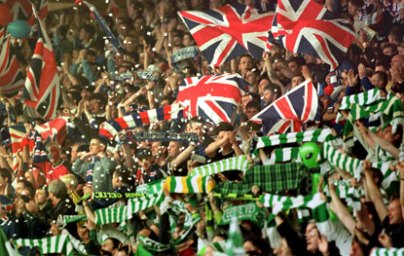
How would the Old Firm fare in the English Premier League?

by Johnny Connelly

Image
How would this look South of the border?

For as long as Celtic and Rangers have held their seemingly relentless stranglehold on Scottish football, fans both north and south of the border have speculated as to how the Glasgow giants would handle themselves against the top clubs in the English Premiership. The Old Firm over the past decade to 15 years or so have regularly met with English opposition in European competition. These battles of Britain have rarely led to the Glasgow clubs taking a real heavy defeat, which does indicate that they can rough it up with the best, but how would the Old Firm do if English opposition was on the fixture list on a weekly basis?

The truth is we can only speculate, as there is little we can do to identify any kind of common denominator to allow a clear, direct comparison.

The first, well documented factor that puts the respective leagues at polar opposites in terms of stature is TV and prize money. Celtic or Rangers can expect a paltry £2.7m for winning the SPL title this year, while the teams who’ll suffer the cruel fate of relegation from England’s elite division can be comforted by a ‘parachute payment’ of £48m over 4 years. The same disparate revenue totals are echoed when it comes to TV money. The Old Firm will pick up a reasonable few million pounds per year for their troubles in the SPL; but some of the top English clubs are raking in up to £4.3m per televised game!

This almost embarrassing difference allows teams who’re far smaller in stature than Celtic or Rangers to make significant inroads in the transfer market. I’m sure all readers would unanimously agree that the Old Firm dwarf clubs like Bolton, Fulham, Aston Villa or Stoke to name but a few – but just look at the money these ‘wee English teams’ can throw at players.

  • Bolton sign David N’Gog for £4.5m
  • Fulham sign Bryan Ruiz for £12m
  • Aston Villa sign Charles N’Zogbia for £10.8m
  • Stoke City sign Peter Crouch for £11.3m

The Old Firm, and Scottish clubs in general can only dream of these budgets. The truth of this hits home when you see Dundee United, one of Scotland’s biggest clubs, bid a miserly £25,000 for Hamilton’s Dougie Imrie, without the means to increase their bid to capture the player’s signature.

Another prime example is the once legendary Fernando Torres. Chelsea splashed an exorbitant £50m on their misfiring striker; a fee that if levied to Rangers in the ongoing HMRC tax case could be enough to force the club into liquidation (hypothetically speaking of course).

I firmly believe that if given the lavish financial buoyancy aids that come along with the Premiership, the Old Firm would be a force to be reckoned with, but again, it’s just a speculative thought in the seemingly infinite cyberspace cosmos that is the football forums of Twitter, Facebook and social media in general.

So, an alternative means of comparison is necessary. An altogether more simplistic one. The crystal clear comparison created by the monitoring of clubs’ ability to put bums on seats.

In Scotland, England, and across Europe as a whole, for decades upon decades, the clubs with the highest attendance figures tend to celebrate more domestic success than those with smaller crowds. This direct correlation is not relative to circumstance, and does stand up to our cross border comparison.

Celtic and Rangers, despite the shocking state of Scottish football, are still pulling in crowds at a remarkable rate, so much so that the average gates would currently put Celtic and Rangers 3rd and 4th in the English Premier League table in this respect.

Team

Average Attendance

Stadium Capactiy

% full

Man Utd

74,864

75,769

98.8%

Arsenal

59,927

60,361

99.3%

Celtic

49,462

60,832

81.3%

Rangers

45,943

51,082

89.9%

Man City

45,513

47,805

95.2%

Newcastle

43,388

52,339

82.9%

Liverpool

42,864

45,276

94.7%

Chelsea

41,439

42,449

97.6%

Sunderland

40,355

48,707

82.9%

Aston Villa

38,573

42,783

90.2%

Everton

36,725

40,157

91.5%

Tottenham

35,794

36,230

98.8%

Wolves

28,366

29,303

96.8%

Stoke

27,162

27,500

98.8%

Norwich

26,515

27,033

98.1%

Blackburn

25,428

31,154

81.6%

Fulham

23,909

25,478

93.8%

West Brom

22,199

26,500

83.8%

Bolton

21,881

28,101

77.9%

Swansea

19,822

20,532

96.5%

Wigan

18,006

25,133

71.6%

QPR

17,024

18,360

92.7%

However, the statistics also bare out that Celtic and Rangers would see a significant rise in attendance figures if they ever did play in the Premiership. Looking at the SPL as a whole, on average, a whopping 43.6% of seats are empty. This figure is heavily skewed by the smaller clubs in the league; if we judge it purely on matches at Celtic Park and Ibrox, the empty seats figure shrinks to just 14.4%.

The story in the Premiership is somewhat different as you’d expect. Across the board in the EPL, you’ll find just 8.8% of seats are empty. If we assume that by playing in the Premiership, the Old Firm saw a similar level of ticket uptake (conservatively estimating the aforementioned calculated 5.6% increase between the leagues) the approximate average attendance at Celtic Park would jump to 52,232 with fixtures at Ibrox being 48,007. These figures put the Glasgow clubs even further afield of the likes of Manchester City, Newcastle, Liverpool, and Chelsea; but still considerably short of Manchester United and Arsenal at the summit of the Premiership. Surely it’s more than just a coincidence that those clubs with the highest attendance figures are the clubs who, buy in large, are fighting it out for the illustrious crown that is the English Premier League title?

Supposing entry was ever granted to the Premiership, Celtic and Rangers would be given an equal share of the over inflated TV money, putting them on an even financial playing field with the rest of the teams. This would make the Glasgow clubs a much more viable option for the top players in Europe and beyond, as the Old Firm could engage in an evenly matched bidding war with any of the other English Premiership club, with the added draw of the huge crowds, legendary atmosphere, adoring fans, and largely incomparable history.

The international brand identity and marketable commodity that Celtic and Rangers possess perhaps may not be as grand in scale as Manchester United or Liverpool currently; but it dwarfs the bottom 10 clubs in the Premiership, and is at least on a par with the likes of Manchester City, Chelsea, Spurs, and Arsenal in my opinion.

Given the opportunity to compete in what’s billed as ‘the greatest league in the world’ by many, would see the Glasgow clubs (after a few years of bedding in) replicate the attendance table positions in the actual league standings.

The Old Firm have everything that a global footballing giant would need, except the financial galvanising that a league like the Premiership offers. The remarkable history and the passion of the adoring fans who turn out in phenomenal numbers, together with the abundant budgets that come as part of the EPL, would almost certainly see Celtic and Rangers challenge for honours with the very best England has to offer.

Sadly though, it’s not as simple and as straightforward as this. Now, and for the foreseeable future, Sky television hold all the cards in this stagnant game of poker. As the Scottish game continues to dwindle and the English game reaches financial saturation, we can but hope that those who call the shots at the television companies come to realise that the royal flush they’re in search of, lies north of the border in the heart of Glasgow.

Have your say – vote in the poll or comment below.

Have Celtic signed the wrong Bangura?

Image
Will Mo start ‘Bang’ing in the goals?

You’d think that there’d be no better judge of striking ability for Celtic to call upon than the Swedish sensation, Henrik Larsson. Larsson’s name will forever echo throughout European football as a great of the game, but did Celtic’s ‘magnificent’ no.7 get it wrong when it comes to the signing of Mohammed Bangura?

On the 30th of August last year, Neil Lennon’s side splashed the cash to the value of £2.2million on AIK’s highly regarded Sierra Leone international, Mohammed Bangura. The Parkhead faithful salivated at the thought of another forward with the guile of Larsson, but 4 months in Bangura has yet to find the back of the net.

Ironically, at the time of his signing, AIK also had another ‘Bangura’ on their books. Teteh Bangura (no relation) plays the same position, is the same age, and the same nationality as Mohammed. However, the similarities end when it comes to on the field matters.

Both Banguras played together at Kallon, and remarkably, Mo was the more prolific of the two, netting a remarkable 39 times in 58 appearances. Mo, after a semi-successful spell at AIK, made the move to Celtic, while Teteh proved to be the Bangura who was ‘banging’ in the goals.

Teteh scored a superb 15 goals in 17 appearances for AIK this season, before making the switch to Turkish top-flight club Bursaspor. Since his switch to the Super Lig, Teteh has managed 3 goals in 9 appearances. This clearly is a dip in conversion, but given that Bursaspor are fighting against relegation, his haul for the season still remains decent.

Mohammed however, looks as though he’s finding it a little tougher to find his form. He’s turned out on 12 fruitless occasions for Celtic (granted that only 1 of these has been a start). Altogether, he’s played 5.5 hours of football for the Glasgow giants, and it would seem as though he’ll not have long left to convince Neil Lennon or the Celtic fans that he’s the man for the job.

Match Time on the field Date Details
1 23 mins 10/9/11 4-0 win over Motherwell
2 9 mins 18/9/11 4-2 loss against Rangers
3 14 mins 21/9/11 2-0 win over Ross County
4 39 mins 24/9/11 2-0 win over ICT
5 90 mins 29/9/11 1-1 draw against Udinese
6 59 mins 2/10/11 2-0 loss against Hearts
7 45 mins 15/10/11 3-3 draw against Killie
8 3 mins 20/10/11 1-1 draw against Rennes
9 27 mins 26/11/11 5-0 win against St Mirren
10 1 minute 10/12/11 1-0 win over Hearts
11 9 mins 15/12/11 1-1 draw against Udinese
12 11 mins 18/12/11 2-0 win over St Johnstone

Total : 330 minutes (5.5 hours)

Points can be made for and against Mo Bangura’s performances. He’s young, and has a history of goalscoring. Perhaps Celtic’s style of play isn’t utilising his ability in the best way? Take the recent form of Giorgios Samaras for example. Six months ago, the Celtic support were almost unanimous in the opinion that the player wasn’t a valuable asset to the club. Now, after a stint as more of a floating left-sided forward, he’s scoring goals and causing problems to top clubs in the Europa League. I also seem to remember John Hartson taking around 8 or so appearances before he got that Parkhead goalscoring monkey off his back.

On the negative side, even the most run of the mill Celtic strikers throughout the ages have managed a decent goal scoring record. Andy Paton, Darren Jackson, Tony Cascarino, Marc-Antoine Fortune, and even the much ridiculed Harald Brattbakk notched up a decent tally – so why is this £2.2million acquisition seemingly incapable of doing the same?

The clock is ticking for Bangura. As a Celtic striker, the pressure is on, by hook or by crook to score goals. Not all strikers get to make a dream start, in such a way that the likes of Jorge Cadete did in his debut against Aberdeen. The approval of such a legend as Henrik Larsson doesn’t come lightly, but with the SPL title looking to go down to the wire, and with Lennon in the market for another striker, Bangura’s time to find his form is of the essence.

Why Rangers must condemn Aluko’s comments

Sone Aluko Dive
The incident in question

As Rangers new signing Sone Aluko looks to kick-start his Rangers career after a despicable diving incident, the Nigerian international appears to have shot himself in the foot again. The forward was banned for three matches following a clear dive to win Rangers a penalty (and ultimately the match) against Dunfermline; and was handed an opportunity to the media today to come clean and condemn his deception of the game’s officials.

Instead of doing so, Aluko has brushed off the incident, and likened diving to other foul play or stoppages of play in the game (namely, offside decisions, handball incidents).

He said: “Everyone has had an opinion. There were seven-page spreads and every ex-pro had this and that to say.

“It was three weeks ago, let’s get on with it. It’s football, it happens.”

The correct thing to do would have been for Aluko to stop here. He’s committed a footballing felony, he’s served his punishment, and should now be free to press on with making a name for himself at the Ibrox club.

However, Aluko continued on, defiantly absolving himself from any wrong-doing.

Aluko said: “People have handballs, people are accused of diving. Those are football incidents and people like to talk, that’s what’s beautiful about the game.”

“Every player would be a cheat. If you get caught offside, that’s cheating, it’s not in the laws of the game. If you handball it that’s cheating. Who’s not a cheat in football?”

“I’m just going to carry on playing the way I do and everyone else will talk.”

“I’ll keep playing in the same way. I’m not going to change because there is a new panel or whatever.”

Perhaps the increased media spotlight that comes with the move from Aberdeen to Rangers, coupled with the player’s inexperience could be to blame for these ludicrous comments, but either way, the club must issue a statement to counter Aluko’s opinions.

Diving is in no way like being caught offside or touching the ball with your hand. If a player dives, they are trying to deceive the match officials to gain an advantage in the match. The case of the Rangers player is worse yet, as the simulation in question was the deciding factor in an SPL victory for the Glasgow club, providing three valuable points in a title race that is expected to go to the wire.
Does the average Old Firm fan or SPL neutral want to see the championship be decided in such a way? – Clearly not. In a time of proposed reform for the Scottish game, when every aspect of it is under the microscope for scrutiny, this kind of attitude to diving is not acceptable. On a global level, diving (or ‘simulation’ to give it it’s euphemistic FIFA title) is regarded as one of the biggest problems in the modern game.

Rangers, as with Celtic in the SPL, are huge clubs who’re leveled with the expectation to win with style, not by virtue of diving. Scottish football fans don’t want to pay to go and watch over-paid players diving to earn success in an unwholesome manner.

The baton of responsibility is now passed to the Rangers officials, and the manager Ally McCoist to quash this moment of madness from Aluko. The time is now for the club, and the SPL as a unit to take a firm and unequivocal stance on diving in the game.

Why Fletcher’s misfortune could be a wake-up call for Scottish football

Image
Unfortunate – Scotland Captain Darren Fletcher

By David Andrews

Are there greater powers at work in Scottish football? The recent news that Scotland’s talisman and model professional Darren Fletcher has been struck down with a serious stomach bug, forcing him to take some time out of the game, has come at a time when Scotland has already been brought to its knees and is now lying spread-eagle face down on the ground, wondering where it all went wrong.

It would seem that the powers that be in that great boardroom in the sky have it in for this founding nation of the “beautiful game”. From fines to unpaid tax bills and wages and bullets to corrupt disciplinary procedures, the visible signs of a downward trend are obvious. Ex-politicians have been brought in to advise, wicket keepers appointed to keep the peace, all to no avail. Now it seems even our captain is the target of some misfortune from on high.

But who can blame the footballing gods for striking us down? If football was a religion and not just a direct substitution for one, as some would have us believe, there would be an inquisition and not just another investigation or review. A group of Europeans from Zürich would have landed on our shores, dressed in black robes with the FIFA logos emblazoned on their galeros, marching on all the shrines of football. Promptly they would round up the key instigators within the established rungs of Scottish football and subject them to all manner of interrogation before replacing them with their own cronies. After successive torture methods and years of imprisonment, the inquisitors would gather the followers of football together and proclaim “you are all guilty”. The criminals responsible for perpetrating all of the vile acts against Scottish football in recent times are the collective institution itself.

It is clear to see from the issues, controversy and debacle after debacle that all of Scottish football’s problems are self-inflicted. All stakeholders in the Scottish game have a joint responsibly to a greater or lesser degree. The alleged corruption within refereeing was a product of a flawed disciplinary procedure and complacent practices from an old guard of referees and an association unwilling to update its practices. The Rangers vs. Inland Revenue bout stemmed from mismanagement and a belief that Rangers Football Club was an untouchable icon of Scottish society. The actions of a mindless few, who tarnished the game throughout the 2010/11 season, were also a product of the society in which we live, operating at the extreme end of a sliding scale from 90-minute bigotry to serious offences that go far beyond rivalry and banter.

In more general terms, the falling attendances and revenues have long been an indicator of an overpriced and unsound product. Countless people speak about how the Old Firm can “charge whatever they like” for a derby ticket. However, surely the converse is true? Supply and demand? Scottish football is currently damaged goods and requires some significant price restructuring to encourage interest. Perhaps there should be a sign outside all stadiums: “broken, in need of repair –entrance half price”.

The SFA seem to be powerless to deal with issues in the game and have been overlooked by UEFA in imposing fines on both sides of the Old Firm. These teams play in a league governed by the SFA and should be disciplined for breaches in its code of conduct by the SFA. Instead, the SFA ignore it and UEFA have to intervene, undermining the strength and independence of Scottish football and its governing association.

Within the national team there have been several key events. Former captain Barry Ferguson and current favoured goalkeeper Alan McGregor both disgraced themselves with an all-night drinking session at the Cameron House Hotel and subsequently did themselves no favours by reacting and gesturing to the media and, by proxy, the fans. Aiden McGeady was also snatched from beneath the nose of the Scotland youth system.

Almost all up and coming Scotland players seem to be destined to veer off of the straight and narrow at some point in their careers. McFadden, O’Conner, Riordan and now Bannan – at what point will young players realise that the reason they are no longer reaching the height of previous Scots is that there are players out there who will outstrip them on every level both personally and professionally. They will train harder, get up earlier, study more, sacrifice more, drink less, cause less trouble and keep constraints on their ego. The players currently waiting in the wings have to realise that this is the “modern game” and success is rewarded only after large amounts of sacrifice.

As an all-round product, a day out at the football should inspire us and coax us out of our comfortable living rooms into a passionate theatre of entertainment. The Scottish game has much to offer, but is sadly marred in so many areas that no single change or revamp would yield any significant outcome.

The ‘unlucky’ footballing nation of European and indeed International football tag is an unenviable one to bequeath Scotland. From numerous national teams throughout the years being glorious failures in qualifying and at major finals, to Celtic’s hard-fought but ultimately worthless point away to Udinese last night, a common theme is apparent. Perhaps it could be suggested that the rectification of the aforementioned root-cause problems of Scottish football could potentially alleviate the ‘unlucky’ tag in years to come.

The only way forward is for the individuals who have watched over Scottish football as it staggered towards its current lowly state to take account of their actions, stand up and move aside for transition to a more modern and fresh thinking approach.

The loss of Darren Fletcher does not affect the Scottish the domestic game; it is just another injury to add to insult on the downturn of Scottish football. It is not only a loss for a match squad; it is a loss for the game. Darren Fletcher is a model professional and a teetotaller for a start. He’s a player who young footballers should be inspired by and someone who, if all else fails, Scotland can look to for confidence that one day we will become a strong footballing nation again.

We can but hope, on a personal and sporting level, that Darren makes a speedy recovery to regain his position as a leading light in Scottish football at a time of such unmitigated darkness.