The SPFL – Fan Fuelled Evolution

by Johnny Connelly

(As hosted on http://www.plzsoccer.com/news)

It’s been a long, long time coming, but we’ve successfully reformed the structure of our professional football league format in this country. It’s all kicking off this week, and not a minute too soon.

That arduous, seemingly never-ending string of weeks where we find ourselves with a gaping football hole to fill is almost at an end. We kid ourselves that pre-season friendlies, and even old Youtube clips of bygone years will anesthetise us throughout the summer, but the truth is, nothing but the real McCoy will do. In Scotland, the fans need football; but more importantly, the football needs fans.

This interdependency has never been more apparent than it is now. The dark cloud of doom that lurked over Rangers throughout the Craig Whyte/Charles Green/liquidation saga served as a stark warning that all clubs can fall victim to the perils of the business aspects of the modern game. Yet, at the other end of that turmoil, we saw glimpses of the finest element of our game, the unwavering and unquestioning support of the fans.

Clubs in our country have been plagued by problems of their own, but we’re fighting through it together as football fans. The news this week that Dunfermline’s long standing threat of liquidation could be at an end is huge shot in the arm for our wavering game. The fact that the CVA came from ‘Pars United’, an ordinary group of Dunfermline supporters, further enhances the remarkability of this particular happy ending.
Image

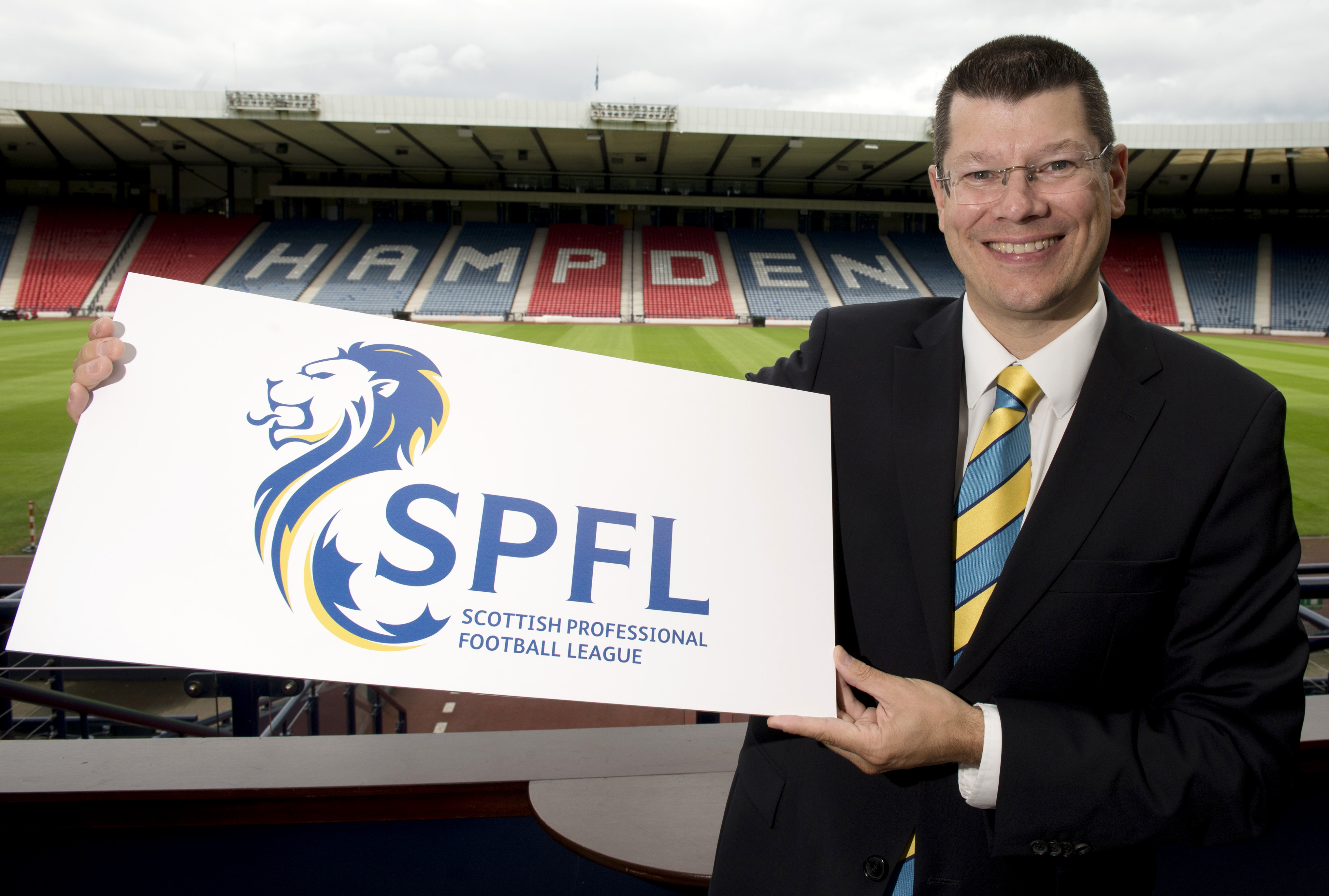
The New Way – Neil Doncaster showcases the new SPFL logo at Hampden

As we prepare to embark upon the new dawn that is the SPFL, it becomes apparent that fan power is more important than ever. Last season was resplendent with hints that the fans will have the final say when it comes to football in this country.

Last season we saw something of a siege mentality at Ibrox, as Rangers fans flocked to support the team in their darkest hour. Attendance records were challenged, and dare I say it, the much maligned Glasgow club seem to be through the worst of their troubles, all thanks to the fans.

Similarly, Dunfermline looked doomed just weeks ago, probably more so than Rangers, but the collective presence of likeminded fans have all but saved their club, albeit through the means of a CVA and by virtue of an empathetic set of creditors.

The SPFL’s big focus now should be channelling energy into finding a solution for Hearts. They too will sink or swim based on the actions of their fans. The effort and commitment so far from the Hearts fans has been overwhelming, and if they could somehow meet the desired monetary amounts to satisfy the creditors, we’d be witnessing a miraculous escape for one of our country’s most revered clubs.

Clubs defying the odds to survive thanks to fan power are perhaps somewhat sensationalised examples of what the common punter can achieve in the world of football. We can however, step back and see that the fans have the power to make the new SPFL a success, despite the apparent downgrading of our domestic game since the days of Larsson, Laudrup, De Boer, and Sutton.

As fans, we’ve faced debacles like the Setanta deal and uncertainties galore, yet here we are, on the brink of another glorious season. Excitement is cascading across the country in anticipation of the big kick off. Yes, there’ll be more problems, and yes, it’s far from the polished product that our neighbours across the border take in every weekend, but it can still be glorious in its own inimitable way.

Small steps are being taken in the right direction all the time. It’s looking positive for the start of the season, as there’s no clearer indication of support than a rise in season ticket sales. 7 of the 12 SPFL Premiership clubs have reported increases in season ticket sales so far, and another 3 SPFL Premiership clubs say their sales are on a par with last season.

Even without the presence of Rangers in our top division, the clubs do have something to attract their fans this season. Celtic, Motherwell and St Johnstone have a taste of European football. They’ll be looking to maximise their involvement this term, and ensure they get to participate again next time around.

Ross County and Inverness Caledonian Thistle will strive to continue their meteoric rise, challenging for 2nd place in the Premiership this season perhaps? Hearts, Hibs, Dundee United and Aberdeen will seek to right the wrongs of last season and finish in a position that befits their club stature; while St Mirren, Kilmarnock, and the new boys Partick Thistle will be well aware they’ve been touted to go down, so they’ll have fire in their bellies, and a will to escape the drop.

The road back to the big time for Scottish football is a long one, we may never get back to where we were, but football in this country is a labour of love. We’ll forever indulge in nostalgia, we’ll forever exaggerate the glory days, and we’ll forever dream of a product better than the one we current showcase.

Our excitement for football is insatiable, there’s nothing quite like those start of the season butterflies. This time around, we’ll take the bad news with a pinch of salt and remember that football is for enjoying.

It may not be perfect, but it’s our league, and we love it.
SPL/SFL Merger: Progress at last or a gamble we can’t afford?

By Johnny Connelly

At long, long last, a majority of SPL and SFL clubs have come to an agreement on the future structure of our domestic leagues. In a wrangle that felt equally as long-winded as the Rangers v HMRC tax debacle, a breakthrough was reached as 23 clubs voted in favour of new plans that’ll see the creation of a single governing body (the SPFL).

Audible sighs of relief (as opposed to the expected hubbub of optimism) rippled through the Scottish football community when this deal was reached. The big black cloud that loomed over our game’s future has been cleared from our skies at least temporarily, as we can now look forward a new exciting format that boasts financial redistribution, as well as the reintroduction of playoffs.

As much as I’m pleased to see the end of this, I can’t help but think back to the massive overhaul in structure that the fans and the clubs cried out for. The new, 12-10-10-10 structure just doesn’t match up to these demands in my eyes. If we look initially at the SPL and SFL Division 1 clubs, as far as I can see (playoffs aside) all that’ll change is the distribution of wealth amongst them.

Image

When two become one – The SPL and SFL will be replaced by the SPFL


I see this as something of a gamble, although I do understand the strategy. Make some of the top placed teams in the SPL suffer financially in the short term, so as to financially boost the bottom placed clubs in the SPL and the rest of the SFL initially, and create a more holistically-centric, financially viable league structure in Scotland in the long-run.

The logic is sound, but we must hold our hands up and admit that it is a gamble of sorts. This process would be the golden ticket to revamping our game domestically if all the current SPL clubs were financially bloated, but we all know this isn’t the case. From a moral and idealistic standpoint, throwing money at the 1st Division clubs is without a doubt the right thing to do. It shows that the powers that be are thinking about the game’s success in the long term; but to disregard the threat this scheme poses to the top SPL clubs is foolish.

Here is how the money is expected to be redistributed throughout the current SPL and SFL Division 1 clubs:

SPL
1: £2,405,514 (13.39%, -£314,487)
2: £1,717,454 (9.56%, -£682,546)
3: £1,460,555 (8.13%, -£59,446)
4: £1,288,629 (7.17%, -£71,371)
5: £1,202,757 (6.7%, -£77,243)
6: £1,116,884 (6.22%, -£83,116)
7: £1,056,701 (5.88%, -£63,299)
8: £1,005,142 (5.6%, -£34,858)
9: £987,895(5.5%,+£27,895)
10: £902,023 (5.02%, +£22,023)
11: £816,150 (4.54%, +£16,150)
12: £730,277 (4.07%, +£10,277)

First Division

1: £386,248 (2.15%, +£318,248)
2: £343,132 (1.91%, +£276,132)
3: £300,016 (1.67%, +£234,016)
4: £256,900 (1.43%, +£191,900)
5: £240,731 (1.34%, +£176,731)
6: £188,633 (1.05%, +£126,633)
7: £172,464 (0.96%, +£111,464)
8: £154,499 (0.86%, +£94,499)
9: £138,331 (0.77%, +£79,331)
10: £120,366 (0.67%, +£63,366)

This looks good in theory. If we take only the top two Divisions into account, we see that 8 clubs will suffer initially, while the remaining 14 benefit substantially. The 2nd and 3rd Divisions tell a similar story, with some smaller clubs standing to make an additional £46,000 a year, while any decrease of revenue for clubs can be as little as £80.

However, the likes of Motherwell punch above their weight, on a shoe string, with a threadbare squad. Every penny counts for them, yet if this structure was in place last season, despite them miraculously finishing 2nd Scotland’s elite division, the Lanarkshire club would be £682,546 worse off. This, although nothing compared to the money that the giants of European football are throwing around, is still significant when we put it in context that it would almost double the losses made by the club, bringing them up to a combined loss of over £1.2m for the season.

This year’s 3rd and 4th placed clubs would be dealt a similar hand, although not quite as severe. St Johnstone would have been almost £60,000 worse off for the year, and Inverness Caledonian Thistle too would be down by over £71,000. Again, these figures mean nothing without context, but when you see that St Johnstone have made six-figure sum losses in three of the last four seasons, that £60,000 becomes a sum of money that’s not to be scoffed at. Terry Butcher’s Inverness Caledonian Thistle too run on a shoe-string budget, but this projected loss of £71,000 represents around 18% of the club’s current overall debt.

On the other side of the coin, how can we be sure that the right clubs are benefitting if all we’re going on is their final league position over a season? Take Queen of the South for example. This season they cruised through the Scottish Second Division, thanks to a larger budget amongst other things. Under this new structure, the team in the 2nd Division that claimed the title thanks to greater financial muscle, would further be enhanced by a winnings pot of £102,401 (an increase of over £46,000 on the previous year).

I suppose we’ll never know how this’ll pan out until we stop speculating, and let it run for a few seasons. One thing that we all seem fully behind though is the revamp and reintroduction of playoffs across all of our divisions. Playoffs guarantee that the season has a focus and purpose, regardless of how far apart the clubs may be points-wise. A final showpiece and crescendo to the season is ensured, which should hopefully dispel the apathy that’s been creeping in over the past few seasons.

This season the SPL has been crying out for a playoff setup. Celtic won the league at a canter; and Dundee went down without a whimper. The whole league was a dead duck by Christmas. At least with playoffs, we’ll have something to get excited about right until the end of the season as teams will have something to play for right until the very last kick, and in all divisions too. The closest thing we had to excitement outside the SPL this season was the Ramsdens Cup final. What a great example of how to achieve excitement in football in a simple way. 10,000 people crammed in to Almondvale for the final, and thousands more watched live on BBC Alba. This proves beyond doubt that although we may not have the quality of the Premiership at our disposal, the route to success for our game in this country lies with generating excitement. Structuring the game correctly is the key to this, and we’ve shown from the likes of the Ramsdens Cup, that excitement trumps quality any day of the week.

My personal preference would have been for a bigger league, and the fans voted in their numbers for this. The fact is that we must bend over backwards to get bums on seats in football grounds all over Scotland. When you achieve that, the desired TV deals could well have followed, as we’d have injected the excitement back into the game that drew crowds, and would spur interest from further afield. Who’s to say this won’t happen in the future, but for now I’m happy that a cohesive approval from our top clubs will drive a united front for our domestic game to succeed. The formation of the SPFL could signal the start of a journey towards a prosperous league setup in Scotland, but if it’s to succeed, we must back it unwaveringly. It must be adjusted accordingly to generate as much revenue and excitement as possible, or we could find ourselves in the midst of another moribund spell of ‘reconstruction talks’ again before too long.

Why Celtic must take the money for Wanyama…

By Johnny Connelly

It’s that time of year again when the transfer rumour mill goes into over-drive. Every prized asset from clubs all over Scotland will be touted for a move to a new potential suitor; some, as in Victor Wanyama’s case, will even be linked with clubs in the self-proclaimed, ‘best league in the world’, the English Premier League.

Victor Wanyama celebrates against Barcelona
Wan the man – Victor bested Barca

Wanyama is a wonderfully talented player. He’s composed, pacey, ferocious in the tackle, competent in the air, can pass well under pressure, and has even been known to knock-in the odd wondergoal, but if the reported bids of £10-£12m are true, then Celtic would be mad to hold on to him.

Let’s face it, it’s been the plan all along. The scouts spotted a promising young Kenyan playing for Beerschot AC in Belgium, and the club proceeded to snap him up for a paltry fee of £900,000 with a view to developing him for a couple of seasons, and selling him on for a huge profit. Whichever way you look at it, a potential £12m return on a £900,000 signing is a fantastic piece of business (if it goes ahead of course).

The dangers of rejecting this type of offer are crystal clear. You need only look as far as Emilio Izaguirre to see how quickly a white-hot gem of a player can descend back into mediocrity, taking his alleged £10m-ish price-tag with him. Celtic have to strike while the iron’s hot, behaving like a clever stock broker, buying cheap and selling high. The likelihood is that SPL clubs will never (at least in the foreseeable future) be able to command a transfer fee that exceeds £12m. There’s a glass ceiling in terms of value in the SPL, and Wanyama has hit it.

Players devalue quickly; this is one of the game’s most fickle qualities. As well as current Celts like the aforementioned Izaguirre, I remember the summer of 2001, when a certain Bobby Petta was tearing up defences and skipping past wingers for fun. The Parkhead faithful must have thought they had a world-beater on their hands when Petta, with his accomplice Didier Agathe, produced a phenomenal performance against Dutch giants Ajax in the Amsterdam Arena during a Champions League Qualifier. Petta found the net that night, and continued on to wreak havoc for full-backs who could only look on as the majestic winger left them for dead. At the peak of his powers, Petta’s opposite number Fernando Ricksen, was taken off just 20 mins into an Old Firm Derby where Celtic went on to famously win 6-2.  Petta even secured a call-up to the Holland squad, and caught the attention of Paris St Germain. A £3m bid ensued, which Celtic of course rejected. With the gift of hindsight, this proved to be a foolish move. Petta’s form dipped, and the cult hero spent much of his remaining few years at Celtic Park on the sidelines, blighted by injury.

Not to suggest that Wanyama isn’t a better player than Bobby Petta, but if Celtic could turn the clock back and take the £3m, there’s not a supporter in the world that’d have stood against it. This, although admittedly an extreme example, could very well happen to Wanyama too.

Yes he’s a fantastic player, but when the grand history of Celtic Football Club comes to be written, I’m sure there’ll be few who’d regard the big Kenyan as indispensable. Neil Lennon seems to be well steeped in the club’s buying and selling policy. He’s been around the club for a while, both as a player and manager; long enough to have learned when to sell on for maximum profit. Since Petta, when have Celtic got it wrong? When have they hung on to a player too long?

Stan Petrov went to Aston Villa for £8m, Aiden McGeady to Spartak Moscow for £9m, and Ki Sung-Yueng to Swansea for £6m. These players were all wonderfully gifted, but they went at the right time, and many would argue that Celtic got the best years out of them.

When a top player leaves, the club always becomes stronger in their absence. When Celtic defeated Barcelona at Celtic Park last season, nobody was thinking that the team missed a McGeady, Ki, or Petrov. Wanyama will be no different, despite his talents and commendable attitude.

The plan was to sell on Wanyama, right from the start. The dream scenario is always to unearth a gem on the cheap, develop the player, enjoy their talents for a few seasons, then sell on for an exponentially larger sum than they paid to acquire the player’s services.

There’s no debating the logic. Celtic can’t generate large profits solely from winning competitions in Scotland. Champions League TV money and selling on young players, while operating within a strict wage budget is the only sustainable business model for the club. The likes of Gary Hooper, Emilio Izaguirre, Beram Kayal, Joe Ledley and Fraser Forster were signed with the same long-term goal in mind, although not everyone would admit it.

The plan doesn’t always work out, but if 1 in 3 players develops into a potential £10m transfer, then the scouts at the club will have successfully completed their task, and the club can reinvest in youth to start the process all over again, while achieving domestic success, competing in Europe, and most importantly, exciting the fans along the way.

Is the penny finally dropping for Ally?

McCoist looks as though he’s learned lessons from last year’s flops

The long suffering Rangers fans of the modern era will no doubt continue to have their club dragged through the dirt in the coming season as more and more details of the Craig Whyte & Charles Green cavalcade of misdemeanors and skulduggery come to the fore. Sadly these club issues will wrangle on, but the last few weeks have had a silver lining of sorts on the actual football side of things, as Ally McCoist has made some impressive signings straight off the bat since the controversial transfer embargo has been partially lifted.

Rangers Manager Ally McCoist
Stern of face – McCoist has his work cut out for him

The past and continued involvement of Charles Green and Craig Whyte is a matter for the courts, and is well out of the fans and McCoist’s hands, but it would appear that there are signs of life as the manager has wasted no time in pressing on with strengthening his squad for life in Division 2, with one eye clearly on shaping a team that could compete in Division 1 and the SPL.

Gers fans haven’t had much to smile about over the last few years, broadly speaking, but the latest 4 players to join Rangers should bring a smile to even the grumpiest of supporters.  Although Rangers cruised to the Scottish 3rd Division title, even the most devoted of fans grew weary of the performances (or lack of) being put in by some of last season’s signings. A distinct shift in signing policy was required; and it looks as though it’s being delivered.

The likes of Fran Sandaza and Ian Black were never going to be wise choices to slot into a Rangers side facing a gruesome fight in the Scottish 3rd Division – for very different reasons of course. Sandaza, although a gifted goal scorer, has never been the most energetic player. His lethargic style of play led to him being a divisive character at Dundee United, and generally unpopular during his short spell at Brighton. There’s no doubt that he can stick them away when given a decent supply; but when be faced with a muddy park, playing against hard-nosed joiners and labourers who’d like nothing better than to put you on your backside, his effectiveness soon diminishes.

Ian Black too has struggled to win over the Ibrox faithful. He succeeds where Sandaza fails in terms of endeavour, but his blatant lack of ability and over-reliance on a style of play that borders on thuggery leaves him well short in terms of credentials to hold down a place in the Rangers midfield.  Of course there have been glimpses of promise from the likes of Dean Shiels and David Templeton, but the overall style and standard of signing has been lacking from a long-term perspective.

McCoist has wasted no time in securing the services of 3 top SPL players and a 40-goal striker from Queen of the South. Jon Daly, Nicky Law, and Cammy Bell have been joined by Nicky Clark as Rangers look to take the 2nd Division by storm.

Jon Daly is no spring chicken at 30 years of age, but with a goal tally of 58 from 167 appearances for Dundee United available on a free transfer, McCoist would be a fool to turn him down. Again in stark difference to Sandaza, Daly can throw his weight about and isn’t afraid to mix it up when it comes to tackling hard. His vast experience in England’s lower divisions while playing with Stockport, Bury, Grimsby, and Hartlepool will be drawn upon again as this same grit and determination will be required to guide Rangers up through the divisions here in Scotland.

Cammy Bell was something of a surprise when you consider Rangers already have a quality keeper in Neil Alexander. Ongoing contract debates with Alexander, and a propensity to concede goals due to lapses in concentration last season have clearly lead his manager to look for alternatives. In Scotland’s lowest division, Alexander managed just 12 clean sheets in matches where Rangers picked up all 3 points. Cammy Bell has his best years ahead of him at just 26 years of age, and could easily hold on to the no.1 jersey when Rangers eventually return to the SPL. His impressive performances over the last 7 years for Killie even led to peripheral inclusion in the Scotland setup. Bell will be around for a while at Rangers if he plays his cards right, but will come under the same scrutiny as Alexander if he fails to hit the ground running.

The acquirement of Nicky Law’s signature caught everyone off guard. Law was at the heart of the Motherwell midfield this season as they punched above their weight to finish 2nd in the SPL.  He’s attracted attention from the Championship, and reports even linked him with SPL Champions Celtic, so a move to the Scottish 2nd Division, albeit with Rangers, was a surprise to everyone. At just 25, he too could remain as a first team pick for McCoist when the club get back to the big-time. He’s shown himself to be strong in the tackle, but with a decent engine to go box to box, and with the ability to split defences with a clever pass. Law has cut his teeth in England’s lower divisions, having spent time with Sheffield United, Yeovil, Bradford, and Rotherham. He’ll be one to watch for Rangers this season and beyond, if his performances last season were anything to go by.

Away from the SPL, Queen of the South striker Nicky Clark also joined the ranks at Ibrox this week. McCoist shattered the delusion that Rangers would simply be cherry picking players from the SPL, as he opted for Clark who shone in the 2nd Division and Ramsdens Cup last year. He rattled in 40 goals last season, and knows only too well the pressures of playing for Rangers if he’s been listening to his father, Sandy Clark. It’s fair to say he’s not proved himself at the highest level, but finding the net 40 times in a season at just 21-years of age makes him a hot prospect for the future. It’ll be interesting to see if he can replicate or better his tally this season, given the increase in pressure brought on by playing for a bigger club.

Given the way the last 3 years have gone, we know that there’ll be more twists and turns to come in this seemingly never-ending saga of ownership, debt, EBTs, title deeds, liquidation, and every other sensationalised story that’s landed at the gates of Ibrox in recent times, but credit must be given to McCoist on this occasion for competently dealing with the task at hand – strengthening his squad. The road back to the big-time for Rangers will be a long and arduous one, and if success is to be achieved, then McCoist will need to deliver the right type of performance from the right type of signing. The real pressure starts now, and his latest signings will be expected to explode into action next season.

McInnes Means Business as Dons Release 11 Players

By Johnny Connelly
(As seen on PLZ Soccer – 18/05/2013)


Right at home – McInnes has settled in at Aberdeen

As the world begins to come to terms with the imminent departure of Sir Alex Ferguson from our game, his successful and adventurous spell at Aberdeen was highlighted, and feels like a lifetime ago. Fergie’s propulsion of the club and the players of the day to the status of European heroes is but a distant memory for the long suffering Dons fans, given the club’s dismal league performances in recent seasons.

Aberdeen have finished the last 3 seasons in 9th place in the SPL, a record not befitting one of the biggest and best supported clubs in the country. Despite a positive start to this season under wily old Craig Brown, the club could yet make that a 4th successive 9th place finish, if things go pear shaped against Hearts on the last day of the season.

This just won’t do. Given the history and support of this club, there’s no reason why they shouldn’t have been up there alongside their under-resourced SPL counterparts, Motherwell and Inverness Caledonian Thistle, breathing down Celtic’s neck at the summit of the SPL.

It looks as though things have become worryingly stagnant and predictable at Aberdeen. Constantly finishing 9th overall, and match by match, they seem to only pick up points by stifling the opposition in the middle of the park, effectively choking the game. On 8 occasions this season, Aberdeen have drawn 0-0. This stat, above all else, signifies the need for change at the club.

Fair play to Derek McInnes, he’s identified that a major overhaul is needed alter the club’s fortunes, or at least bring a bit of variety of their results on the field. The ex-Rangers player will quite rightly take no blame for the dull performances this season, as he’s only just in the door, and will need time to make the wholesale changes required.

It seems as though the Dons have tried everything over the last few years. I honestly thought Craig Brown had cracked it when he complimented his young Aberdeen side with battle-hardened SPL players like Gavin Rae, Niall McGinn, and Russell Anderson. For whatever reason, perhaps the Brown’s advancing years, this didn’t transpire.

McInnes has started positively, and should be commended for his bravery in his decision to release 11 players from his current squad.

Players released:

  • Rory Fallon
  • Mitch Megginson
  • Rob Milsom
  • Gary Naismith
  • Isaac Osbounre
  • Gavin Rae
  • Dan Twardzik
  • Scott MacAulay
  • Zach Szemis
  • Stuart Close
  • Jamie Hamilton

The Dons manager told his club’s website: “It’s one of the least enjoyable aspects of the job to tell players that they won’t be staying and I would like to thank all of them for their contribution to this football club.”

He continued:  “Each of them are excellent professionals and we wish them all the very best in their future careers.”

A shrewd bit of media handling there by McInnes, but the real hard work for him starts now. The Aberdeen squad isn’t huge by any stretch of the imagination, so he’ll need to make some major moves in the transfer window.

It doesn’t take a genius to work out the Niall McGinn will remain a pivotal part of the Aberdeen setup after leading their scoring charts with a scintillating 21 goals to his name. Josh Magennis has also recently signed a contract extension, so it looks as though McInnes is relatively pleased with his attacking options.

Given the lack of funds readily available, McInnes will be required to be shrewd with free transfers and loan deals to transform this Aberdeen team.  He may well come to call upon his experience and connections from south of the border, having both played and managed at a decent level there, with a view to securing a few undiscovered gems that could improve his side.

As the likes of McGinn have shown, the difference a couple of players can make is remarkable.  1 or 2 decent signings could make the difference for them in the SPL.  The fact is that their recent seasons in the SPL haven’t been good enough, and the club should really be challenging in the domestic cups, year in, year out. The support the club have is amazing, they deserve more than what they’re currently being subjected to.

Derek McInnes is a talented manager, so there must be a quiet sense of optimism surrounding the Dons for the upcoming season. However, if he joins the long list of managers who’ve failed at Pittodrie, many will start to wonder if the problems stem from the management team, or whether they run much deeper at Aberdeen FC.


Lay off Allan Johnston

The Queen of the South Gaffer is a Worthy Winner

By Johnny Connelly

Isn’t it funny how every armchair supporter becomes an expert when it comes to the awards season in football? No sooner had Allan Johnston picked up his PFA Manager of the Year award, before a legion of disgruntled fans of SPL clubs registered their disgust at the outcome, some even branding it a farce.

Allan Johnston points on the touchline
Top Dog – Johnston scooped the top managerial award in Scotland

In what must have been a close run vote, Johnston trumped Neil Lennon, Stuart McCall, and Terry Butcher to claim the first managerial prize of his career.  All nominees made it to the shortlist purely on merit. Lennon guided Celtic to a fairly straightforward SPL title win, as well as some wonderful European nights, most notably against Barcelona. McCall continued to defy the odds with a miniscule budget and squad size to secure 2nd place in the SPL, while adhering to an attractive style of play along the way. Butcher similarly galvanized an under-resourced club to punch above their weight, and should be commended for pushing Motherwell all the way in the battle for 2nd spot.

Each nominee’s achievements should be commended, but none overwhelmingly eclipse those of Allan Johnston this season, on a pound for pound basis at least. Johnston’s Queen of the South team romped their way to the 2nd Division this season, scoring goals for fun, and insisting upon an expansive style.  Johnston’s men were the first team in the United Kingdom this season to win their league. If there was ever a leveller for all managers to be compared by up and down the country, surely this is it. Even with Celtic having no Rangers to contend with, Queen of the South had their title in the bag long before the Parkhead club, or any other title winners across the country.

The Scottish 2nd Division trophy was joined by another piece of silverware that everyone and their granny expected to reside in Ibrox by now, the Ramsdens Cup. Although not the most prestigious tournament in world football, the achievement of a 2nd Division club winning the Ramsdens Cup is certainly at least noteworthy. Knocking out tournament favourites Rangers early on was as much of an achievement as lifting the cup itself in that unforgettable final against Partick Thistle. Even the top sides in the country came across tangible difficulty when playing against Queen of the South this season. A single goal was all that separated the Doonhamers against Dundee United and Killie in the League Cup and Scottish Cup respectively. The 2nd Division outfit even managed to go one stage further against Hibs in the Scottish Cup, securing a 2-0, and another feather in Johnston’s cap.

Away from cup competition, their league form has been outstanding, both in terms of results and performances. They’ve lost just twice in the league, chasing a points total just short of 100! Along the way, the style of play has attracted plaudits from the media as well as Johnston’s peers. His expansive style as a player has been replicated in his first management role, as his focus would appear to be entertaining the fans, and simply outscoring the opposition. On their way to the title this year, the fans have been treated to a glut of goals, currently sitting with a goal difference of +69, and having scored 3 or more goals in a game on 17 occasions.

Some sections of supporters within the Scottish Football realm have turned their noses up at a 2nd Division manager and team being rewarded on the PFA front at all. I do wonder, if Rangers go on to win the 2nd Division and Ramsdens Cup next season in style, would people be so quick to discount the achievements of Ally McCoist and his players?

Another criticism leveled at those who voted for Johnston is that Queen of the South do have something of a wider resource pool than all other clubs in the division. While this is a clear advantage in some ways, it brings with it a huge pressure to win by a healthy margin. The Doonhamers boss has thrived under this pressure, and delivered on all fronts.  I find it strange that the resource inequality argument isn’t leveled at the likes of Neil Lennon’s Celtic side, Jupp Heynckes’ Bayern Munich side, Tito Villanova’s Barcelona side, or Carlo Ancelotti’s PSG side for example. Surely it’s such a common issue that you’d have to criticise everyone in question, or swallow your pride and admit it when a manager has done a good job?

Perhaps the ‘fresh air’ factor of Allan Johnston’s performance this season is what set him apart from the others on the shortlist? The Queen of the South journey has been something of a whirlwind at a time when our game was beginning to seem a little stagnant. As much as Lennon, McCall and Butcher’s achievements have been laudable, there was nothing ground breaking about any of them (domestically speaking at least).

Those who voted for Johnston for the PFA award clearly felt that the game in Scotland developed a much needed, exciting young manager. Shame on anyone who berates a man who’s trying to play the game the way it should be played. Long may he continue to inject this new life into our game, and with any luck we’ll see a few more developing managers of his ilk strengthening the quality and appeal of the game in Scotland.

Ban the Bigots; Not the Booze

By Johnny ConnellyImage

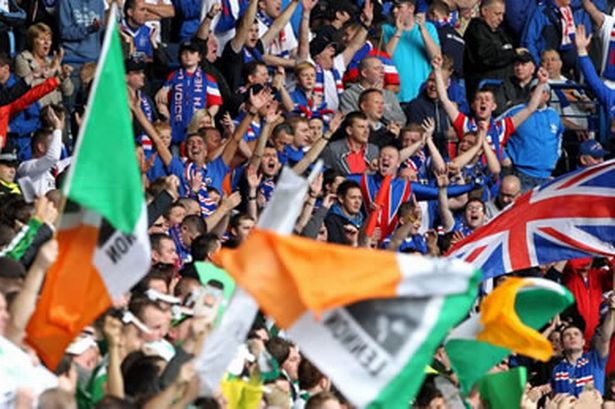
Old Firm Fans – The rivalry lives on

Just as the green or blue (depending on which side of the city you’re from) tinted glasses of nostalgia began to focus on that most famous of Glasgow derbies from yesteryear, out came the morons in full charge to besmirch and pillage an Old Firm U17’s Cup Final.

 What must the 22 boys on the park, during the biggest game of their lives have thought when they looked around them to see nothing caveman behaviour from significant sections of the crowd in what should have been an enjoyable fixture for all? Vile sectarian songs, violence, missiles being launched, and stadium defacement all around, despicable behaviour, of that there is no question.

 Both sets of fans and both clubs must take a hard line on this, and only a fool would discount the part that alcohol played in this debacle.  However, that’s no reason to give up the fight to restore the unremarkable and elsewhere mainstream concept of selling alcohol at football matches in this country.

I understand their logic, but it is flawed in so many ways. The timing of the crowd trouble couldn’t have been any worse. Just as Celtic Chief Executive, Peter Lawell, comes out and publically backs the move to reintroduce alcohol to football, a night of booze-fuelled misbehaviour unfolds at Fir Hill. But aren’t we forgetting several things?

First up: The idiots who cause problems at football on this scale will drink to excess regardless of any regulations we put in place (like the current ban on alcohol in the grounds, which many of them flaunt unashamedly) and it’s the responsibility of the authorities to weed them out and banish them from our game.

All the anti-sectarianism and anti-bigotry campaigns in our country have one thing in common. They seek to identify and punish the mindless few; who spoil the beautiful game for the straight-laced, fanatical masses. Why should our approach to alcohol be any different?

Alcohol can be enjoyed at football games around the world, largely without issue, so are we really the worst behaved fans in the world? Or do we lack the common sense to see things clearly and simply eradicate the troublesome fans?  I’m positive it’s the latter.

Not only can you drink alcohol at most other football venues around the world; but you can drink alcohol at almost every other sport or mass public gathering in this country. Golf, horse racing, hockey, basketball, concerts, tennis, music festivals, theatre performances, you name it. Why should football in this country be any different? Sure there’s a problem, but it’s a problem that’s there to be tackled, for the good of the image of the Old-Firm globally, and for the good of the game in this country as a whole. The current setup resembles that of a nanny-state. Scotland is a prosperous country that has historically lead the way on the international front in many ways, so it’s about time we caught up in terms of the infrastructure of our football.

 I also find the logistics of an alcohol ban at football, in terms of how it is currently, to be at best contradictory, and at worst, absolutely baffling. If we’re so opposed to alcohol at football matches in Scotland, then why is it that an ordinary punter can stick on a shirt and tie, buy an overpriced hospitality ticket at both Parkhead or Ibrox, and consume alcohol to their heart’s content for hours on end before kick-off? There are also an abundance of pubs in and around the grounds of Scotland’s big two, plying fans with as much alcohol as they see fit before matches. Fans would rather be paying this money to their beloved clubs, so why don’t we let them?

If we take the English Premiership’s alcohol policy for example: fans in attendance can purchase just two beers/ciders at a time, and have a very limited time to do so. The average adult fan would have time for a quick beer before the game, and one at half-time (queues permitting of course). Hardly binge drinking now is it? Who knows the effect it may have on fan behaviour with regard to how they’ll plan their day. The optimist is even tempted to think that some of the heavier pre-match drinkers will forgo their hurried pre-kick off binge in favour of a cool pint at their leisure in the ground.

At a time when clubs in our country, both big and small, are counting every penny, the powers that be remain completely ignorant to this potentially huge revenue stream. That extra £10 spent on the day by a few thousand fans at every ground would make a world of different, particularly to those clubs dangling near the SPL drop-zone. 

The current setup of no alcohol in football is an admission of failure for Scottish Football. It’s a white flag to the troublesome few, trading off the demands of the masses and the financial benefits to the clubs, for fear of how a few might behave.  Our game in this country is wallowing in the financial and social mires, yet we punish and disadvantage the many, for the sins of the few.

The simple fact of the matter is that football fans, Old Firm or otherwise that cause the type of problems we endured in this week’s U17 cup final, should be dealt with harshly, and ejected from Scottish Football forever. The more welcoming we make Scottish Football for the families and civil minded individuals of this country, the more we’ll see a positive result in attendances, finances, and overall product.

The time is now to take strong action against the bigots and morons ruining our game. Either we banish the idiots, or the good, fair-minded football fans will continue to vote with their feet and take a walk from our game for good.


We Fade to Gray

How the powers that be are strangling the life from Scottish Football

By guest blogger, ‘Kes Devaal’

;

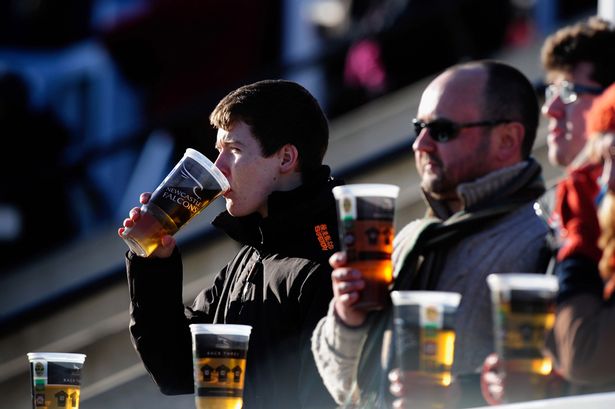
Rugby fans enjoy a beer
What’s the problem? Ok at rugby; but not at football…

España 82’. What a wonderful time to be introduced to the beautiful game. I remember as a child being overcome with excitement as the colour and noise of this wonderful event had me glued to the screen. The pizzazz of Platini, Rossi, Zico & Socrates laid out in front of me for the first time, a real splendorous feast of football, whetting my footballing appetite for life.

Fast forward 24 years, and this time I had the pleasure of getting to savour the flavour for myself with a few mates at The 2006 World Cup Finals in Germany. Amidst all the excitement and drama of what unfolded that summer, what really left an indelible mark on me was the coming together of thousands of fans from countries all across the globe embracing the occasion in the correct spirit & obviously over a cold Schofferhofer or two.

The fact that this was able to happen in a safe, family-friendly arena without an intense Police presence exponentially added to the wonderful carnival experience. It’s with this sentiment that I ponder over the possibility of ‘The Impossible Dream’ making it to our country – i.e. getting to watch the game I love in a Scottish stadium packed with men, women & children, with an optional cold beer in hand.

Having listened to Les Gray, The former head of The Scottish Police Federation on Monday’s edition of ‘Scotland Tonight’ it’s clear that long arm of the law still harbours doubts that the Scottish Football fans’ social behaviour has evolved since The Hampden riot of 1980. Going by this absurd logic, we might as well deter people from visiting Germany for a city break since we were at war with them 74 years ago.

Gray of course is no stranger to explosive diatribe. In fact his spurious blurb following the Lennon v McCoist touchline handbags following the March 2011 Old Firm match was central to the kneejerk legislation passed by First Minister Alex Salmond. The ‘Offensive Behaviour at Football and Threatening Communications Bill’ was intended to address anti-social behaviour at football, but now only serves to choke the very spirit of our domestic game. Innocent football fans have, and continue to be treated with mistrust as a consequence of a lazy narrative shoehorned by The Scottish Government and police, fulfilling criteria that generates nothing more than additional paperwork to file.

Worryingly for thousands of ordinary punters like me who strive to see the Scottish game flourish on the park, Mr Gray thinks your average Scottish Football fan cannot be trusted with alcohol whereas our friends who follow the oval ball can. We aspire to experience a modern sporting day out at the football, comparable in value and pleasantness to that of a day at the races, golf, or rugby. The fact that those in authority see fit to prohibit any progress on this front is nothing short of a slur on the working class. I thought that kind of approach of contempt for the working class punter was supposed to have died in November 1990, when the late Margaret Thatcher was dislodged from No.10.

To compound matters, you can attend virtually any sport in Scotland and be permitted to consume alcohol. Should you have the luxury of disposable income then you can enjoy a beer at the football, but only in the Corporate/Hospitality areas. Again this promotes a dangerous class divide, a false notion that only affluent wealthy classes can be trusted with alcohol.

Sir David Murray embarked on an egotistical spending crusade at Rangers to outdo Celtic’s 9 in a row and achieve European Cup success. He did so by being economical with the rules of the game and spending money that wasn’t there. The cost of failure was the very existence of Rangers Football Club when they were liquidated in 2012. The cost to the Scottish game was that our member clubs had to gamble with finances to compete with Rangers, and we now find ourselves in a very precarious financial reality. With this in mind, the Scottish game now, more than any other time, needs to do two things to sustain a bright future. On the park we need to get back to the model that served us well: Operating within our means and investing in youth. To be fair to most SPL clubs, the penny has at last dropped and they are embracing this policy. The second component, which is equally critical, is that we need to look after the paying public and give them a match day experience that compels them to return. The introduction of controlled, responsible drinking I believe would go a long way to making the paying customer feel as if they are being catered for. As they do across all Premiership stadia, SPL clubs would control responsible drinking largely with stewards, which is a straightforward process, and one that causes little or no trouble south of the border.

Championing the cause, Peter Lawell will most likely need to call upon the services of a Johnnie Cochran style lawyer with supreme powers of persuasion to stand any chance of altering the opinions of the powers that be in this country. As the finances of the game in Scotland continue to dwindle, as does the time we have to right this wrong. The dream of having an all-encompassing football infrastructure that allows the likes of alcohol to be sold within the grounds is in no way an unrealistic target, but now is the time to act if we’re ever to make the change.

;

e

Celtic Open The Door To Sensible Ticket Prices

by Johnny Connelly – Archive piece from PLZ Soccer – April 2013

Just as the SPL season screeches to a halt, the doomsday prophets are already salivating at the concept of attendances falling again in our premier league next season.

With the never-ending list of questions surrounding Rangers’ future, the format of the league still up in the air, and edgy wait for a new league sponsor to emerge, even the most optimistic of football fans could be forgiven for pondering the notion of half-empty stadiums next season.

Enter Celtic (just in the nick of time) with a revolutionary attempt to curb the downward spiral of attendance…

READ THE FULL STORY HERE…

Get the Hawk outta Here

Why I Hope the SPL will never introduce Goal-Line Technology

By Johnny Connelly

Hawkeye camera
Coming to a match near you? The Premiership has given the nod to Hawkeye

So Hawkeye’s revolutionary goal-line technology is to be introduced to the self-proclaimed ‘best league in the world’ – Let’s hope it doesn’t creep over the border.

It feels as though the beautiful game is slipping further and further away from the romantic notion of the sport that traditionalists love and hold dear. This latest challenge to the integrity and flow of the game comes as an unwelcomed addition, in my opinion at least.

A day at the football is unparalleled when it comes to the fast-paced, high-energy, passionate encompassing of sportsmen and 10’s of thousands of fans exerting themselves for 90 minutes. It’s exhilarating. It’s enthralling. It’s football! And it’s exactly the way it should be.

Compare the magnificence that is football with the likes of cricket, tennis, or rugby. What sets our beloved game apart from lesser sports is the flow of the game. The introduction of goal-line technology will only hamper that. The days of referees having to make split second decisions to judge if the ball is over the line would be a thing of the past. Needless pauses in football are kept to a minimum by design for the good of the game. Yet now, we’d be actively encouraging such things!

When we’re fully integrated with the concept of goal-line technology, what comes next? Where else could we implement technology to ‘improve’ our game? How long before we question the purpose of referees at all? Would we write off the latest officiating innovation of goal-line assistants? And linesmen! Would we replace them with automated machines that run the line for us with a 0% chance of error? It’s a scary train of thought to meander down.

While we’re on the subject of officials; what would be left for our referees and linesmen to aspire to if big decisions like debatable goals were decided by technology? Football needs top referees. The development of officials is just as important as the development of players. What must they be thinking just now? To become the next Pierluigi Collina, youngsters must work incredibly hard. Their fitness must be on a par with that of a top player, and they must know every nook and cranny of the rule book. This won’t be the case if we start to lean on technology to enforce the rules and make the big calls. The refereeing aspect of football would be in serious danger of floundering before our very eyes.

Off the field it’d create problems too. Being a football fan is a 24/7 occupation. The fans live and breathe the game. A single match lasts but 90 minutes, so it’s a long wait between the full time whistle and the following Saturday’s kick off. To fill the void, the game needs talking points. Pundits, colleagues, and friends alike will endlessly debate things like whether the striker was offside, whether the player handled the ball, and of course, if the ball was indeed, over the line. The introduction of goal-line technology will make the “was it or wasn’t it in” talking point all but extinct. Further delving into technological advances in football will chip away at our other talking points, until we’re left with nothing but speculative conjecture to exchange on the way home from work, the pub, or the stadium.

As much as football is resplendent with examples of skill, camaraderie, and a sense of justice when the Goliaths of the game are somehow toppled by the plucky little Davids; we cannot discount or ignore some of football’s historical events that were in direct violation of the rulebook. As Scots, we’re painfully reminded all too often that England won the World Cup back in 1966, all thanks to a dubious Geoff Hurst goal.

Yet in the same breath, they’ve suffered heartbreak when Frank Lampard’s long range effort was disallowed against Germany in 2010, and who could forget that famous time when a little Argentinean relied on, as he alluded to, some divine intervention to topple England in 1986?

Can you imagine football without incidents like those? Surely over the course of time the decisions balance themselves out.

So what if goal-line technology would ‘right a few wrongs’ in terms of goals being awarded? Doesn’t the best team always win the league every year anyway?

Removing the potential for human error in the game is removing the simplistic beauty of the game itself.  If football was supposed to be perfect, there’d be no need for yellow & red cards, offsides, penalties, stoppage time, or any of the other subtle little nuances and imperfections that make our game what it is… absolutely brilliant!