Stand By Your Man

Why Saints Were Right To Have Faith In Danny Lennon

by Johnny Connelly

(as seen on PLZSoccer.com) – 09/10/13
Image

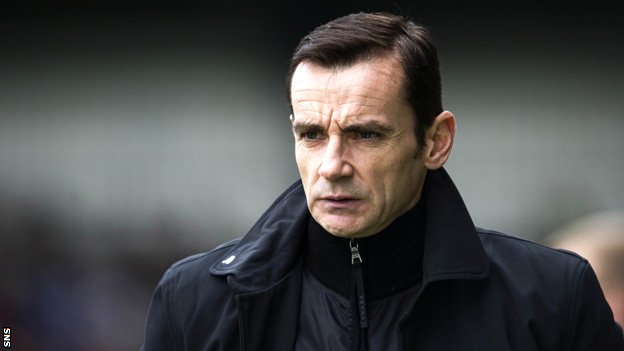
You could almost hear a faint knelling of a funeral bell, as the Grim Reaper sharpened his scythe and turned his damning gaze towards the managerial career of one, Danny Lennon at St Mirren just a few weeks ago.

The buzzards were circling; such is the intense nature of football in this country. A run of half a dozen poor results at the start of the season ensured that Danny Lennon was the red hot candidate to be the first manager in the SPFL to be sacked this season.

It was unanimous, there was no debate to be had. St Mirren were playing poorly, in rut you could say, and with Lennon at the helm, they were on the brink of being pulled into a relegation battle with crisis-stricken Hearts.

Fast forward a few weeks, and the Buddies picked up a spirited draw against Aberdeen, and a huge victory in a must-win fixture against Hearts. All of a sudden, the clouds from above St Mirren Park, and the football world begins to remember that (all things considered), Danny Lennon has done an excellent job as manager of the Paisley club.

St Mirren in recent years has been a club that budgets to finish 11th in the Scottish top flight. Under Lennon, the club have invested in a new stadium, achieved their highest league finish, and won their first major trophy in 26 years when they got their hands on the League Cup this year.  

By all accounts, that’s about as good as Danny Lennon could be expected to do, given the resources available to him. 

Prior to the Hearts game, if Lennon had been relieved of his duties, it’d have been far from the biggest shock in our game over the last few years. It would have been a foolish decision, as just a handful of matches can change everything. 

St Mirren may well get relegated this season, and on the other hand, they may well finish in the top six. It’s just too early to make any kind of concrete prediction of that magnitude. We’re just 9 games into a league season, and unless there’s a readymade Sir Alex Ferguson or Jose Mourinho willing to take over, it makes little or no sense to light the blue-touch paper and instigate the uproar that ensues when a club sacks their manager. 

When Lennon was flying below the radar of scrutiny way back in August, Pat Fenlon was the man that bore the brunt of the sacking speculation. Yes, Hibs had a shocking start to the season, and yes, yet another Easter Road sacking wouldn’t have been beyond the realms of imagination, but just look at what can happen with a bit of time and support.

Fenlon’s men imploded to record a 9-0 aggregate defeat to Malmo, but now look at them. They are the form side in the SPFL, sitting in 5th place, just five points behind Inverness Caley Thistle in 2nd place, and they’ve lost just one of their last seven matches. 

The real scrutiny in football nowadays should be happening at the appointment stage, not after a club has committed to a long term deal with a new manager. The gaffer who currently finds his head nearest the guillotine is Kilmarnock’s Allan Johnstone, and perhaps rightly so.  Killie haven’t won a competitive match since 11th May, so the pressure on the management is understandable, and the patience placed in them won’t be inexhaustible. 

As much as there can be a right time to part company with a manager in some circumstances, the virtue of patience has historically been proven to pay more dividends than any knee-jerk sackings.

Can you imagine what would currently stand for the global institution that is Manchester United if they’d given Fergie the bullet after 6 months?  The biggest club in the world may never have reached their potential!

Conversely, the perils of knee-jerk sackings are all too apparent, especially in English football. The recent Paolo Di Canio debacle highlights this perfectly. Sunderland have hired and fired managers all too eagerly in recent times. Di Canio’s appointment came but a day after Martin O’Neill was relieved of his duties. The Sunderland board withstood criticism from all corners of their fan base for the original appointment, only to fire the manager after just 13 matches in charge.

St Mirren have done the right thing in backing Danny Lennon for the time being, and I sincerely hope the correct level of patience and faith is extended to all SPFL managers this season. Hibs, Hearts,  and Killie (amongst others) have experienced a turbulent few years, purely because they’ve gone through a drove of managers in that time. Hibs have had 4 managers in 5 years, Hearts have had 4 in 3 years, and Killie have had 3 in 3 years. 

Now, more than ever, a bit of patience, and dare I say it, common sense is required.

Make the right appointment, trust your judgement, and back your club to the hilt.

Qatar Sticks In Your Throat

Why We Should Just Say No, to a Winter World Cup

By Johnny Connelly

Image

Paradise Found? – An artist’s impression of one of the Qatar stadiums

There’s a very good reason why Nat King Cole’s famous ‘Christmas Song’ starts: “Chestnuts roasting on an open fire”, and not “Neymar blazing over an open goal” – The World Cup is a summer event, and should be kept as far away from the festive season as T in the Park, Scottish Cup Final day, and 99’ cones at Ayr beach currently are.

Eyebrows were raised across the globe when Qatar was selected as the preferred bidder for the 2022 World Cup, especially over the likes of Australia, but this latest suggestion to shift the tournament to a November/December affair is a bridge too far, (in my eyes at least). 

I fully understand that it could be troublesome to host a tournament in the height of summer in a country where the temperature at this time can frequently exceed 40 degrees, but the notion of it being warm in Qatar isn’t a new phenomenon. This begs the question, why even select Qatar as the hosts in the first place?

FIFA’s approach to the World Cup is abundantly clear. They’ve bought into this utopian idea to move the world’s premier football tournament to every far flung corner of the planet.

I’m all for raising the profile of the game in countries that aren’t steeped in the game. For example, the USA have never looked back since hosting the tournament in 1994, but their situation differs from that of Qatar’s in terms of infrastructure and cultural readiness for what is essentially a heavily westernised event.

FIFA’s motto, “For the game, for the world”, seems as though it couldn’t be further from reality. Given how inaccessible Qatar is to western tourists for this type of event, the average punter would have better luck going to the World Cup if it were hosted on the moon. 

The disruption it’ll cause to domestic football would be at best bizarre, and at worst, catastrophic. The sheer logistics of working in a winter shutdown of two months or more across the biggest leagues in the world would decimate the rhythm of the traditional season, and could open a can of worms in terms of inviting the questioning of all our football traditions.

 Traditions are what make our game ‘beautiful’, and when you start to challenge things like having the World Cup as a summer event with a carnival atmosphere, you’re toying with the very building blocks of the tournament itself.

Football purists will point you towards the likes of Espana ’82, Mexico ’86, and France ’98 to name but a few instances of how the World Cup should be hosted. The shambolic decision to award the tournament to a nation, then latterly question if it’s even possible for them to host it within the usual parameters really tears the Hollywood shine off what should be the biggest event in the world.

We can only hope that lessons are learned, and common sense prevails to allow the World Cup to retain its usual summer timeslot. Questions will be raised about the World Cup in Qatar in the lead up to, during, and after the tournament itself.

The hope is that in the future, the focus will once again return to bringing the games to the people, creating a carnival atmosphere, and facilitating a multicultural celebration of the beautiful game for all to enjoy – Tartan Army included of course!

Scouting for Scots

Anya shines in Skopje, but could we unearth further hidden gems?

By Johnny Connelly

Image

Football has this funny habit of throwing up moments of brilliance, surprise, and shock when you least expect it. Just when you think you’ve sussed out how a team will play or line-up, up pops one of the game’s little surprises to catch you off guard.

Just a few weeks ago, the name ‘Ikechi Anya’ was completely alien to the Tartan Army. Now, plucked from the international abyss, the Watford attacking fullback looks to be amongst Scotland’s hottest properties.

After an impressive half hour cameo against Belgium, and an awe inspiring 90 mins in Macedonia, the Tartan Army are buzzing with excitement about the surprise package that is, Ikechi Anya.

Given that we’re a few days on from the match in Skopje, the dust has settled somewhat. We’re still on a high from Anya’s outstanding performance and wonderful goal, but the question has been whispered among fans, how on earth did we not notice this guy until now?

Despite not having a surname like Wallace or McDougal, Ikechi Anya is as Scottish as Irn Bru, and the guy on the Scott’s Porridge Oats box. Anya was born in Glasgow and bred in Glasgow (albeit to a Nigerian father and Romanian mother). He’s Scottish, and has a wealth of experience playing at a decent level in Spain, almost cracking the Sevilla and Celta Vigo first teams, yet nobody thought to even consider him in a dark blue shirt.

He’s been a real top performer for Gianfranco Zola’s Watford team. With his electric pace, dogged determination, and newly discovered composure when it comes to finishing, Anya looks as though he’ll go from strength to strength, both domestically and internationally. His discovery is a huge benefit to our national side, but our failure to discover him until the age of 25 should send alarm bells ringing through the current player identification setup.

If he could slip through the net and under our radar, how many others are out there?

We’re no strangers to making the most of the options presented through things like the Grandparent eligibility ruling. The likes of Neil Sullivan, Don Hutchison, Nigel Quashie, and Kris Commons (to name but a few) all made the grade as Scottish internationalists in recent times, despite not being technically Scottish.

With the Scotland side being somewhat rejuvenated under Strachan, players are enjoying being a part of the international setup. Hopefully this puts an end to players pulling out of squads, masking their apathy to play with dubious ‘injuries’.

Barry Bannan was quoted in the PLZ Soccer ‘Boot Room’ saying: “There’s a great buzz about the Scotland camp. Everyone wants to be involved and play for Scotland.” Perhaps this buzz will help us unearth some eligible players like Anya, that we may have previously overlooked.

As much as the purists of international football hate it, the Grandparent rule has become part and parcel of the modern game. Even the heavyweights of the world utilise it to the Nth degree. Take Germany for example. As much as their style of play is a joy to behold, they’re far from a starting XI of pure blood Germans.

  • Miroslav Klose – Polish
  • Lukas Podolski – Polish
  • Sami Khedira – Half Tunisian
  • Mesut Ozil – Turkish
  • Cacau – Brazilian
  • Jerome Boateng – Half Ghanaian

The stereotypical German efficiency seems to go beyond their endeavours on the park, and into their identification of eligible players for their national side, earmarking the best ones from a young age. We should be doing the same.

It’s a bonus to the purist when the player, like in Anya’s case, turns out to be born and bred in Scotland, but there’s no shame in going further afield, and using the rules to your advantage, as the Germans and many other top sides have done in recent years.

The alien concept of having to send out scouts to identify players eligible to play for Scotland may well be the right road to go down. Scotland has never been a nation resplendent with special players, so the addition of another one or two players like Anya could make all the difference. What lurks in the English Championship? Or further afield across Europe? The discovery of a Scottish grandparent for an uncapped player could make all the difference, especially when we get to add the likes of Steven Fletcher back to the squad, and can harness the developing skills of younger players like James Forrest.

It’s a no brainer; players want to play in successful teams. Success breeds success, and there’s a real feeling that Scotland can go places with Gordon Strachan at the helm. There’s only one place the Tartan Army would like to go, and that’s France again in 2016.

It’d be quite fitting for the long-suffering Scotland supporters to make their return to the big-time in France, for Euro 2016. By then it’ll have been 18 years since they last made the trip to France for a major finals.

Maybe now is the time; Lord knows it’s been long enough, and a little help from the right scouts could go a long way.

Firepower lacking as Celts scrape through

The emotion of relief was etched across Neil Lennon’s face as the full time whistle resonated around the Borås Arena, sealing Celtic’s safe arrival in the Champions League playoff round. A scrappy 0-0 in Sweden was enough to cement a 1-0 aggregate for Celtic over Swedish champions, Elfsborg. 

Celtic have started the season well on paper and are on course to reach the Champions League group stage as planned, but despite this, unconvincing victories have led sections of the Parkhead faithful to become concerned at the depth of Lennon’s squad, particularly in the attacking areas.

The Glasgow giants cruised past part-timers Cliftonville as expected, narrowly defeated Ross County on the opening day of the season, and secured the narrowest of aggregate wins over Elfsborg, a side that currently languish in 4thplace in the Swedish top flight. Yes, Celtic are winning, but whether or not they can continue to successfully pursue a place in the Champions League group stage with the current crop of forwards is in serious doubt.

During the 0-0 draw with Elfsborg, Celtic recorded just two shots on target. The isolated figure of Georgios Samaras, despite now being something of a fan favourite, looked ineffective. His 69th minute replacement, Anthony Stokes, was similarly foiled by the resolute Elfsborg defence. In a familiar way to all the other games so far this season, heads turned to Kris Commons to provide something special on his own, and on this occasion, he failed. On occasions like this in the past, all too often Neil Lennon’s men were bailed out by their prolific striker, Gary Hooper. Hooper scored goals in all competitions, and was as much of a threat to the likes of Barca and Spartak, as he was to Dundee and St Mirren.

The Englishman found the net 31 times last season for Celtic, and his £5.5m switch to Norwich has left Lennon with a significant spot in his team to fill.

Hooper’s departure sits nicely with the club’s overall, buy cheap, develop, and sell on policy, but only if another viable developing replacement is in place at the time.  

Celtic have done brilliantly to get £5.5m for Hooper, £12m for Victor Wanyama, and now reportedly £2.5m for Kelvin Wilson, but when these departures come without active replacements, the club’s business strategy comes under threat. In layman’s terms the club’s business strategy, by virtue of the absence of the type of money bequeathed to the English Premiership clubs, appears to hinge on the repeated delivery of these three goals: 

  • Reach the Champions League group stages every year (i.e win the league and qualifiers)
  • Keep the fans interested with an entertaining product for the majority of the year
  • Continue to be shrewd in the transfer market, develop players and sell on for profit

Without replacing these big players, particularly in attacking positions, the first and second goals become exponentially more difficult. True, given the absence of Rangers in the Scottish Premiership, a shift in transfer policy can be expected to some extent, but with the resources available at Celtic, a gulf of chiasmic proportions should still be apparent between them and the rest of the country’s top flight. 

Image
Lennon speaks to the BBC moments after qualifying for the Champions League Playoff


The Champions League playoff will be the toughest set of matches of the season so far for Celtic, and without a striker with the ability to score 30 goals a season in the squad, Celtic could well flounder. 

Historically, Celtic have always seemed to come up trumps when it comes to obtaining forwards capable of scoring goals  (in a similar way to how Rangers often seem to have relative ease in procuring a top-drawer goalkeeper, season after season). Not always a 53 goal a season Henrik Larsson; in the past we’ve seen the likes of Scott McDonald rattling in 31 in a season. Sometimes the big ticket signing isn’t required, it’s just a case of spotting a potential goal scorer.  

Hooper apart, this seems to be a skill that’s eluded Neil Lennon during his time in the Celtic dugout. The Northern Irishman has signed up several forwards, and for a variety of reasons, most of whom haven’t illuminated the league with their goal tally. The endeavour of Samaras is admirable, but he isn’t a natural goal scorer. 

Lennon has gone on record as saying he doesn’t think Anthony Stokes is “Champions League material”, and the likes of Tony Watt, despite his heroics against Barcelona last season, still has much to learn before he could be considered to be the finished article.

You’d also forgive the fans for being slightly apprehensive about Lennon’s choice of transfer targets to fill Hooper’s boots. It’s early days yet, but Amido Balde looks as though he hasn’t impressed his manager. He looks to be little more than a cumbersome bench-warmer. There’s no question over his fitness, so it would appear as though he’s deemed as third or fourth choice striker at the moment based on training ground performances. 

Parallels could be drawn with Balde’s situation, and other strikers that Lennon snapped-up; Miku, Lassad, Mo Bangura, Pawel Brozek, and Darryl Murphy to name but a few. 

The Hoops boss’ record for procuring quality goal scorers appears to be questionable at best when you see the list of failures above. The countdown to the transfer window slamming shut is well and truly on, and the names of two strikers appear to be cropping up in the rumour mill over and over again: Kevin Doyle of Wolves, and Alfreð Finnbogason of Heerenveen. Doyle looks like the far more likely signing, given his willingness to join, and Wolves’ willingness to sell. The Irishman, despite being a tireless worker, is far from a goal scorer. His record of 27 goals in 135 games (around 0.2 goals per game) is hardly awe inspiring, even when compared to Celtic’s other strikers. 

The likes of Samaras outperforms him in a Celtic shirt, scoring 48 goals in 156 games (0.31 goals per game). Stokes too boasts a better record, finding the net 33 times in 82 appearances (0.4 goals per game), and even the much maligned Harold Brattbakk’s Celtic record compares favourably to Doyle’s, as he scored 12 in 44 (0.27 goals per game). 

Herenveen’s Icelandic striker Alfreð Finnbogason looks as though he could be an ideal replacement for Hooper. He’s just 24 years old, so resell value becomes a factor, and scored 28 goals in 33 games last season (0.84 goals per game). He managed to find the net twice in Herenveen’s opening Eredivise match at the weekend too, but a hefty touted price tag of £7m puts him well out of Celtic’s price range, if the transfer policy of recent seasons is anything to go by.  

Lennon’s next move had better be a good one. A healthy compromise, somewhere between a Doyle and Finnbogason could be enough to do the business in the Champions League and win favour with the Celtic fans, but the clock is ticking, and you can be sure that all top European clubs will be sniffing around for a 30-goal a season striker. Now, more than ever, the lack of a cerebral, ruthless striker at Celtic Park is apparent. Perhaps the urgency and importance of the situation will bring clarity to the Celtic boss and help him find the player he needs. 

The fans can only wait and hope. Over to you, Neil.

McInnes Means Business as Dons Release 11 Players

By Johnny Connelly
(As seen on PLZ Soccer – 18/05/2013)


Right at home – McInnes has settled in at Aberdeen

As the world begins to come to terms with the imminent departure of Sir Alex Ferguson from our game, his successful and adventurous spell at Aberdeen was highlighted, and feels like a lifetime ago. Fergie’s propulsion of the club and the players of the day to the status of European heroes is but a distant memory for the long suffering Dons fans, given the club’s dismal league performances in recent seasons.

Aberdeen have finished the last 3 seasons in 9th place in the SPL, a record not befitting one of the biggest and best supported clubs in the country. Despite a positive start to this season under wily old Craig Brown, the club could yet make that a 4th successive 9th place finish, if things go pear shaped against Hearts on the last day of the season.

This just won’t do. Given the history and support of this club, there’s no reason why they shouldn’t have been up there alongside their under-resourced SPL counterparts, Motherwell and Inverness Caledonian Thistle, breathing down Celtic’s neck at the summit of the SPL.

It looks as though things have become worryingly stagnant and predictable at Aberdeen. Constantly finishing 9th overall, and match by match, they seem to only pick up points by stifling the opposition in the middle of the park, effectively choking the game. On 8 occasions this season, Aberdeen have drawn 0-0. This stat, above all else, signifies the need for change at the club.

Fair play to Derek McInnes, he’s identified that a major overhaul is needed alter the club’s fortunes, or at least bring a bit of variety of their results on the field. The ex-Rangers player will quite rightly take no blame for the dull performances this season, as he’s only just in the door, and will need time to make the wholesale changes required.

It seems as though the Dons have tried everything over the last few years. I honestly thought Craig Brown had cracked it when he complimented his young Aberdeen side with battle-hardened SPL players like Gavin Rae, Niall McGinn, and Russell Anderson. For whatever reason, perhaps the Brown’s advancing years, this didn’t transpire.

McInnes has started positively, and should be commended for his bravery in his decision to release 11 players from his current squad.

Players released:

  • Rory Fallon
  • Mitch Megginson
  • Rob Milsom
  • Gary Naismith
  • Isaac Osbounre
  • Gavin Rae
  • Dan Twardzik
  • Scott MacAulay
  • Zach Szemis
  • Stuart Close
  • Jamie Hamilton

The Dons manager told his club’s website: “It’s one of the least enjoyable aspects of the job to tell players that they won’t be staying and I would like to thank all of them for their contribution to this football club.”

He continued:  “Each of them are excellent professionals and we wish them all the very best in their future careers.”

A shrewd bit of media handling there by McInnes, but the real hard work for him starts now. The Aberdeen squad isn’t huge by any stretch of the imagination, so he’ll need to make some major moves in the transfer window.

It doesn’t take a genius to work out the Niall McGinn will remain a pivotal part of the Aberdeen setup after leading their scoring charts with a scintillating 21 goals to his name. Josh Magennis has also recently signed a contract extension, so it looks as though McInnes is relatively pleased with his attacking options.

Given the lack of funds readily available, McInnes will be required to be shrewd with free transfers and loan deals to transform this Aberdeen team.  He may well come to call upon his experience and connections from south of the border, having both played and managed at a decent level there, with a view to securing a few undiscovered gems that could improve his side.

As the likes of McGinn have shown, the difference a couple of players can make is remarkable.  1 or 2 decent signings could make the difference for them in the SPL.  The fact is that their recent seasons in the SPL haven’t been good enough, and the club should really be challenging in the domestic cups, year in, year out. The support the club have is amazing, they deserve more than what they’re currently being subjected to.

Derek McInnes is a talented manager, so there must be a quiet sense of optimism surrounding the Dons for the upcoming season. However, if he joins the long list of managers who’ve failed at Pittodrie, many will start to wonder if the problems stem from the management team, or whether they run much deeper at Aberdeen FC.


Ban the Bigots; Not the Booze

By Johnny ConnellyImage

Old Firm Fans – The rivalry lives on

Just as the green or blue (depending on which side of the city you’re from) tinted glasses of nostalgia began to focus on that most famous of Glasgow derbies from yesteryear, out came the morons in full charge to besmirch and pillage an Old Firm U17’s Cup Final.

 What must the 22 boys on the park, during the biggest game of their lives have thought when they looked around them to see nothing caveman behaviour from significant sections of the crowd in what should have been an enjoyable fixture for all? Vile sectarian songs, violence, missiles being launched, and stadium defacement all around, despicable behaviour, of that there is no question.

 Both sets of fans and both clubs must take a hard line on this, and only a fool would discount the part that alcohol played in this debacle.  However, that’s no reason to give up the fight to restore the unremarkable and elsewhere mainstream concept of selling alcohol at football matches in this country.

I understand their logic, but it is flawed in so many ways. The timing of the crowd trouble couldn’t have been any worse. Just as Celtic Chief Executive, Peter Lawell, comes out and publically backs the move to reintroduce alcohol to football, a night of booze-fuelled misbehaviour unfolds at Fir Hill. But aren’t we forgetting several things?

First up: The idiots who cause problems at football on this scale will drink to excess regardless of any regulations we put in place (like the current ban on alcohol in the grounds, which many of them flaunt unashamedly) and it’s the responsibility of the authorities to weed them out and banish them from our game.

All the anti-sectarianism and anti-bigotry campaigns in our country have one thing in common. They seek to identify and punish the mindless few; who spoil the beautiful game for the straight-laced, fanatical masses. Why should our approach to alcohol be any different?

Alcohol can be enjoyed at football games around the world, largely without issue, so are we really the worst behaved fans in the world? Or do we lack the common sense to see things clearly and simply eradicate the troublesome fans?  I’m positive it’s the latter.

Not only can you drink alcohol at most other football venues around the world; but you can drink alcohol at almost every other sport or mass public gathering in this country. Golf, horse racing, hockey, basketball, concerts, tennis, music festivals, theatre performances, you name it. Why should football in this country be any different? Sure there’s a problem, but it’s a problem that’s there to be tackled, for the good of the image of the Old-Firm globally, and for the good of the game in this country as a whole. The current setup resembles that of a nanny-state. Scotland is a prosperous country that has historically lead the way on the international front in many ways, so it’s about time we caught up in terms of the infrastructure of our football.

 I also find the logistics of an alcohol ban at football, in terms of how it is currently, to be at best contradictory, and at worst, absolutely baffling. If we’re so opposed to alcohol at football matches in Scotland, then why is it that an ordinary punter can stick on a shirt and tie, buy an overpriced hospitality ticket at both Parkhead or Ibrox, and consume alcohol to their heart’s content for hours on end before kick-off? There are also an abundance of pubs in and around the grounds of Scotland’s big two, plying fans with as much alcohol as they see fit before matches. Fans would rather be paying this money to their beloved clubs, so why don’t we let them?

If we take the English Premiership’s alcohol policy for example: fans in attendance can purchase just two beers/ciders at a time, and have a very limited time to do so. The average adult fan would have time for a quick beer before the game, and one at half-time (queues permitting of course). Hardly binge drinking now is it? Who knows the effect it may have on fan behaviour with regard to how they’ll plan their day. The optimist is even tempted to think that some of the heavier pre-match drinkers will forgo their hurried pre-kick off binge in favour of a cool pint at their leisure in the ground.

At a time when clubs in our country, both big and small, are counting every penny, the powers that be remain completely ignorant to this potentially huge revenue stream. That extra £10 spent on the day by a few thousand fans at every ground would make a world of different, particularly to those clubs dangling near the SPL drop-zone. 

The current setup of no alcohol in football is an admission of failure for Scottish Football. It’s a white flag to the troublesome few, trading off the demands of the masses and the financial benefits to the clubs, for fear of how a few might behave.  Our game in this country is wallowing in the financial and social mires, yet we punish and disadvantage the many, for the sins of the few.

The simple fact of the matter is that football fans, Old Firm or otherwise that cause the type of problems we endured in this week’s U17 cup final, should be dealt with harshly, and ejected from Scottish Football forever. The more welcoming we make Scottish Football for the families and civil minded individuals of this country, the more we’ll see a positive result in attendances, finances, and overall product.

The time is now to take strong action against the bigots and morons ruining our game. Either we banish the idiots, or the good, fair-minded football fans will continue to vote with their feet and take a walk from our game for good.


Celtic Open The Door To Sensible Ticket Prices

by Johnny Connelly – Archive piece from PLZ Soccer – April 2013

Just as the SPL season screeches to a halt, the doomsday prophets are already salivating at the concept of attendances falling again in our premier league next season.

With the never-ending list of questions surrounding Rangers’ future, the format of the league still up in the air, and edgy wait for a new league sponsor to emerge, even the most optimistic of football fans could be forgiven for pondering the notion of half-empty stadiums next season.

Enter Celtic (just in the nick of time) with a revolutionary attempt to curb the downward spiral of attendance…

READ THE FULL STORY HERE…

Why Gary’s Jumping Through Hoops to be Lennon’s no.1 Striker

By Johnny Connelly

With no Rangers in the SPL, Celtic unquestionably have an easier route to retaining the title. Despite the benefits of this, it does create another issue for Neil Lennon’s men. Keeping a whole squad of players performing at their best becomes difficult when the consequences of dropping points are exponentially less severe.

Even at this early stage in the season, (despite a few instances of complacency) Celtic’s quality has shone through, and only a great fool would bet against the SPL trophy staying at the Parkhead club’s trophy cabinet.

Given Lennon’s relative lack of experience in the dugout, many have questioned his ability to handle the problems that face a huge club like Celtic. That said, the way he’s managed to tackle this most recent issue is nothing short of remarkable.

So, the million dollar question, how do you keep players performing at their best when your biggest rival is no longer breathing down your neck? Or in a more universally comparative way, what do you do when your biggest external competitor disappears?

The answer?  Simply introduce more internal competitiveness.

Lennon has illustrated this ethos beautifully raising the stakes when it comes to competition for places in his starting XI. This is how Celtic will succeed and flourish without Rangers, and it’s already bearing fruit in the form of a resurgent Gary Hooper.

Image

Is it a bird? Is it a plane? – No, it’s Hooperman

Hooper netted the opener for the Bhoys against Motherwell on Saturday, taking his tally to 8 for the season already. This time last season, even with Rangers in the league, it was December before Hooper reached this tally. I put this down to increased competition for places.

At the start of the season, Celtic’s striking options were less considerable. Hooper was the main man, usually partnered with Stokes. The only real competition was from Georgios Samaras and Tony Watt. Samaras was and is playing the best football of his career, but is more effective as a winger. Watt too looks promising, but at just 18 years of age, will be used sparingly.

Lennon must have looked through his squad list and saw few other alternatives. He chose to loan out the cumbersome Darryl Murphy, youthful James Keating, and the flop that is Mo Bangura. Had this been left the way it was, I believe Celtic would have been subjected to a lesser Gary Hooper than the one that’s tormenting defences currently.

Enter Miku and Lassad Nouioui. Two experienced strikers to give Hooper a much needed boot up the backside in training every day. Over the last few seasons, if Hooper’s form was below par, he’d still start (more often than not). This season will be different. He’s widely regarded as Celtic’s best striker, but this time around, if his form drops, he’ll find himself on the bench.

Hooper notched up 29 goals last season in 50 appearances, (58% conversion). This was his second highest ever return, just 1 goal off his career best. This season so far, his record is 8 goals from 12 games, a marked conversion improvement at 67%.  On the basis of these current figures, and the fact that Hooper will soon be hitting his physical peak as he turns 25 in January, Lennon will be hoping his man will manage around 34 goals this season.

Celtic’s central midfield too has long been feeling the benefits of a healthy competition. Lennon has a plethora of options available to him in the middle of the park. Victor Wanyama, captain Scott Brown, Joe Ledley, Beram Kayal, and Filip Twardzik all fit there naturally, while the likes of Charlie Mulgrew, Kris Commons, and Paddy McCourt too can slot in if need be. This wide choice has made Celtic’s midfield the strongest area of the team, and allowed the club the luxury of being able to sell on a player like Ki for £7m, a healthy profit without weakening the team.

Lennon has quietly applied the same logic to the forward line, and arguably the back four with the addition of Efe Ambrose to the team. More or less the whole squad now knows that they are not bomb proof, and their place in the squad is not guaranteed. Possibly Fraser Forster and James Forrest are the exception to this rule currently, but given the nature of Lennon’s past dealings, it’ll only be a matter of time before they also find themselves having a sterner test in training to justify their selection.

This policy of increased competition for places has proven successful, but it a work in progress without question. This season won’t see a record points total for Celtic, and it’s unlikely to be one that’ll feature heavily when the complete history of the club comes to be written. What it will be able to boast though is that it’ll be a successful season both on and off the pitch. Financially the club is being run in a prudent manner, the fans will be entertained and see their heroes play against the finest teams in Europe, and the players, under Lennon’s shrewd setup, will be assured that only the best performances will merit their next opportunity to pull on that famous green & white jersey.

As Jock Stein once said, “Celtic jerseys are not for second best, they don’t shrink to fit inferior players”, and Neil Lennon’s competitive squad will ensure that Gary Hooper and the rest are no exception to this.

How Old Media killed Rangers FC…and how New Media danced on its grave – PART II

PART II – How New Media danced on Rangers’ grave

By Mr Custard

Where was I? Oh that’s right, Old Media killed Rangers…

I was brought up with a newspaper coming through the letterbox every day in our house. We had a big family and it got passed about. We knew it was biased in places but we were intelligent enough to read between the lines and find the truth. I was a paper delivery boy for years too, I did the same round Joe Jordan did. I remember getting a bollocking for delivering the Evening Times Saturday night copy late because I had been at Pittodrie that day. When the internet came along it opened people’s eyes. It became quite clear the newspapers were feeding us lie after lie. Unsurprisingly, circulation numbers began to dwindle. Now I don’t miss them. On my commute to work I can pick up fresh news, with interactive moments from various sources. Right now I would never dream of picking up a ‘red top’. Why would I pay to read the jaundiced words of Traynor, Keevins and Hateley? Before this era they were the only show in town, empowered by their own ego and their words were given credence. Now? In this internet age (which they seemingly can’t understand) they have been shown up as dinosaurs, and their meal ticket has run oot.

Not only did the Old Media kill Rangers; they killed themselves.

Image

Take the floor shiny New Media. New Media is people led, fan led. It sets the agenda and it runs with it. In this current ‘internet age’ someone can have a good idea and it can gather pace and spread like wildfire. If it strikes the right chord, it’ll run and run instantly. The best example of this is the well known Twitter account, “Rangers Tax Case”. It came into being due to Old Media not only ignoring the biggest sporting swindle to ever hit these islands, it denied, obfuscated, and deflected too. Ordinary people had concerns, a blog aired these concerns and very quickly, a light was sparked and everyone did some digging, shared information and made informed decisions.

For months and months the mainstream media ignored these new findings. Things that had been dug up about Craig Whyte not having ten bob and a packet of fags, the Ticketus scam, the crumbling steel empire of Murray, the proof of dual contracts. The mainstream media denied it all, paving the way for the illuminating light of New Media. This name in itself is misleading in the context of the old. New media is everyone connecting, sharing views and opinions and quickly realising that contributors were far more resourceful and intelligent than their antiquated predecessors. Obviously Celtic fans had the most reason to investigate but they were joined by fans of other teams and fans of fairness and justice who were similarly fed up by the open corruption and bored with the SPL cabal that hadn’t seen the league trophy leave Glasgow in over a quarter of a century.

Instead of buying a newspaper that was already redundant by the time it hit the newsstands, purveyors of New Media could read these articles immediately online, and within minutes form and dissipate this opinion to others, often hilariously. By use of Twitter articles can be easily aired, derided and parodied by fans of all teams. Rangers Tax Case led to Celtic tax case, Aberdeen tax case and St Mirren tax case… all with their own humorous contributions.

After year upon year of comedy reporting that had now been shown up for the joke that it was, the New Media fearlessly put the boot in, and what a wealth of material to choose from. Craig Whyte was openly lampooned which was like shooting fish in a barrel. The ‘Mr Custard’ debacle where Rangers Fighting Fund proceeds were transferred via Paypal to a clown was like something off Chucklevision. I’m purposely not naming names as would lead to cracking contributors being left out but in the midst of Old Media being dire, Joe Public was left to fill the void…and some humorous, well informed minds carried out this task. Each mention of “warchests” was derided. The comedy administrators Duff & Duffer equally got it for their shambolic dealings, as well had their long time conflicted interest in the case. Some clever peeps with too much time and too much Photoshop knowledge were given instant audience and infamy. Comedy “in denial” utterances from the “flat earth society” were also instantly shared with great glee. But amidst all the fun and joviality there was a serious and important message being shared.

From the old MSM claims of “nothing to see here” about the tax case (which bizarrely enough are now officially named as “the big tax case” and “the wee tax case” by all after being christened so on rangers tax case.) to “Craig Whyte is minted”…..we had Rangers in administration on Valentine’s Day, lying talk about being back out of admin for euro qualification, we had lying talk in the press about a CVA being do-able it quickly became clear that the only way to get near to the truth was New Media blogs, and twitter feeds from the footballing family.

Even now we are still being fed lies. Apparently Rangers didn’t get liquidated and are still in existence? Apparently the whole of Scottish football is going to hell in a handcart because “the peepul” aren’t there to scrape their knuckles across the landscape. So all SPL teams aren’t reporting record season ticket sales due to this cancer being cut out of the game?

I genuinely think this is a watershed moment for Scottish football. The schoolyard bully has been given a severe doing, the prefects who looked on have been similarly given a bloody nose. Scottish football has been given a shot in the arm due to new enthusiasm, lower league teams will see their exposure and coffers swell, SPL teams will have a better chance of silverware and there also seems to be a new found sense of “chumminess” between clubs over denying the passengers who wanted to keep the status quo and who served notice on their clubs guardians.

So here we are, Armageddon didn’t happen. Sky is still paying as it was, ticket sales are up and we’re all friends…the future’s so bright, I gotta wear shades!

Heroes and Villains: Why our beloved game’s media men should be next under the microscope

By TuttiFruttiBusDriver

The decision to offer Dundee FC a place in the SPL appears to offer a welcome release from the maelstrom of committees, board meetings and legal chicanery that has consumed the thoughts of many during this dreich Scottish Summer of sport. It offers an opportunity for fans of all teams to focus on summer transfer windows, pre-season friendlies, and, perhaps, foster a wee bit of cautious optimism about what the season ahead may bring. Maybe the dust will settle a little and we can concentrate on the football.

However, while it is undoubtedly healthier to look forward with positivity to the new season, it is necessary to get several things in order if this is not to become yet another missed opportunity to address the parlous state of the game. There are many issues that need looked at from a change point of view, none more so than the role of BBC Scotland’s sport department going forward.

The now notorious inability of a vast rump of the Scottish football media to ask questions of David Murray for fear of being banished from the vineyards, private jets and oak-paneled offices is an embarrassment that will haunt many hacks for as long as they continue to eke out an existence in the media. Many key players at the BBC were not immune from this. Similarly when Craig Whyte emerged from the shadows (with a questionable CV to boot) the prevailing practice of parceling up PR-swill while avoiding asking difficult questions continued. On the evidence so far, and with a few notable exceptions as detailed below, Charles Green hasn’t exactly getting the roughest ride either.

Image
Chick Young and Jim Traynor – Purveyors of questionable coverage?

It is arguable that the senior management at BBC Scotland’s Sportsound conducts a fundamental and radical review of the makeup of their broadcasting team for the forthcoming season. While some have enhanced their reputations with an honest and even-handed approach to the protracted saga (Jim Spence and Richard Gordon spring to mind) others, such as the laughably lightweight Chick Young and the deliberate mendacious Jim Traynor are surely redundant. Young’s grasp of the story is weak and ineffectual. Traynor, meanwhile, has brought nothing to BBC Scotland’s sports output bar a hectoring, bullying, sneering, doom-mongering style that has many listeners reaching for the off-switch.

Traynor can write what he likes in his newspaper (which given the latest circulation figures appears to be living on borrowed time ) but I am sure many license-fee payers resent his views being rammed down their throats in the sake of ‘parity’ or ‘balance’. A slavish desire to see the status quo remain purely out of self-interest has been has main contribution to the debate. Surely this propagandist has no place in a key forum for debate on the issues going forward?

Jim Spence and Richard Gordon, conversely, are notable for the way that they have made room for nuanced arguments. They have focused on complex issues, have tried to make sense of wildly conflicting information and synthesize it into something meaningful for the listening audience. They’ve asked the difficult questions, engaged widely with fans on social media and largely understood that fans are now better informed, more connected, and, with worthwhile opinions (compare that to the loathing of ‘internet bampots’ that you get from Traynor).

It is vital that all those with an interest in the future of Scottish football ensure that the mainstream media charged with holding authorities to account ask the questions that we want asked and provide informed analysis/opinions. Where the pundits are not fulfilling that role then others must be offered the opportunity. Punditry should not be a job for life, it should be determined by an ability to ask the right questions, no matter how uncomfortable those may be, and, a demonstration of sound interpretation of events. The days of the two-dimensional Traynor autocrat or the sycophancy of Young are gone. While social media has radically altered the media landscape by increasing connections, relationships, and, the democratisation of information, it is important that those in charge of the BBC Scotland Sports department fulfill their commitment to serve in the public interest. Weak scrutiny has failed us in the past; it should not be allowed to happen again.