Lay off Allan Johnston

The Queen of the South Gaffer is a Worthy Winner

By Johnny Connelly

Isn’t it funny how every armchair supporter becomes an expert when it comes to the awards season in football? No sooner had Allan Johnston picked up his PFA Manager of the Year award, before a legion of disgruntled fans of SPL clubs registered their disgust at the outcome, some even branding it a farce.

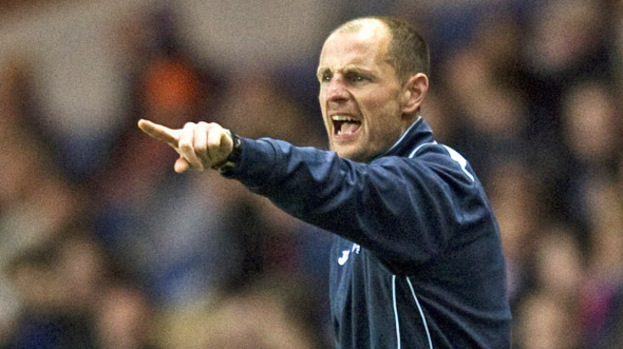
Allan Johnston points on the touchline
Top Dog – Johnston scooped the top managerial award in Scotland

In what must have been a close run vote, Johnston trumped Neil Lennon, Stuart McCall, and Terry Butcher to claim the first managerial prize of his career.  All nominees made it to the shortlist purely on merit. Lennon guided Celtic to a fairly straightforward SPL title win, as well as some wonderful European nights, most notably against Barcelona. McCall continued to defy the odds with a miniscule budget and squad size to secure 2nd place in the SPL, while adhering to an attractive style of play along the way. Butcher similarly galvanized an under-resourced club to punch above their weight, and should be commended for pushing Motherwell all the way in the battle for 2nd spot.

Each nominee’s achievements should be commended, but none overwhelmingly eclipse those of Allan Johnston this season, on a pound for pound basis at least. Johnston’s Queen of the South team romped their way to the 2nd Division this season, scoring goals for fun, and insisting upon an expansive style.  Johnston’s men were the first team in the United Kingdom this season to win their league. If there was ever a leveller for all managers to be compared by up and down the country, surely this is it. Even with Celtic having no Rangers to contend with, Queen of the South had their title in the bag long before the Parkhead club, or any other title winners across the country.

The Scottish 2nd Division trophy was joined by another piece of silverware that everyone and their granny expected to reside in Ibrox by now, the Ramsdens Cup. Although not the most prestigious tournament in world football, the achievement of a 2nd Division club winning the Ramsdens Cup is certainly at least noteworthy. Knocking out tournament favourites Rangers early on was as much of an achievement as lifting the cup itself in that unforgettable final against Partick Thistle. Even the top sides in the country came across tangible difficulty when playing against Queen of the South this season. A single goal was all that separated the Doonhamers against Dundee United and Killie in the League Cup and Scottish Cup respectively. The 2nd Division outfit even managed to go one stage further against Hibs in the Scottish Cup, securing a 2-0, and another feather in Johnston’s cap.

Away from cup competition, their league form has been outstanding, both in terms of results and performances. They’ve lost just twice in the league, chasing a points total just short of 100! Along the way, the style of play has attracted plaudits from the media as well as Johnston’s peers. His expansive style as a player has been replicated in his first management role, as his focus would appear to be entertaining the fans, and simply outscoring the opposition. On their way to the title this year, the fans have been treated to a glut of goals, currently sitting with a goal difference of +69, and having scored 3 or more goals in a game on 17 occasions.

Some sections of supporters within the Scottish Football realm have turned their noses up at a 2nd Division manager and team being rewarded on the PFA front at all. I do wonder, if Rangers go on to win the 2nd Division and Ramsdens Cup next season in style, would people be so quick to discount the achievements of Ally McCoist and his players?

Another criticism leveled at those who voted for Johnston is that Queen of the South do have something of a wider resource pool than all other clubs in the division. While this is a clear advantage in some ways, it brings with it a huge pressure to win by a healthy margin. The Doonhamers boss has thrived under this pressure, and delivered on all fronts.  I find it strange that the resource inequality argument isn’t leveled at the likes of Neil Lennon’s Celtic side, Jupp Heynckes’ Bayern Munich side, Tito Villanova’s Barcelona side, or Carlo Ancelotti’s PSG side for example. Surely it’s such a common issue that you’d have to criticise everyone in question, or swallow your pride and admit it when a manager has done a good job?

Perhaps the ‘fresh air’ factor of Allan Johnston’s performance this season is what set him apart from the others on the shortlist? The Queen of the South journey has been something of a whirlwind at a time when our game was beginning to seem a little stagnant. As much as Lennon, McCall and Butcher’s achievements have been laudable, there was nothing ground breaking about any of them (domestically speaking at least).

Those who voted for Johnston for the PFA award clearly felt that the game in Scotland developed a much needed, exciting young manager. Shame on anyone who berates a man who’s trying to play the game the way it should be played. Long may he continue to inject this new life into our game, and with any luck we’ll see a few more developing managers of his ilk strengthening the quality and appeal of the game in Scotland.

We Fade to Gray

How the powers that be are strangling the life from Scottish Football

By guest blogger, ‘Kes Devaal’

;

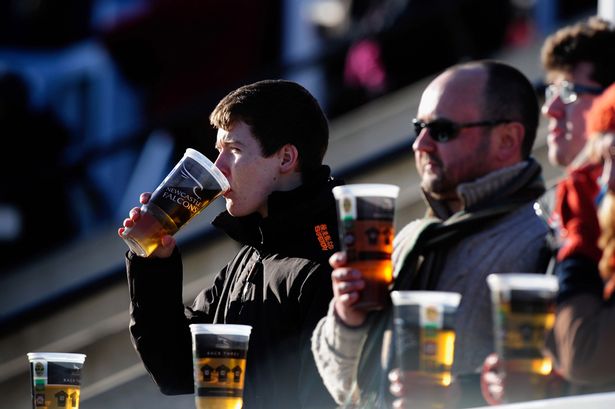
Rugby fans enjoy a beer
What’s the problem? Ok at rugby; but not at football…

España 82’. What a wonderful time to be introduced to the beautiful game. I remember as a child being overcome with excitement as the colour and noise of this wonderful event had me glued to the screen. The pizzazz of Platini, Rossi, Zico & Socrates laid out in front of me for the first time, a real splendorous feast of football, whetting my footballing appetite for life.

Fast forward 24 years, and this time I had the pleasure of getting to savour the flavour for myself with a few mates at The 2006 World Cup Finals in Germany. Amidst all the excitement and drama of what unfolded that summer, what really left an indelible mark on me was the coming together of thousands of fans from countries all across the globe embracing the occasion in the correct spirit & obviously over a cold Schofferhofer or two.

The fact that this was able to happen in a safe, family-friendly arena without an intense Police presence exponentially added to the wonderful carnival experience. It’s with this sentiment that I ponder over the possibility of ‘The Impossible Dream’ making it to our country – i.e. getting to watch the game I love in a Scottish stadium packed with men, women & children, with an optional cold beer in hand.

Having listened to Les Gray, The former head of The Scottish Police Federation on Monday’s edition of ‘Scotland Tonight’ it’s clear that long arm of the law still harbours doubts that the Scottish Football fans’ social behaviour has evolved since The Hampden riot of 1980. Going by this absurd logic, we might as well deter people from visiting Germany for a city break since we were at war with them 74 years ago.

Gray of course is no stranger to explosive diatribe. In fact his spurious blurb following the Lennon v McCoist touchline handbags following the March 2011 Old Firm match was central to the kneejerk legislation passed by First Minister Alex Salmond. The ‘Offensive Behaviour at Football and Threatening Communications Bill’ was intended to address anti-social behaviour at football, but now only serves to choke the very spirit of our domestic game. Innocent football fans have, and continue to be treated with mistrust as a consequence of a lazy narrative shoehorned by The Scottish Government and police, fulfilling criteria that generates nothing more than additional paperwork to file.

Worryingly for thousands of ordinary punters like me who strive to see the Scottish game flourish on the park, Mr Gray thinks your average Scottish Football fan cannot be trusted with alcohol whereas our friends who follow the oval ball can. We aspire to experience a modern sporting day out at the football, comparable in value and pleasantness to that of a day at the races, golf, or rugby. The fact that those in authority see fit to prohibit any progress on this front is nothing short of a slur on the working class. I thought that kind of approach of contempt for the working class punter was supposed to have died in November 1990, when the late Margaret Thatcher was dislodged from No.10.

To compound matters, you can attend virtually any sport in Scotland and be permitted to consume alcohol. Should you have the luxury of disposable income then you can enjoy a beer at the football, but only in the Corporate/Hospitality areas. Again this promotes a dangerous class divide, a false notion that only affluent wealthy classes can be trusted with alcohol.

Sir David Murray embarked on an egotistical spending crusade at Rangers to outdo Celtic’s 9 in a row and achieve European Cup success. He did so by being economical with the rules of the game and spending money that wasn’t there. The cost of failure was the very existence of Rangers Football Club when they were liquidated in 2012. The cost to the Scottish game was that our member clubs had to gamble with finances to compete with Rangers, and we now find ourselves in a very precarious financial reality. With this in mind, the Scottish game now, more than any other time, needs to do two things to sustain a bright future. On the park we need to get back to the model that served us well: Operating within our means and investing in youth. To be fair to most SPL clubs, the penny has at last dropped and they are embracing this policy. The second component, which is equally critical, is that we need to look after the paying public and give them a match day experience that compels them to return. The introduction of controlled, responsible drinking I believe would go a long way to making the paying customer feel as if they are being catered for. As they do across all Premiership stadia, SPL clubs would control responsible drinking largely with stewards, which is a straightforward process, and one that causes little or no trouble south of the border.

Championing the cause, Peter Lawell will most likely need to call upon the services of a Johnnie Cochran style lawyer with supreme powers of persuasion to stand any chance of altering the opinions of the powers that be in this country. As the finances of the game in Scotland continue to dwindle, as does the time we have to right this wrong. The dream of having an all-encompassing football infrastructure that allows the likes of alcohol to be sold within the grounds is in no way an unrealistic target, but now is the time to act if we’re ever to make the change.

;

e

Get the Hawk outta Here

Why I Hope the SPL will never introduce Goal-Line Technology

By Johnny Connelly

Hawkeye camera
Coming to a match near you? The Premiership has given the nod to Hawkeye

So Hawkeye’s revolutionary goal-line technology is to be introduced to the self-proclaimed ‘best league in the world’ – Let’s hope it doesn’t creep over the border.

It feels as though the beautiful game is slipping further and further away from the romantic notion of the sport that traditionalists love and hold dear. This latest challenge to the integrity and flow of the game comes as an unwelcomed addition, in my opinion at least.

A day at the football is unparalleled when it comes to the fast-paced, high-energy, passionate encompassing of sportsmen and 10’s of thousands of fans exerting themselves for 90 minutes. It’s exhilarating. It’s enthralling. It’s football! And it’s exactly the way it should be.

Compare the magnificence that is football with the likes of cricket, tennis, or rugby. What sets our beloved game apart from lesser sports is the flow of the game. The introduction of goal-line technology will only hamper that. The days of referees having to make split second decisions to judge if the ball is over the line would be a thing of the past. Needless pauses in football are kept to a minimum by design for the good of the game. Yet now, we’d be actively encouraging such things!

When we’re fully integrated with the concept of goal-line technology, what comes next? Where else could we implement technology to ‘improve’ our game? How long before we question the purpose of referees at all? Would we write off the latest officiating innovation of goal-line assistants? And linesmen! Would we replace them with automated machines that run the line for us with a 0% chance of error? It’s a scary train of thought to meander down.

While we’re on the subject of officials; what would be left for our referees and linesmen to aspire to if big decisions like debatable goals were decided by technology? Football needs top referees. The development of officials is just as important as the development of players. What must they be thinking just now? To become the next Pierluigi Collina, youngsters must work incredibly hard. Their fitness must be on a par with that of a top player, and they must know every nook and cranny of the rule book. This won’t be the case if we start to lean on technology to enforce the rules and make the big calls. The refereeing aspect of football would be in serious danger of floundering before our very eyes.

Off the field it’d create problems too. Being a football fan is a 24/7 occupation. The fans live and breathe the game. A single match lasts but 90 minutes, so it’s a long wait between the full time whistle and the following Saturday’s kick off. To fill the void, the game needs talking points. Pundits, colleagues, and friends alike will endlessly debate things like whether the striker was offside, whether the player handled the ball, and of course, if the ball was indeed, over the line. The introduction of goal-line technology will make the “was it or wasn’t it in” talking point all but extinct. Further delving into technological advances in football will chip away at our other talking points, until we’re left with nothing but speculative conjecture to exchange on the way home from work, the pub, or the stadium.

As much as football is resplendent with examples of skill, camaraderie, and a sense of justice when the Goliaths of the game are somehow toppled by the plucky little Davids; we cannot discount or ignore some of football’s historical events that were in direct violation of the rulebook. As Scots, we’re painfully reminded all too often that England won the World Cup back in 1966, all thanks to a dubious Geoff Hurst goal.

Yet in the same breath, they’ve suffered heartbreak when Frank Lampard’s long range effort was disallowed against Germany in 2010, and who could forget that famous time when a little Argentinean relied on, as he alluded to, some divine intervention to topple England in 1986?

Can you imagine football without incidents like those? Surely over the course of time the decisions balance themselves out.

So what if goal-line technology would ‘right a few wrongs’ in terms of goals being awarded? Doesn’t the best team always win the league every year anyway?

Removing the potential for human error in the game is removing the simplistic beauty of the game itself.  If football was supposed to be perfect, there’d be no need for yellow & red cards, offsides, penalties, stoppage time, or any of the other subtle little nuances and imperfections that make our game what it is… absolutely brilliant!

The ‘Out of Contract’ SPL Select

Motherwell Striker, Michael Higdon

By Johnny Connelly

09/04/13

It’s no big secret that the game in Scotland has seen better days financially. The lavish spending that saw Scottish clubs trying to lure players from the Premiership and beyond is well and truly at an end. Now, more than ever, the ability to be shrewd in the transfer market is of paramount importance, as SPL clubs look to get as much bang for their buck as possible.

This summer, an astonishing 124 players will leave SPL clubs, admittedly some of these will be loans expiring, but the vast majority will form a huge pool of potentially promising free transfers is there to be trawled through. The difference between success and failure in the SPL can boil down to just a few clever signings, so you can be sure that all SPL managers will be casting a speculative eye on the list of players who’re out of contract this summer.

Unquestionably, there are some players among the 124 that could still be a major force in the SPL. Check out our top ‘Out of Contract’ SPL Select below:

Goalkeeper: Darren Randolph (Motherwell)

Between the sticks for our dream team, we have the man who’s smashed records for Motherwell, and been a major factor in their meteoric rise under Stuart McCall. Darren Randolph has been in fine form again this term, and only last season recorded a club record, 20 clean sheets.  He’s continued to pull off big saves in big games, especially away from home. He’s conceded the fewest away goals in the SPL this season (Celtic apart), and seems to be improving all the time. Neil Lennon is a known admirer of Randolph, and a move for the player was considered before Fraser Forster took the Parkhead jersey on a permanent basis. At just 25, his best years are most certainly ahead of him. Motherwell will be hard pushed to find a replacement of his ilk, but his release from Fir Park will be music to the ears of clubs in search of a top goalkeeper. Given the player’s current stature and form, a move south of the border, perhaps to the Championship, appears to be a more likely outcome. However, if another SPL club could somehow secure Randolph’s signature, he’d be an asset to them, and the league in general.

Defender: Alan Maybury (Hibs)

At 34, Maybury is no spring chicken; but what he lacks in youthful exuberance, he makes-up for in experience. The Irishman has plied his trade in the SPL, on and off, for the past 12 years. He made his biggest impact in his younger days on the other side of the Edinburgh divide at the mainstay of the Hearts defence. His no nonsense style and ability to play anywhere across a back-4 made him a hit at the Tynecastle club, and a good solid prospect for some of the lesser SPL clubs to this day (despite his advanced years). Having also spent time at Aberdeen and St Johnstone, before ending up at Hibs, Maybury knows better than most what the SPL is all about. His experience in England, as well as for Ireland at full international level would be a welcome addition to most SPL dressing rooms. He’s failed to reproduce his top form for Hibs this season, but his ‘steady-eddy’ approach could be appealing for clubs fighting the drop next season as his grit and determination is something all managers look to install in their defence.

Defender: Thomas Rogne (Celtic)

Norwegian international, Thomas Rogne, has divided opinion amongst the Parkhead faithful in his 2 and a half year spell at the club. On one hand, a promising, young, commanding centre-half with his best years infront of him; and on the other, an injury prone, frustrating enigma of a player. Rogne was picked up by Celtic during the ill-fated Tony Mowbray regime. Initially he impressed, so much so that he was dubbed as, “the best young talent to come out of Norway in the past 10 years”, by ex-Celt Vidar Riseth. Since Neil Lennon took the reins at Celtic, Rogne has fallen out of favour, and has been hampered by a string of long term injuries. He’s yet to have been given a significant run of games this season, and when he rejected a contract extension based on salary, his exit from Parkhead seemed to be sealed. At just 22, and with the raw talent he’s shown (albeit on a limited basis), he could prove to be a shrewd signing for clubs in the Scottish top flight or beyond. Assuming of course his relatively high wage demands could be met, and his injury hell, a thing of the past.

Defender: Andy Webster (Hearts)

Experienced defender Andy Webster will leave Hearts for the second time in his career this summer, albeit in slightly less controversial circumstances this time. The rough and tumble centre half has been a regular for the Hearts side of late, replicating the decent form he captured during his first spell at the club between 2001-06. He’s no world-beater, but a consistent performer that’s tough in the tackle, and plays to his strengths, without over-stepping his mandate on the field. Webster played only a handful of times at Wigan and Rangers before coming back to Hearts to make his mark. Despite having bags of experience, at 30 years old, he’s still got a good few years left in him, and wouldn’t look out of place in most SPL defences. He’s been capped for Scotland 28 times, and has been on the periphery of the squad several times in the past few years. He’ll be keen to stay in the SPL if possible, and it’s not beyond the realms of possibility for him to earn a place in Gordon Strachan’s Scotland squad once more.

Defender: Mihael Kovacevic (Ross County)

Given the fantastic season Ross County have had, it’s something of a surprise that they’ve succumbed to letting a player as solid as Kovacevic slip through their fingers. The 6ft 4in fullback has been a regular in Derek Adams’ back 4 this season, and something of an unsung hero at times. The Swiss defender offers little going forward, but ensures that he gives his opposite number a formidable challenge each time he takes to the field. He game seems to have developed considerably since his Dundee United days, as the 25 year old’s ball distribution and positional sense have been lamented this term. Kovacevic’s home form in particular has caught the attention of many, and the stats also back up his performances. At home this season, Ross County have conceded the 2nd fewest goals, picking the ball out the net just 14 times since August. This’ll have gone some way to helping Ross County pick up the £500,000 windfall guaranteed by finishing in the top half of the SPL. Kovacevic will be a sore loss to the Staggies, but their loss could well be another SPL club’s gain.

Midfielder: David Wotherspoon (Hibs)

Pat Fenlon’s transfer policy at Hibs since he took over seems to have connotations with the revolving door of a popular department store. David Wotherspoon and 7 others will head for the Easter Road exit when the season draws to a close, and the young Scotsman is expected to be amongst the more sought-after Hibs departees. He has pace, a willingness to get forward, and seems to turn on the flair in big games (most notably scoring a late winner against fierce rivals Hearts earlier in the season). Perhaps a little lightweight, and his goals return leaves a lot to be desired, but his ability to beat players and pick a pass is unparalleled in the current Hibs team. His summer departure will mark the end of a 6-year spell at the Hibees, and his preferred departure remains as yet unknown, but offers from the more frugal SPL clubs are to be expected.

Midfielder: Andrew Shinnie (Inverness)

Definitely the surprise package of the SPL this season, Inverness Caley Thistle’s Andrew Shinnie catapulted the Highland club to a remarkable top-6 finish, and could yet aid them to finish in 2nd place if he can recapture his early season form. The attacking midfielder exploded into form as the SPL 2012/13 kicked-off. He found the net 9 times in the first half of the season, and isn’t afraid to get his hands dirty with the less attractive side of the game too. His form this season has showed that the 23-year old is on the up, making Rangers potentially regret deeming the player ‘surplus to requirements’ back in 2011. His Tulloch Caledonian Stadium departure was purely by choice, after the creative midfielder rejected an extension to stay under the watch of current gaffer, Terry Butcher. Aberdeen have already expressed an interest in the player, but it appears as though Shinnie won’t be rushed into deciding where his next move will be.

Midfielder: Paddy McCourt (Celtic)

When the grand history of Celtic Football Club comes to be written, few players will be considered to have been more of an enigma than their current cult hero/zero, Paddy McCourt. His aptitude for skipping past players and scoring spectacular goals with relative ease endeared him to sections of the Parkhead support, but his never-ending fitness issues have blighted his career to a point where Neil Lennon has decided not to retain his services. His seeming inability to play 90 minutes on a football field at an age when most football players hit their physical peak is baffling to say the least. However, when it comes to dribbling ability, there are only a handful of players in the SPL that can hold a candle to the Northern Irishman. Rumours of Premiership interest in the past, including Liverpool and Wolves on several occasions have hovered around the player, but with a matter of weeks remaining on his contract, it seems as though the ‘Derry Pele’ may yet continue to ply his trade in Scotland, if a suitable SPL suitor can be found. Signing him would be a gamble for SPL clubs, but if the player’s fitness could be resolved and maintained, McCourt could yet light up the SPL for seasons to come.

Midfielder/Forward: James McFadden (Motherwell)

Faddy’s return to Fir Park just a few months ago was the nearest thing to a marquee signing that our ailing league has seen for many years. The Motherwell fans were euphoric to welcome home their prodigal son, all the while wondering if the former Scotland talisman still had some magic left in his locker. Much to the relief of Stuart McCall, he’s turned it on, more and more as each game passes. Perhaps not as quick as he once was, and certainly needing to shift a few pounds, but anyone it’s clear he’s still a cut above the majority of the competition in the SPL. He’s still a goal threat from free-kicks, as he proved against St Mirren last week, and he still possesses the touch and drive of a player with something to prove, and trophies to win. Given the sense of apathy from English clubs for McFadden over the past few years, an SPL club could be his ticket back to the Scotland squad, as he seeks to recapture the form that secured him the big move to Everton all those years ago.

Striker: Kris Boyd (Kilmarnock)

Ok, he’s not the lean, sprightly Rangers and Kilmarnock goal machine he was in the past; but still at just 29 years old, and with the commendable record of being the top scorer in the history of the SPL, Kris Boyd on a free transfer must at least be worth a thought for some clubs in Scotland’s top flight. Since leaving Rangers just a few years ago, Boyd has had a frustrating time down south with Middlesbrough & Nottingham Forrest, a nightmare of a time in Turkey with Eskisehirspor, and a farcical time in the MLS with Portland Timbers. Kenny Shiels saw an opportunity to pick up a cut-price proven goalscorer for Kilmarnock, and it almost paid dividends, as they missed out on a top 6 position in the SPL by the skin of their teeth. Boyd has found the net for Killie upon his return, and given that his stock is low pretty much everywhere except Scotland, there’ll never be a better time to pick up a bargain basement priced striker capable of scoring 30 goals a season. The risk for any interested parties would of course be the player’s attitude and general enthusiasm for the game at that level. Still, the rewards greatly outweigh the risks, and I’m sure we’ll see offers for the player in the coming weeks, assuming of course Killie don’t opt to take the plunge themselves.

Striker: Michael Higdon (Motherwell)

Unfortunately for Motherwell, Michael Higdon is the 3rd player of theirs to make it into our ‘Out of Contract Select’.  Higdon is one of many top, dependable players exiting the Lanarkshire club this summer, and he’s done himself no harm at all career-wise when you analyse the shift he’s put in for the Steelmen. The big scouser will win few awards for his artistic approach to the game (or lack of), but firing home 25 goals so far this season for Motherwell has perched him at the top of the SPL goal scoring charts, and has helped his side to get to within touching distance of 2nd place in the SPL. His presence in the penalty area is unmistakable. He’s a handful for any and all defenders in the league, and he gives 100% at every 50/50. His attitude is what makes him the player, and the asset he is. Motherwell will struggle without him next season, and his phenomenal goal scoring record this season will no doubt have attracted attention from his homeland. For the good of the SPL, I for one hope Higdon extends his stay in Scotland, and keeps on banging in the goals.

Jambos Rejoice, Romanov’s Offski

by Johnny Connelly – Archive piece from PLZ Soccer – April 2013

9 years ago, a little known Lithuanian of Russian descent embarked upon a trailblazing scheme to take over one of Scotland’s biggest football clubs.

He promised, under his leadership, they’d win the Champions League within a decade.

Now, with less than a year to fulfil his promise, and with his millions and millions of pounds of assets now allegedly in the hands of others, said Lithuanian unquestionably has his work cut out for him…

READ THE FULL STORY HERE…

McCall Proves That The Steelmen Are Well Worth 2nd Place

By Johnny Connelly

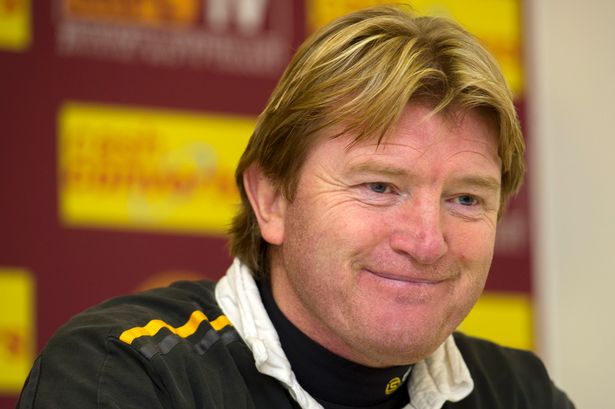
McCall

Hats off to Stuart McCall. Friday night’s 4-1 demolition of Hibs at Fir Park surely proves that his Motherwell side are worthy of a top 6 finish in the SPL, and could be a springboard for the Lanarkshire club to go on and secure the runner-up spot in Scotland’s elite division.

Barring a cataclysmic implosion, Motherwell will finish in the top 6 for a fourth consecutive season, and are within striking distance of a club record points total. With just 7 games left to play, they sit comfortably in 2nd place in the SPL, and are widely expected to finish there come May. This sustained stability and success is a wonderful achievement for the club, especially when you consider that their very existence came under threat thanks to administration back in 2002.

Since that time, the Motherwell fans have endured watching their beloved amber & claret clad heroes finishing bottom of the league (although not relegated thanks to Falkirk’s stadium not meeting SPL criteria), and saw the club part company with no less than 6 managers.

Despite the high regard the manager is held in now, many people seem to forget that Stuart McCall’s arrival at the club was something of a muted one. The fans were reeling at losing Craig Brown to Aberdeen, particularly after the wily ex-Scotland boss had vehemently denied any interest in the Pittodrie hot seat.  Taking on McCall was something of a risk for Motherwell. McCall was extremely inexperienced as a manager, and despite some early positives and difficult circumstances, left his previous post at Bradford as the club languished in the bottom half of League 2.

Fair play to the powers that be at Motherwell Football Club, they clearly saw something in McCall. That same grit, determination, and passion for the game that made him a success as a player proved to be assets that would transfer well to the Fir Park dugout. In his first full season, he guided the club to finish 3rd in the SPL. This alone was enough reason to celebrate for the long suffering Well fans, surely he couldn’t go one better this season, could he?

Motherwell are firing on all cylinders right now. Their form has been steady from start to finish (broadly speaking), with the occasional flash of brilliance, like Friday night’s demolition of Hibs.

Motherwell 4-1 Hibs – Highlights

They’re now unbeaten in 4 games in the league, including a win over current Champions Celtic, and have scored more goals at home this season than any other SPL club outwith the Glasgow giants. The more you analyse this Motherwell side; the more you can see McCall’s influence. In McCall’s first season, a club record 20 clean sheets were recorded with keeper Darren Randolph between the sticks. Throw in a couple of exciting attacking players like the returning James McFadden,  the shrewd loan signing of Kallum Higgingbotham and formidable target man like Michael Higdon, and you find yourself with what could be the strongest Motherwell side since the Scottish Cup winning side of ’91.

Like all other clubs up and down the country, McCall has had to work with a shoe string budget, and with a tiny squad (the smallest in the league), making his achievements this season all the more impressive.

TEAM CURRENT SQUAD SIZE (excl loans in/out & youth players)
Celtic

31

Dundee

29

Hearts

28

Aberdeen

26

Kilmarnock

24

Inverness Caledonian Thistle

23

Hibs

23

Dundee United

23

St Mirren

23

St Johnstone

22

Ross County

21

Motherwell

18

Yes, a basic squad of just 18 players! It doesn’t get much more threadbare than that. McCall has kept the wage bill down, and has a net spend of £0 on transfers (excl loan fees etc) which could modestly be described as difficult parameters to worth within. The financial downturn in football has meant that every club in the SPL and beyond have had to cut their cloth accordingly, Motherwell have done this with a modicum of success, operating sustainably, while clubs like Hearts and Kilmarnock continue to make noises about ‘going to the wall’.

Sometimes in football we get bogged down with the negative aspects and the seemingly ubiquitous question, ‘where is the game headed?’

Perhaps if we had more guys like McCall in the Scottish game, the situation wouldn’t look quite so perilous. The SPL needed some new blood, and the Motherwell boss duly delivered. I’ve detailed his positive ‘on-the-field’ aspects above, but his community interest at the club and media-friendly nature give the Lanarkshire club something of a unique glow.

The Well gaffer holds regular meetings with fans of the club to help shape the future of the club within. He hasn’t subscribed to the archaic notion of the manager being somewhat aloof and untouchable to the fans. It turns out that he’s even got a sense of humour too.

How many other SPL managers would muck in and get involved with a music video for an up-and-coming band from the local area?

http://www.youtube.com/watch?v=9BefcAIjN0Y

He even laughed off this timeless gaff from his Bradford City days…

http://www.youtube.com/watch?v=0EI4SDBKY38

It’s early days for him in management, but he’s ticking all the boxes at Motherwell. He’s a breath of fresh air, and a shining example to all managers in Scottish Football. It seems that some of the ‘bigger’ clubs in the SPL could do with adopting his style. With a fraction of their resources, he’s comfortably outstripped the likes of Hearts, Hibs, and Aberdeen for the second year on the bounce. He’s galvanised a small group of players, creating an underdog, siege mentality that serves the team well going into every game.

Long may it continue, as his impending contract extension will benefit Motherwell Football Club, and our wavering game in this country as a whole.

Why Sacking Barry Smith was Ludicrous

by Johnny Connelly

Image
Out of a job – Barry Smith was axed by the Dundee board

The phrase, “It’s a funny old game”, has been synonymous with football since long before I was born, but we’ve been given a reminder that it still rings true today when the news broke that Dundee FC had sacked their manager, Barry Smith.

The decision to sack Smith is at best peculiar, and at worst, downright ludicrous.

The ill-fated manager’s affiliation with the Dark Blues started way back in the mid 90’s. After breaking through to the Celtic first team as a youngster, he failed to hold down a first team slot, and made the journey north to join Jim Duffy’s Dundee side in 1995. His tenacious attitude and no nonsense style at the back made him a fans’ favourite, and an unmistakeable presence at the heart of the Dundee first XI for over a decade. He played over 400 times for the club, earning a testimonial, captaining the club for many years, and was inducted into their hall of fame. He showed a love for the club, an unshakeable loyalty that made him a success as a player, and stood him in good stead for the top job at Dens Park.

Fast forward a few years and Smith jumped at the chance to take over as manager of the then 1st Division club, an acceptance that was all the more admirable given the difficulties that the club was in the midst of facing. In October of 2010, Smith took the reins. His beloved Dundee were in administration and on the brink of obliteration from football.

A 25-point deduction would have consigned most teams to relegation. Can you imagine, an already financially doomed Dundee, being expected to function and survive in the 3rd tier of Scottish football? It just wouldn’t have happened. Somehow, Smith installed a belief in his players to the extent that he guided them to an unprecedented 23-match unbeaten streak. The Dee finished the 2010/11 season in 6th place. Had it not been for the 25-point deduction; they’d have finished in 2nd place, just one point behind Dunfermline.

So, in a season where the club were in danger of accompanying Third Lanark and the Tennant’s Sixes in the Room 101 of Scottish Football, Smith’s men worked hard enough to effectively challenge for promotion to the top-flight, had it not been for the aforementioned bizarre points deduction.

Not to rest on his laurels, Smith kept the momentum up the following season, a season that was ultimately to lead to his demise. As we all know, in the 2011/12 season, Dundee finished 2nd, with a threadbare squad, and due to the crisis in the blue end of Glasgow, were to be thrown head first into the Scottish Premier League without the infrastructure at the club to survive.  

It was a remarkable achievement. That team on paper had no right to finish 2nd in the ferociously competitive Scottish 1st Division, so what chance would they have, with no further investment, to survive in the SPL? They’d be like a lamb to the slaughter, and that’s exactly how it’s panned out.

Smith was a victim of his own success. Had his Dundee side finished 3rd instead of 2nd two seasons ago, Falkirk would have gone up, and it’d be Steven Pressley who could be in this horrible position. Had Dundee finished 3rd that season, they’d be most likely be challenging for promotion this season. When it boils right down to it, Smith has been sacked for finishing 2nd instead of 3rd. What kind of reasoning comes into play to punish a man for his successes? And for a situation that was ultimately out of his control?

Could any manager, even Mourinho, Ferguson, or Guardiola, take what is essentially a run of the mill Scottish 1st Division side, and traverse through a season in the SPL, avoiding relegation come May? I severely doubt it.

The timing of the decision too smacks of indecision. Surely, if there was any hope of saving the club from relegation, the decision to part ways with Smith would have been made (ironically) around the ‘season of good will’, to allow the next manager the time he’d need to turn things around.

Now, the Tayside club will face what could be their toughest challenge yet: imminent relegation to the 1st division, and in dire need of a bright spark like Barry Smith in the dugout. The danger being if they can’t find one, the downward spiral could continue into an irreparable state.

All the while, Barry Smith will be unquestionably be handed the next half-decent 1st Division job that comes up, with his reputation intact, and the ability to make that club a success in the SPL.

I hope for the sake of Scottish Football that Dundee don’t live to regret terminating Barry Smith’s contract. But for the life of me, I can’t see how they’d do anything but.


Why McNamara is the right man for United

by Johnny Connelly

Image
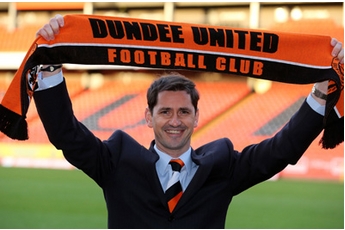
Trading Up – McNamara jumps ship and heads for Tannadice

Just as the ever-echoing knell of Scottish Football’s funeral bell seemed to be resonating louder than ever, up pops Stephen Thomson with a timely shot in the arm that could, and indeed should, transform the fortunes of one of the country’s biggest clubs this season.

 It’s been a funny old season so far in Scotland’s top flight for several reasons, most apparently the absence of one half of the Old Firm. When the news first broke that there’d be no Rangers in the SPL this season, one of the first questions that football fans began to ponder was ‘who’ll challenge Celtic for the title?’ You’d be forgiven for expecting Dundee United to be in with as good a shout as any, (at the start of the season of course).

Their dogged style, recent history of moderate success, and formidable squad (on paper at least) led many to believe that they were contenders. Without going into too much detail, it didn’t come to fruition, much to the frustration of the Arabs.

With Peter Houston at the helm this season, the club embarked upon a whole host of baffling signings, and an abominable run of form at Tannadice. Radoslaw Cierzniak apart, the signings were poor, and the Tayside club have recorded just two wins at home in the league. But with players like Johnny Russell, Gary Mackay-Steven and Jon Daly to call upon going forward, there’s no way the club should be languishing behind ‘smaller’ clubs like St Johnstone, Motherwell and Inverness Caley Thistle (as impressive as they’ve been this year).

When the friction between Houston and the board became too much and it became clear he’d be leaving, I did worry that we’d see some haggard or soulless Scottish Football journeyman being rolled out to act as a safe bet. Sometimes change is needed, and Stephen Thomson saw this.

The slow death Scottish Football is enduring is as a direct result in part to some of the unadventurous and fundamentally dull managers like Jim Jeffries, Bobby Williamson and Gus McPherson (to name but a few).

It would have been easy for Thomson to go down this route, but he’s taken a gamble on a young, passionate manager with a penchant for attacking football. I for one believe this gamble will pay off. Jackie McNamara ticks all the boxes.

He’ll command the respect of the players given the illustrious career he carved out despite not necessarily being the most talented player out there. McNamara, with a spot of good fortune and the right attitude on and off the park, won titles, played for his country, and played against some of the best players in Europe.

I’m confident McNamara will instil this idea of knuckling-down to reap rewards and punch above your weight in his new Dundee United squad. Are any of the less well-rounded, young players at United any worse than McNamara was at Dunfermline as a player? I think not. If Jackie can get across to his players that attitude outshines ability any day of the week, then there’s no limits to what his squad can achieve.


Plaudits rained in from all over the media for the success McNamara brought to his Patrick Thistle squad, and rightly so. His Partick side has lost just once at home this season, and can go top of the First Division if they win their two games in hand over Greenock Morton. This, combined with steering his team to the final of the Ramsdens Cup, drew in big crowds, sometimes upwards of 5,000.  

Football fans vote with their feet. If the product on the pitch is good enough, the club won’t have to worry about empty seats. This was the case at Partick Thistle under McNamara, and Stephen Thomson will be hoping that his new manager’s passion attract fans back to Tannadice to cheer on the Terrors.

No manager’s appointment guarantees success, and everyone at Dundee United will know that there’s a lot of hard work to be done over the next few months. That said, given the options available, there was no better choice than McNamara. For the good of the game in this country, I hope the new Dundee United manager transfers and enhances the same excitement he generated at Firhill, to his new employers 80 miles up the road.

Hats off to Stephen Thomson for being bold enough to try something bold, and good luck to the SPL’s newest manager, Jackie McNamara.

Samaras is Head & Shoulders above the rest…

Sections of the Celtic support have long been divided in their opinion of Greek striker Georgios Samaras. 

The enigmatic Celt appears to be winning the battle with the support after his endeavours in the Euros, his rich vein of form in Europe for his club, and his newly discovered levels of passion & commitment in his play.

Samaras has proved again today that he’s Head & Shoulders above the rest by appearing in this Greek shampoo advert…


…well let’s face it, there’s not many SPL players that could carry off being in a shampoo advert.

How Not to Run a Football Club – Lessons Scottish Football can learn from Chelsea, Man City & QPR

By Johnny Connelly

These days it seems to be something of a rare occasion when the farcical nature of the beautiful game supersedes that of our own football north of the border. But this, my friends, is one of those times.

The seemingly never-ending chronicles of the Rangers tax-case appear to be finally put to bed, Celtic are just 1 win away from reaching the last 16 of the Champions League, Hearts live on to fight another day, our ‘dysfunctional’ & widely discredited league format is expected to change, and the national side have parted company with their most unenthusiastic and least successful manager in history. Yup, things are looking up in Scotland.

Many more significant successes could be thrown in too, such as Craig Brown transforming Aberdeen, and Terry Butcher working wonders within the constraints of crippling financial resources. But let’s take this moment to poke fun at the complete and utter shambles that some of the ‘bigger’ clubs in the ‘best league in the world’ have embroiled themselves in.

We all know, and we’ve known for some time, that the unsustainable nature of spending south of the border puts football institutions that have existed for well over 100 years in danger. Danger they wouldn’t have faced otherwise.  It’s abundantly clear that Premiership clubs have two primary income sources. The first is the comically over-inflated TV deals from Sky; and the second is the cash in hand payouts from the band of billionaires who’ve taken over these clubs to fill their egotistical void for an elaborate human, emotional, and living plaything.

The second of these income sources currently is what sets the clubs apart in terms of silverware (by in large, as a rule of thumb). The clubs with the biggest money men have had the advantage when competing for honours in recent years, but what a hollow existence for a football fan. To watch your team, strewn with passionate journeymen, battling bravely against relegation one second; to then be catapulted towards competing for the title and signing the most expensive players in the world, just as soon as the money man sees fit to turn on his magic money-tap.

Both of these income streams are not secure. What happens when Sky get bored of the big money payouts? When they don’t feel the product they’re being given is worthy of the hefty price they’re paying? Or when they themselves come across financial difficulty in years to come thanks to the ever-developing world of digital entertainment?

The money man issue is less secure still. At least Sky & EPSN’s involvement is based on a tangible Return on Investment. Like a spoiled child that knows they can get anything they want, a time will inevitably come when boredom sets in. The brat will want a new toy, and the deluded football fans will be left pondering how on earth their beloved team will ever clear debts of hundreds of millions of pounds, and pay the remainder of their top stars’ £120k per week contract.

It genuinely baffles me how most Premiership football fans feel any connection at all with the product their team is putting out for them to support on a Saturday. This week has been a classic example for them.

Look at Chelsea. By hook or by crook, Roberto Di Matteo led them to win the Champions League. They weren’t the best team in Europe; they weren’t even the best team in England. But he did it, and he did it with camaraderie and a likeability factor – something that hasn’t been seen at Stamford Bridge since the days of Gianluca Vialli or Claudio Ranieri’s tenure.

Image
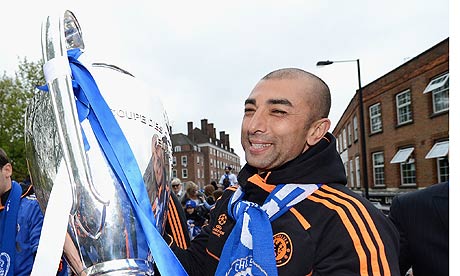
Di Matteo – Good, but not good enough

Roman Abramovic arrived and transformed a middle of the road, semi-likeable club into a glory-hunting, unmitigated machine of imperialistic endeavour. Chelsea started spending Abramovic’s millions, signing players who’d never have touched the club with a bargepole previously, and accepting nothing less than 100% success. Mourinho came and went, followed by Avram Grant, Luiz Felipe Scolari, Ray Wilkins, Guus Hiddink, Carlo Ancelotti, Andre Villas-Boas, and of course, Roberto Di Matteo. Now, the club have taken on another big name manager, Rafa Benitez. They’ll spend yet more money chasing the impossible dreams of a disengaged Russian billionaire, he’ll fail, and then the cycle will continue all over again. What a horrible existence for a football fan to endure, regardless of the standard of the product on the pitch.

Man City are finding themselves being pulled down the same road of despair. Without going into too much detail, the current owner, billionaire Sheik Mansour, propelled a club that typically finished between 10th-16th in the Premiership, into a club that signs players for in excess of £30m, and pays players like Toure around £250k per week!  It’s almost unbelievable, yet it’s what is being put to the average football fan as ‘the way the game is headed’. People forget that Mark Hughes was ousted in bizarre and immoral circumstances as City manager. Now, after the owner has spent over £1bn on the club, it’s Hughes’ successor, the once untouchable Roberto Mancini who is hanging by a thread. Mancini to his credit delivered City’s first ever Premiership title; but has floundered in Europe, and now looks as though he could go the way of the Dodo, (or as we mentioned above, the Roberto).

Image
Hanging by a thread – Mancini could be next for the chop

QPR too parted company with their manager this week, and again it was Mark Hughes who was the victim. Hughes was correctly sacked after failing to secure a Premiership win 4 months into the campaign, but the nature of his departure was despicable. Hughes was sacked, and his successor named all the space of 24-hours. What a cold and pre-meditated way to run a business, especially a football club. But before anyone begins to feel a modicum of sympathy for Hughes, let us remember that his appointment at Loftus Road to replace Neil Warnock was conducted in a similarly horrible manner.  When ‘loveable’ cockney rouge and purveyor of many a brown envelope bung deal, ‘Arry Redknapp’s phone rang about the QPR job, he must have been elated. How this man hasn’t been convicted for his abundantly clear dodgy dealings is beyond me, but for him to be appointed another Premiership job with a fortune to spend on players in January is almost laughable.

Image

Sacked – Mark Hughes was shown the door after no wins in 4 months

Surely nobody has forgotten that this man drove Portsmouth to the brink of obliteration? But has everyone forgotten his failure at Southampton? The man took over Saints on December 8th  2004, picking up just 12 points from 16 games. He relegated the club without a whimper, finishing bottom of the English Premier League. Watch this space for yet more comical spending and ‘unproven’ allegations of irregular financial conduct this season on ‘Arry’s watch. Of the 3 aforementioned exorbitantly spending clubs, QPR concerns me the most, as it’s the one that would stand the least chance of survival if and when the money men catch the next train out of town.

The irony is, stability at these clubs isn’t an impossibility. The correct application of corporate branding, developing your own talent, living within your means, and having a clever man pulling the strings is all that’s required to succeed on all fronts in England.

Look at Manchester United. Despite the challenges of having to battle against these big spenders, being taken over by the Glazers, and the huge changes in the game over the last 20 years, Fergie has ensured that his team are successful.

Sir Alex has outlasted 5 British Prime Ministers, 5 American Presidents, 10 Liverpool managers, 18 Chelsea managers, and 19 Man City managers, while picking up 37 trophies  along the way.

To hark back briefly to Chelsea as a comparison, during the Abramovic era, the London club spent more money (approx £90m) hiring and firing mangers, than Man Utd have spent on players (Net transfer spend). Everton too show themselves to have a successful model. Davie Moyes receives plaudits year on year, not least for his current team that plays exciting and endearing football. The Merseyside club’s attention to financial detail is in stark contrast to that of Chelsea, having spent less money on players in their entire Premiership existence, than the European champs have spent hiring and firing gaffers in the last 8 years. Wenger’s Arsenal are another great example of how it can be done, but the pressure is certainly mounting on the Frenchman to adopt the seemingly trendy, reckless approach to spending.  I hope for the Gunners’ sake, they keep their faith in the Arsene’s approach.

We could analyse the dichotomy between the spending styles until the cows come home, but as I initially stated, it’s clear that the Chelsea, Man City and QPR approach isn’t a morally objective one, and leaves those clubs with a finite lifespan.

North of the border, we’ve suffered in silence. Never really having the power to compete for their players (with the exception of the O’Neill years at Celtic, and the Advocaat years at Rangers) in modern times, but we’re certainly on the right track. Whether they like it or not, Rangers have been forced to start from scratch, and they’ll do anything to avoid a repeat of the strategy that led to the club being liquidated. In the coming years, they’ll adopt the same approach as Celtic, which is proving as successful as could be hoped for. Don’t count on TV money, as it could disappear tomorrow. Count on a good scouting and youth system that allows you to sell players on for exponentially more than it cost to acquire/produce them. Count on a clever global and European marketing strategy to expand your brand and tap into new revenue streams. And finally, focus on keeping the product entertaining for the fans. If the fans can buy into what your club is trying to achieve, then a prosperous future is secured.

At this point in time, Scotland has an exciting league setup. Every team in the top flight is taking points off everyone else. The honours are very much up for grabs, and the relegation battle will likely go to the wire. This, together with the ongoing work to restructure the league to be more commercially viable, Celtic’s impressive form against Europe’s elite, and the opportunity to appoint a new Scotland manager with fresh ideas, puts Scottish football in a very good position indeed.

So let the English media poke fun at the SPL and the national side if they wish. We’ve identified the problems and are working to fix them. All this, while our friends on the other side of the border sit blissfully unaware of the ticking time bomb that is their current league setup; as they pompously preach about the ‘best league in the world’, truly believing theirs is an infallible football industry. How wrong they are.